Every time you pick up a prescription, there’s a hidden guide inside that could save your life. It’s not the pill bottle. It’s not the pharmacy sticker. It’s the safety and warnings section on the label - the part most people glance at and ignore. But if you learn how to read it properly, you’ll know exactly when to pause, ask questions, or change your habits to avoid serious harm.
What’s in the Safety and Warnings Section?
The safety and warnings section isn’t just a list of side effects. It’s a prioritized risk map. The FDA requires this section to follow a strict format, and the most important risks are never buried. They’re front and center. The top warning you’ll see is the boxed warning - also called a black box warning. It’s printed with a thick black border around it, like a warning sign on a construction site. This isn’t just a suggestion. It’s a red alert. The FDA only requires this for drugs that can cause serious injury or death. For example, clozapine, used for severe schizophrenia, carries a boxed warning because it can wipe out your white blood cells. If you take it, you need monthly blood tests. Skip that, and you risk a life-threatening infection. Below that, you’ll find the Warnings and Precautions section. This lists all the major risks tied to the drug, from liver damage to suicidal thoughts. Notice how the language is precise: it says things like “may cause” or “has been associated with.” That’s not vague. It means the risk is proven in clinical studies, not just rumored. If the label says “may cause dizziness,” it’s not just a side effect - it’s a signal to avoid driving or climbing ladders until you know how your body reacts.Drug Interactions: The Silent Killer
One of the most dangerous parts of any label is the drug interactions section. This isn’t just “don’t mix with alcohol.” It’s specific. It tells you which other drugs, supplements, or even foods can turn a safe medication into a poison. For example, some antibiotics like clarithromycin can spike the levels of statins (cholesterol drugs) by 400%. That can cause muscle breakdown and kidney failure. The label won’t say “be careful.” It will say: “Concomitant use with CYP3A4 inhibitors (e.g., clarithromycin) may increase simvastatin plasma concentrations by up to 400%. Avoid concomitant use.” That’s not jargon - it’s a direct warning. If you’re on multiple meds, this section is your most important checklist. Many people don’t realize that over-the-counter painkillers like ibuprofen or cold medicines with dextromethorphan can also interact. A 68-year-old patient in a 2022 case report ended up in the ER with serotonin syndrome because he took dextromethorphan with his antidepressant. The warning was there - small print, easy to miss. But if you know to look for it, you can avoid that.Pharmacy Labels: What the Sticker Tells You
The big bottle label from the manufacturer is just the start. The pharmacy adds its own warning stickers - and these often matter more. They’re designed for you, not doctors. These stickers are required to be at least 10-point font, and they highlight the most urgent risks. Look for phrases like:- “May cause drowsiness - do not operate heavy machinery”
- “Take on an empty stomach”
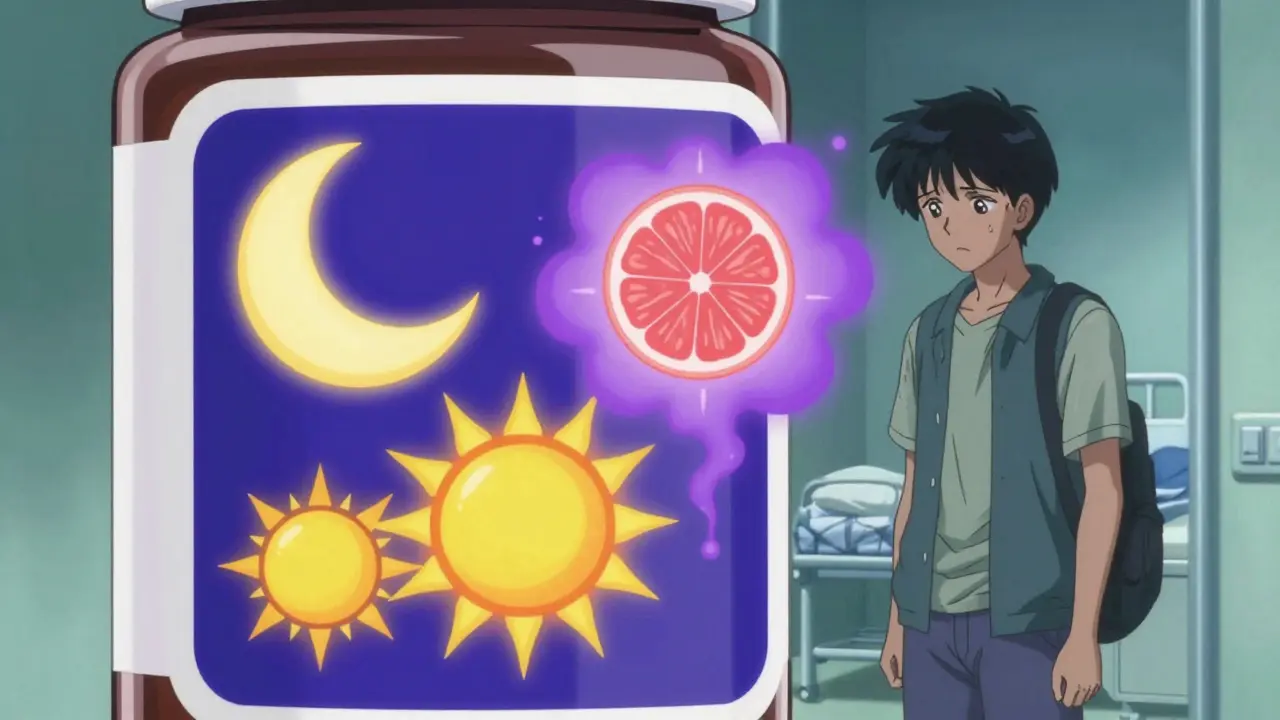
- “Avoid grapefruit juice”
- “May increase sun sensitivity”
How to Understand Warnings If You Have Low Health Literacy
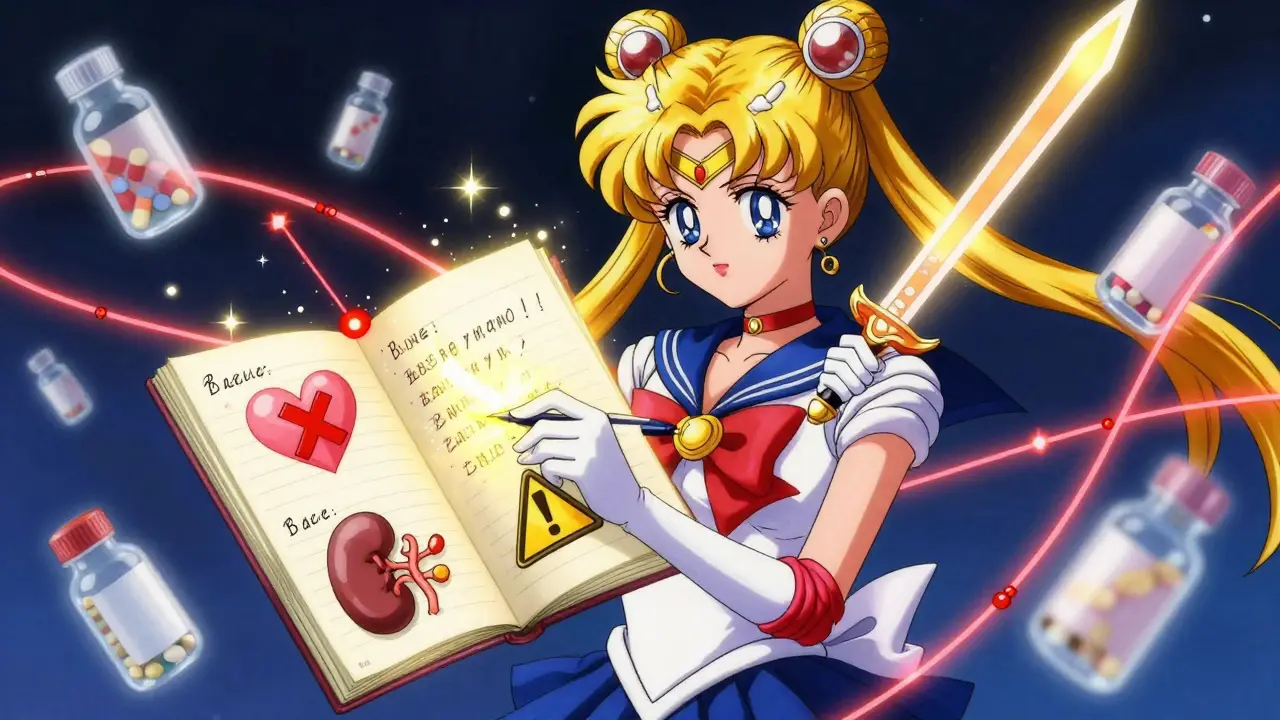
If numbers, medical terms, or long paragraphs confuse you, you’re not alone. Nearly half of U.S. adults struggle with health information. The good news? There are proven ways to make it easier. First, ask your pharmacist to explain the warning in plain language. Don’t be shy. Say: “Can you tell me what this means for me?” Then, use the teach-back method. After they explain, repeat it back: “So, if I take this with grapefruit, my blood pressure could drop too low - is that right?” Studies show this cuts errors by 27%. Second, look for pictograms. Some newer labels now use simple icons - a sleeping person for drowsiness, a heart for heart risks, a sun for sun sensitivity. The FDA is rolling these out more widely. If your label doesn’t have them, ask if the pharmacy can add a sticker with a symbol. Third, use a warning log. Keep a small notebook or phone note where you write down each drug and its top 2 risks. For example:- Warfarin: Risk of bleeding - avoid aspirin, check for bruising
- Metformin: Risk of lactic acidosis - stop if you have severe vomiting or dehydration
What to Do If You’re on Multiple Medications
If you take five or more pills a day - common for older adults or people with chronic conditions - your risk of dangerous interactions jumps dramatically. A 2023 Reddit poll of 1,245 patients found that 73% were confused about interactions when managing polypharmacy. Here’s what works:- Bring a full list of everything you take - including vitamins, herbal supplements, and OTC meds - to every doctor and pharmacist visit.
- Ask your pharmacist to run a drug interaction check. Most pharmacies have software that scans all your meds at once.
- Use a pill organizer with alarms. Apps like Medisafe, used by over 2 million people, can alert you not just when to take your pill, but when a new interaction is flagged.
- If you’re unsure about a new prescription, wait 24 hours before starting it. Call your pharmacist and say: “I’m starting this. What’s the one thing I should watch out for?”
What’s Changing in 2026?
The system is getting better. Starting in 2024, the FDA requires all new drugs to test their warning language with real patients - especially those with low literacy. That means labels will use simpler words, shorter sentences, and clearer visuals. Some pharmacies are testing QR codes on bottles. Scan it with your phone, and you’ll get a 60-second video explaining the warning in plain English. Walgreens piloted NFC tags - tap your phone to the bottle - and saw 92% of patients understand the warnings, compared to 63% with paper labels. But here’s the catch: 24 million Americans don’t use smartphones regularly. So, analog solutions - clear stickers, trained pharmacists, warning logs - still matter more than ever.Final Checklist: What to Do Every Time You Get a New Prescription
Before you leave the pharmacy, do this:- Find the boxed warning. Look for the black border. If it’s there, read it twice.
- Check the pharmacy sticker. Turn the bottle over. Is the warning on the bottom? Ask them to put it on the front.
- Ask about interactions. “I take [list 2-3 meds]. Is this safe with them?”
- Use the teach-back method. Repeat the key warning back in your own words.
- Write it down. Add the drug and its top risk to your warning log.
What does a boxed warning mean on a prescription label?
A boxed warning - also called a black box warning - is the strongest safety alert the FDA requires. It means the drug has been linked to serious, potentially life-threatening risks, like organ failure, severe allergic reactions, or death. These warnings appear in a thick black border on the label and are only used for the most dangerous drugs, such as clozapine or certain chemotherapy agents. If your medication has one, you must follow all monitoring requirements, like blood tests or avoiding other drugs, exactly as directed.
Can I ignore a warning if I’ve taken the drug before without problems?
No. Warnings are based on population-level risks, not individual experience. Just because you didn’t get sick last time doesn’t mean you won’t this time. Your body changes. You might start taking a new medication, develop a health condition, or your liver might process the drug differently. Ignoring a warning because “it was fine before” is one of the most common causes of preventable hospitalizations.
Why do some warnings say “may cause” instead of “will cause”?
The FDA requires precise language. “May cause” means the risk is real and documented in clinical trials, but it doesn’t happen to everyone. For example, “may cause dizziness” means about 1 in 10 people experience it - not all. “Will cause” would be false, because not everyone reacts the same. This wording helps you understand the likelihood without causing unnecessary panic.
What should I do if I don’t understand a warning on my label?
Call your pharmacist. They’re trained to explain warnings in plain language. Don’t guess. Say: “I’m not sure what this means for me.” Then use the teach-back method: repeat what they say in your own words to confirm you got it right. If you’re still confused, ask for a Medication Guide - a separate pamphlet the FDA requires for high-risk drugs. These are written for patients, not doctors.
Are pharmacy warning stickers as important as the official label?
Yes - sometimes more so. The manufacturer’s label is detailed, but the pharmacy sticker is designed for you. It highlights the top 1-3 risks in large print, often with simple icons. Many people never read the full label, but they see the sticker every time they open the bottle. If a critical warning is missing from the sticker, ask the pharmacist to add one. You have the right to clear, visible safety information.
How can I keep track of warnings if I take multiple medications?
Create a simple warning log. Use a notebook, phone note, or app to list each medication and its top 2 risks. For example: “Lisinopril - risk of cough and high potassium; avoid salt substitutes.” Update it every time you get a new prescription. Studies show this improves adherence to safety rules by 41%. You can also ask your pharmacist for a printed summary - many now offer this for free.
Reading your prescription label isn’t about becoming a pharmacist. It’s about becoming your own best advocate. A few minutes spent understanding the warnings can mean the difference between taking a medicine safely - and ending up in the hospital because you didn’t see the red flag.
Hilary Miller
January 22, 2026 AT 08:17I used to ignore these labels too-until my mom ended up in the ER after mixing her blood pressure med with grapefruit juice. Now I read every word. Seriously, it’s not optional.
Margaret Khaemba
January 23, 2026 AT 00:50This is so important. I always ask my pharmacist to explain the sticker on the bottle-they’re way more helpful than the tiny print on the box. And I’ve started keeping a note on my phone with each med and its top warning. Game changer.
Daphne Mallari - Tolentino
January 23, 2026 AT 16:27While the article is commendable in its intent, it exhibits a concerning lack of epistemological rigor in its conflation of regulatory mandates with patient comprehension. The FDA’s linguistic constraints do not equate to cognitive accessibility, nor does the presence of a black box constitute an epistemic guarantee of patient adherence. One must interrogate the structural inequities in health literacy infrastructure, not merely endorse superficial remediation through stickers.
Lana Kabulova
January 24, 2026 AT 05:12Did you know? Clarithromycin doesn't just spike statins-it can trigger rhabdomyolysis, which can lead to acute kidney failure, which can lead to dialysis, which can lead to death-so please, for the love of God, check your interactions!!
Kenji Gaerlan
January 25, 2026 AT 21:05bro why are we reading all this? i just take my pills and hope for the best. also i think the guy who wrote this is a pharmacist trying to make himself look smart.
Oren Prettyman
January 26, 2026 AT 15:42It is, of course, a truism that the pharmaceutical industry operates under a framework of regulatory oversight that is, by design, both reactive and insufficiently granular; however, the notion that laypersons can reliably interpret black box warnings without formal medical training is a fallacy rooted in an overestimation of public health literacy, and a dangerous underestimation of the cognitive load imposed by polypharmacy. One must therefore conclude that the onus should not be placed upon the patient, but rather upon the system to provide intelligible, standardized, and universally accessible risk communication protocols-preferably in multiple modalities, including tactile, auditory, and visual interfaces.
Tatiana Bandurina
January 28, 2026 AT 01:34It’s funny how everyone acts like this is new information. The FDA has been requiring black box warnings since the 1970s. But nobody reads them. And now we’re surprised when people end up in the hospital? This isn’t about literacy-it’s about apathy. And the system rewards it.
Philip House
January 29, 2026 AT 09:16Look, I get it. You want people to read labels. But you know what’s really dangerous? The fact that the FDA lets drug companies write their own warning language. They pick the words. They control the font size. They decide what gets buried. This whole thing is a PR stunt dressed up as patient safety. Real change? Ban pharma from writing their own labels. Let the FDA do it. Or better yet-ban the damn drugs that need black boxes.
Ryan Riesterer
January 29, 2026 AT 17:42Pharmacies are now required to provide Medication Guides for Class I risk drugs under 21 CFR 208.20. The QR code pilot programs referenced are part of the FDA’s Drug Supply Chain Security Act (DSCSA) Phase 3 rollout. Still, adherence remains below 40% in rural populations due to infrastructure gaps. The teach-back method remains the most validated intervention-Cochrane Review 2022, n=11,842.
Akriti Jain
January 30, 2026 AT 13:41They’re not warning you about the drugs… they’re warning you about the system. 😏 The pills are fine. The real poison? The corporate greed that makes you pay $500 for a bottle of pills and then hides the risks in 6-point font. 🤫💊 #BigPharmaLies