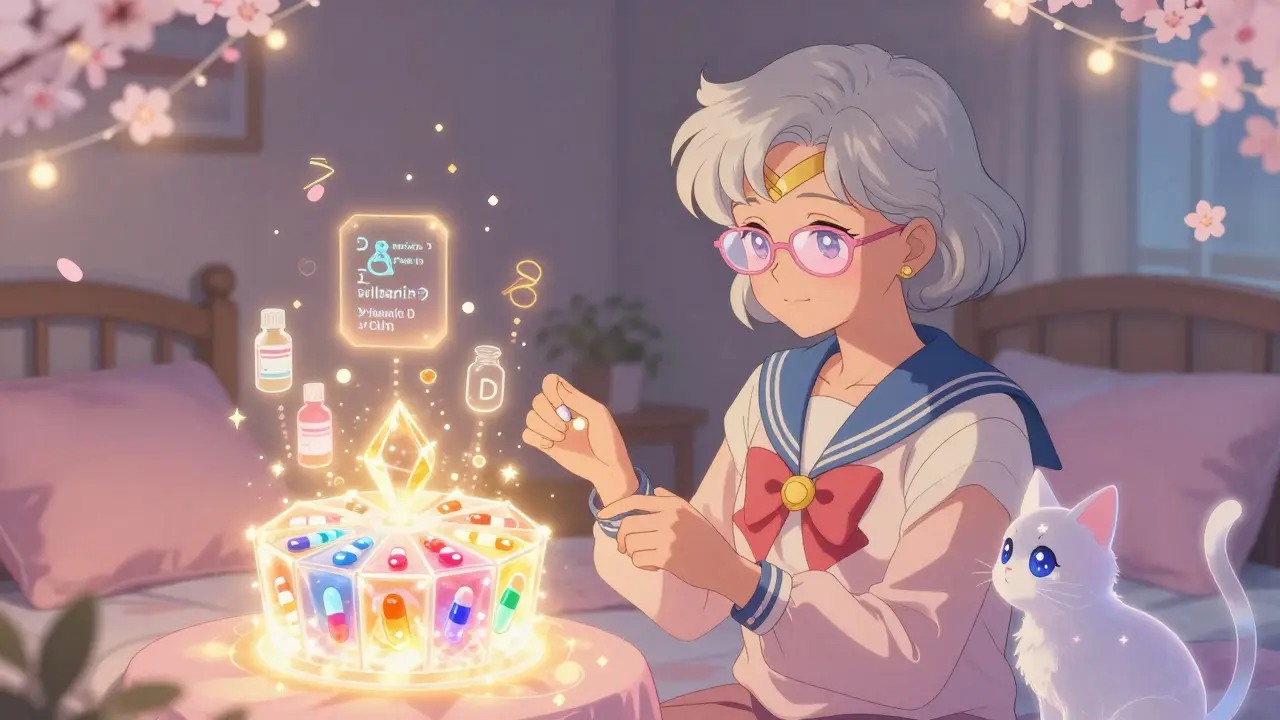
Every year, hundreds of thousands of people end up in the hospital because of mistakes made with their medications at home. It’s not because they’re careless. It’s because the system is broken. Taking five or six pills a day, at different times, with or without food, while juggling prescriptions, over-the-counter drugs, and supplements? It’s easy to mix them up. Miss a dose. Double up. Take the wrong one. And when you’re older, or managing chronic conditions, the consequences aren’t just inconvenient-they can be life-threatening.
The good news? You don’t have to live with this risk. A medication safety system built for your home doesn’t have to be expensive or complicated. You just need the right pieces in place-and the right habits to go with them.
Start with the List That Saves Lives
The CDC says the single most important thing you can do for medication safety is keep an accurate, up-to-date list of everything you take. Not just prescriptions. Everything. That includes aspirin, vitamin D, herbal teas, and that gummy supplement your cousin swore by.
Write it down. Or better yet, use your phone’s Notes app or a free template from the CDC’s website. Include:
- Drug name (brand and generic)
- Dosage (e.g., 10 mg, 500 mg)
- How often (twice daily, every 8 hours)
- Why you take it (e.g., "for blood pressure," "for joint pain")
- Prescribing doctor’s name
Update this list every time you get a new prescription, stop a medication, or try something new. Bring it to every doctor’s appointment-even the dentist. Many medication errors happen because a new provider doesn’t know what you’re already taking. A 2023 study found that 68% of medication-related hospital admissions in older adults were linked to incomplete or outdated lists.
Choose the Right Tool for Your Routine
Pill organizers? They’re better than nothing. But if you’re taking more than three medications at different times of day, a simple plastic box won’t cut it. You need something that talks back to you.
Here’s what actually works:
Basic Pill Organizers ($5-$25)
These are fine if you take one or two pills a day, at the same time. AM/PM boxes are great for someone on a single daily medication. But if you’re taking insulin at breakfast, warfarin at lunch, and a nighttime sleep aid? You’ll forget which compartment is which. And there’s no alert. No way to know if you took it. That’s a recipe for error.
Smart Dispensers ($150-$300 + $15-$50/month)
Devices like Hero, MedMinder, and DosePacker are designed for complex regimens. They load up to 90 doses at once. At the right time, they light up, beep, and flash. If you don’t open the compartment, they send a text to your family member. Some even have two-way video so a nurse can check in.
A 2022 NIH study tracked 200 seniors using these devices for six months. Adherence jumped to 98%. That’s not a typo. Most people in the study had been missing 20-30% of doses before. After, it dropped below 5%.
But here’s the catch: setup takes time. You need help from a family member or home health aide to load the pills. And if your medication changes-say, your doctor increases your dose or adds a new one-you can’t just swap it yourself. You have to call the company. That delay can be risky.
Digital Platforms (Like HomeMeds)
These aren’t devices. They’re apps paired with smartphone camera scanning. Point your phone at a pill bottle. The app reads the label, logs the medication, and syncs it with your care team. No manual entry. No guesswork.
HomeMeds, launched in 2024, is used by home health agencies across the U.S. It cuts medication assessment time by half. The AI version launching in Fall 2025 will automatically flag dangerous interactions-like mixing blood thinners with certain painkillers-and alert your pharmacist before you even take it.
It’s not for everyone. It requires smartphone use, Wi-Fi, and a care provider who uses the platform. But if you’re already seeing a home nurse or pharmacist regularly, this is the most accurate system available.
Build a System That Works With Your Life
Technology helps-but it’s not magic. The best systems combine tools with human support.
Here’s how to layer your safety net:
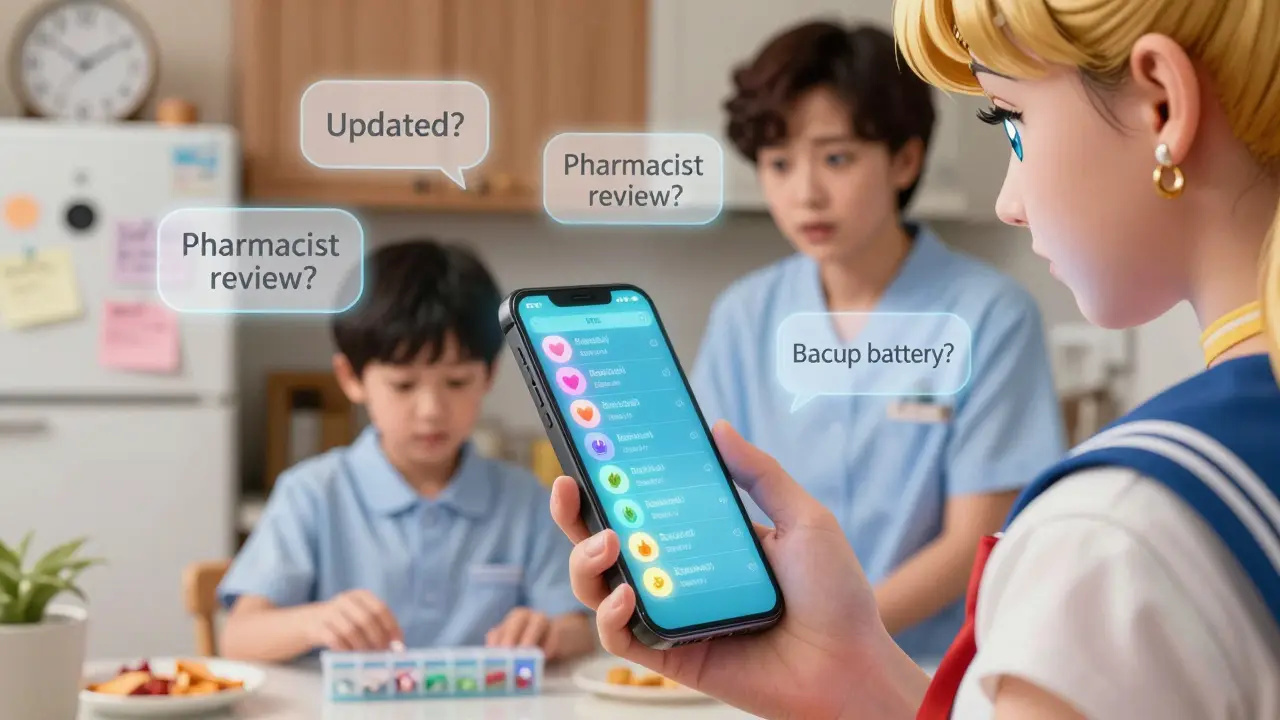
- Verify your list with your pharmacist every 90 days. They’re trained to spot interactions you might miss.
- Use a smart dispenser if you take more than three medications daily. It’s the most reliable way to ensure you take the right pill at the right time.
- Involve a caregiver. Even if you’re independent, have someone else check your pill box weekly. A second set of eyes catches mistakes you didn’t even know you made.
- Keep backup power. Smart devices need electricity. Plug them into a battery backup or keep extra batteries on hand. A power outage shouldn’t mean a missed dose.
- Store meds safely. Keep them in a cool, dry place-not the bathroom. Avoid mixing them in one container. Label everything. If a pill looks different, don’t take it. Call your pharmacy.
One 78-year-old woman in a 2024 AgingCare case study took eight medications. She used a Hero dispenser and had a home health aide come once a week to update her doses. Her adherence rate? 96%. She didn’t have one hospital visit in 18 months.
Watch Out for the Hidden Traps
Even the best systems have blind spots.
As-needed meds are the biggest problem. "Take as needed for pain" or "Use when dizzy" can’t be scheduled. That’s why some dispensers have a manual override button. But if you forget what you took last time? You might double up.
Also, don’t assume your doctor knows what’s in your medicine cabinet. Many patients take OTC meds without telling anyone. A 2023 survey found that 41% of seniors took ibuprofen daily for arthritis but never mentioned it to their cardiologist. That’s dangerous. Ibuprofen can raise blood pressure and interfere with heart meds.
And don’t ignore the learning curve. A Capterra survey of 1,200 users found that 41% of people who quit their smart dispenser said it was "too complicated." If you’re struggling, ask for help. Most companies offer free setup calls. Some even send a technician to your home.

What’s Coming Next
The future of medication safety is smarter-but not necessarily more complicated.
By 2027, most premium dispensers will use AI to check for dangerous drug combinations before you take a pill. Voice-activated systems are in testing for people with vision loss. Biometric locks will ensure only the right person opens the dispenser.
But the biggest shift? Integration. Right now, only 32% of home systems talk to your electronic health record. That means your doctor might not know if you missed a dose. In the next few years, that will change. Systems will automatically update your chart when you take a pill-or when you don’t.
And cost? It’s falling. In 2023, only 22% of low-income seniors could afford smart dispensers. By 2026, Medicare Advantage plans will cover them for eligible members. The math is simple: every $1 spent on medication safety saves $4.30 in hospital costs.
You Don’t Need to Do It All at Once
Start small. Pick one thing.
- Make your medication list today. Print it. Put it on the fridge.
- Swap your old pill box for a simple 7-day organizer with alarms.
- Ask your pharmacist to review your meds during your next visit.
You don’t need a $300 device to prevent a mistake. You just need awareness, a clear plan, and a little help. The goal isn’t perfection. It’s consistency. One less trip to the ER. One less fall. One less day spent confused because you took the wrong pill.
That’s the real win.
James Moreau
March 23, 2026 AT 15:15Just started using a Hero dispenser after my mom nearly mixed up her blood pressure meds last month. It’s pricey, but worth every penny. The text alerts to my sister? Game changer. I didn’t even know she was checking in until she said, ‘Hey, you took your 8am pill, right?’ Turns out I hadn’t. Thanks for the reminder, system.
Also, made a printed list and taped it to the fridge. Now my dog knows when it’s time for meds. She barks. It’s weird. But it works.
J. Murphy
March 25, 2026 AT 00:32rebecca klady
March 26, 2026 AT 19:12I’ve been using HomeMeds for 6 months now. My pharmacist loves it. I scan my bottles, it auto-logs everything. No more guessing if I took the blue pill or the green one. And the drug interaction alerts? Saved me from a bad combo with my fish oil.
Only thing I hate? When the Wi-Fi dies. Then I’m back to paper. Still better than nothing though.
Namrata Goyal
March 27, 2026 AT 07:57This whole ‘medication safety’ thing is just capitalist fearmongering. In my village in India, people take 10+ pills a day with no organizer, no app, no ‘smart’ thing. They just remember. Or they don’t. And they live. Maybe the real problem is that Westerners overmedicate and overthink everything.
Also, ‘CDC says’? Please. That’s like trusting a weatherman in a hurricane.
Alex Arcilla
March 28, 2026 AT 05:48Y’all are overcomplicating this. I’m 72. I take 6 pills. I use a 7-day box. I put it next to my coffee maker. I drink coffee every morning. Boom. Pill taken. I don’t need a robot telling me to take my vitamin D.
And if you’re forgetting meds because you’re too busy scrolling TikTok? Maybe put your phone down. Not buy a $300 gadget. Just saying.
Also, my cat knocks over my box every Tuesday. I call it ‘feline quality control.’ Works better than any app.
Brandon Shatley
March 29, 2026 AT 10:22My grandma used to keep all her pills in a mason jar labeled ‘stuff.’ She didn’t know what was what. One day she took a whole week’s worth of blood thinners. Ended up in the hospital. We got her a pill organizer after that. Simple. Cheap. No tech. Just a box with days on it.
Now she takes them like clockwork. No alarms. No texts. Just a box and a habit. Sometimes the old ways are the best ways. Tech is cool, but not always needed.
Blessing Ogboso
March 30, 2026 AT 23:13As a nurse from Nigeria who’s worked in both rural clinics and urban hospitals, I’ve seen how medication errors kill. In Lagos, people often use herbal remedies alongside prescriptions because they can’t afford the full regimen. In the U.S., people have access to smart devices but still forget because they’re overwhelmed.
The real issue isn’t the tool-it’s the system. We treat medication management like a personal failure instead of a structural one. You can’t expect someone working two jobs, caring for kids, and managing diabetes to remember 12 different pills without support.
What we need isn’t just better gadgets-we need community health workers who check in. Paid caregivers. Pharmacist home visits. Insurance that covers these tools, not just the hospital bills after the mistake. Tech helps, but human care saves lives. And that’s what’s missing.
Also, I love how this article mentions the dentist. So many forget that. My uncle died because his dentist gave him ibuprofen without knowing he was on warfarin. That’s on the system. Not on him.
Jefferson Moratin
March 31, 2026 AT 07:56The fundamental assumption here-that medication errors stem from cognitive overload-is incomplete. The deeper issue is epistemic fragility: the erosion of personal agency in the face of institutional complexity. We have outsourced our bodily autonomy to algorithms, pill dispensers, and medical bureaucracy.
A list is not a solution; it is a symptom of disempowerment. The real safety system is not external, but internal: the cultivation of embodied knowledge. The body remembers what the mind forgets. A ritual-placing pills beside the toothbrush, taking them with morning light-creates a somatic anchor.
Technology may prevent errors, but it cannot restore dignity. And dignity, not adherence, is the true metric of health.
Zola Parker
March 31, 2026 AT 22:02florence matthews
April 1, 2026 AT 00:58My mom used to hate her pill box. Said it felt like a prison. Then I got her a little plant-she waters it every morning. And next to it? A pill box. Now she takes her meds with her morning ritual. It’s not tech. It’s routine. And love.
Also, I’m so glad someone mentioned the bathroom. I used to keep all my meds there. Then I realized the humidity made them crumble. Who knew? 😅
Kenneth Jones
April 2, 2026 AT 04:54