Every year, millions of people take medications that save lives. But not all side effects are caught before they become serious. In fact, less than 10% of adverse reactions are ever reported. That means most of what we know about drug safety comes from a tiny fraction of real-world use. If you work in healthcare - whether you're a pharmacist, nurse, doctor, or even a patient managing multiple prescriptions - staying informed about global medication safety news isn't just helpful. It’s essential.
Where Global Medication Safety News Comes From
The world doesn’t rely on one source to track drug safety. Instead, it uses a network of organizations that share data across borders. At the center of this network is the World Health Organization (WHO) a global health authority that coordinates international drug safety efforts and publishes key guidelines and reports. In May 2025, WHO released a major update on controlled medicines, emphasizing that access to safe, affordable drugs like opioids and benzodiazepines is a human right - not just a regulatory issue. This wasn’t just a policy paper. It was a call to action.
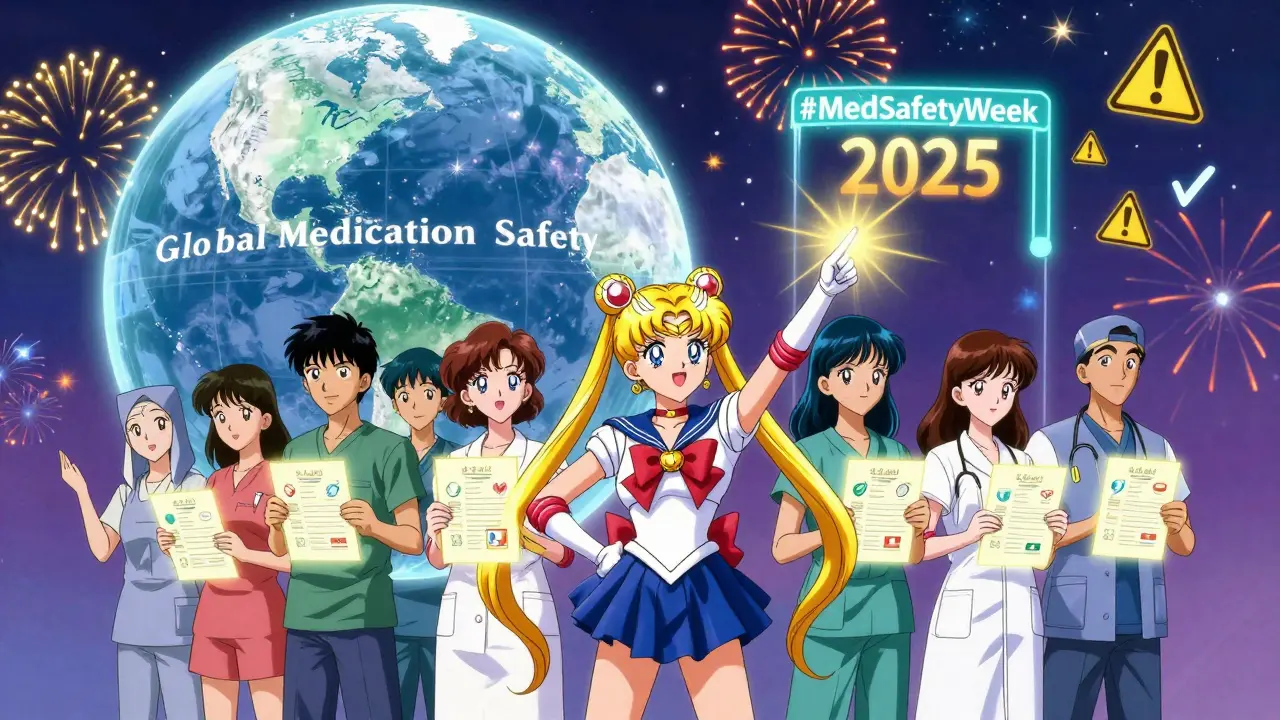
Another key player is the Uppsala Monitoring Centre (UMC) the global hub for collecting and analyzing adverse drug reaction data from 150 countries. UMC runs the annual #MedSafetyWeek a global campaign since 2016 that encourages patients and providers to report side effects, held every November. In 2025, it’s celebrating its 10th anniversary with a theme: "we can all help make medicines safer." The campaign isn’t just posters and tweets. It includes real tools - mobile apps, reporting templates, and training materials - distributed to clinics, pharmacies, and hospitals worldwide.
In the U.S., the Institute for Safe Medication Practices (ISMP) a nonprofit that develops evidence-based safety practices for pharmacies and hospitals releases its biennial "Targeted Medication Safety Best Practices" report. The 2025-2026 edition focused on weight-based dosing for children, vaccine administration, and how pharmacies handle returned medications. One pharmacist in Ohio told me her team used the checklist to catch a dosing error that could have killed a 4-year-old. That’s not hypothetical. That’s real.
How to Get Alerts Before It’s Too Late
Waiting for a news headline or a colleague to mention a drug warning is too slow. You need direct, reliable alerts. Here’s how to set them up:
- Subscribe to WHO’s Medicines Safety Updates - These are free email bulletins sent out monthly. They summarize new safety signals, updated guidelines, and upcoming global events. No fluff. Just facts.
- Register for #MedSafetyWeek materials - Starting in August each year, UMC opens its resource portal. Download posters, infographics, and digital reporting guides. Even if you’re not in a hospital, these are useful for community pharmacies and home care providers.
- Download the Yellow Card app - If you’re in the UK, this is your go-to tool. The Medicines and Healthcare products Regulatory Agency (MHRA) the UK’s official body for monitoring drug safety and enforcing regulations runs the Yellow Card scheme. The app lets you report side effects in under 90 seconds. It syncs with national databases and sends you confirmation. Over 300,000 people used it in 2024.
- Follow WHO and UMC on social media - Use hashtags like #MedSafetyWeek, #ReportSideEffects, and #MHRAYellowCard. These aren’t just marketing. They’re live channels where safety alerts get pushed out in real time.
Don’t forget World Patient Safety Day a global observance on September 17 each year focused on preventing harm in healthcare settings. In 2025, the theme was "ensuring safe care for every newborn." Hospitals in Brazil, Canada, and South Africa held live webinars. Recordings are still online. You can watch them anytime.
What You’re Missing: The Data Gap
Here’s the uncomfortable truth: rich countries report hundreds of adverse reactions per million people. Poor countries report fewer than 10. That’s not because drugs are safer in low-income regions. It’s because reporting systems are underfunded, understaffed, or nonexistent. WHO’s 2024 Global Patient Safety Report showed that only 18 of 108 countries had fully functional pharmacovigilance systems. That means if a new drug causes liver damage in Nigeria or Nepal, it might take months - or years - for anyone to know.
That’s why global reporting matters. When a pharmacist in Australia reports a reaction to a generic statin, that data flows into UMC’s global database. If the same reaction shows up in Germany, Canada, and India, WHO flags it. That’s how a drug gets a safety update - not because a company admitted fault, but because thousands of small reports added up.
One study from 2024 found that countries with strong reporting systems saw a 40% drop in hospitalizations from drug reactions within two years. That’s not magic. That’s data.
Tools That Actually Work
Not all "safety resources" are created equal. Some are vague. Others are outdated. Here are the ones that deliver:
| Tool | Who Uses It | Key Feature | Proven Impact |
|---|---|---|---|
| ISMP Best Practices Worksheets | Pharmacists, hospital safety officers | Step-by-step checklists for dosing and dispensing | 15-22% reduction in errors in early adopters |
| Yellow Card App (UK) | Patients, GPs, pharmacists | Mobile reporting with auto-submission to MHRA | 300,000+ reports in 2024; 45% from non-clinical users |
| Medi-Span Clinical Decision Support | Hospitals in Saudi Arabia, Australia | AI-powered drug interaction alerts | 40% fewer medication errors in pilot sites |
| WHO Global Patient Safety Report | Policy makers, regulators | Annual country-by-country progress metrics | Guides funding and reform in 108 countries |
One nurse in Bristol told me she started using the ISMP worksheets after her unit had two near-misses with insulin dosing. Within six weeks, they cut those errors to zero. She didn’t need a fancy system. She needed a checklist.
The Hidden Threat: Medical Misinformation
While we’re focused on drug reactions and reporting systems, there’s a quieter danger: misinformation. The Emergency Care Research Institute (ECRI) a nonprofit that researches patient safety risks and publishes annual top threat lists named social media misinformation as the third biggest patient safety issue in 2025. Why? Because false claims about vaccines, drug interactions, and "natural cures" are driving people to stop taking life-saving meds.
ECRI’s data shows regions with high social media use saw an 18% spike in false adverse event reports - not because drugs were dangerous, but because people believed rumors. One Facebook group in the U.S. claimed a common blood pressure pill caused blindness. The claim was debunked by WHO. But by then, 2,000 people had stopped taking it. Two had strokes.
There’s no app to fix this. But awareness helps. If you see a viral post about a drug danger, check it against WHO’s site or the Yellow Card database before sharing. One simple habit: verify before you share.
What’s Next? The Future of Drug Safety
By 2027, AI will play a bigger role. Medi-Span’s system is already using machine learning to predict which drug combinations are most likely to cause harm. WHO is testing AI-powered symptom checkers that let patients report side effects through voice or text. In beta tests, these tools caught 30% more reactions than traditional forms.
But tech alone won’t fix the problem. The real breakthrough will come when reporting becomes routine - not optional. When every pharmacist, nurse, and patient knows how to report a side effect, and when every country has the tools to act on that data.
That’s why the next step isn’t about downloading more apps. It’s about asking: Who in my workplace is responsible for tracking drug safety? Is there a system? Is it used? Is it connected to global networks?
Start there. Because the next life saved might depend on you.
How often are global medication safety alerts updated?
WHO sends monthly updates via email. The Uppsala Monitoring Centre releases new safety signals as soon as they’re confirmed - sometimes within days of a report. ISMP updates its Best Practices every two years, but publishes interim advisories if urgent risks emerge. For real-time alerts, use the Yellow Card app or follow #MedSafetyWeek on social media.
Can patients report side effects outside the UK?
Yes. Every country with a national pharmacovigilance program allows patient reporting. In the U.S., use the FDA’s MedWatch portal. In Canada, it’s Health Canada’s Adverse Reaction Monitoring Program. The UMC coordinates a global network of 150 countries - so even if your country doesn’t have a website, you can still report through WHO’s global portal. The process is standardized.
Do I need to be a healthcare professional to report?
No. In fact, over 40% of reports to the UK’s Yellow Card scheme come from patients or caregivers. You don’t need medical training. Just know the drug name, the side effect, and when it happened. The forms are designed to be simple. Your report matters - even if you’re not a doctor.
What’s the difference between WHO and national agencies like MHRA?
WHO collects and analyzes data from all member countries to spot global patterns. MHRA (in the UK) or the FDA (in the U.S.) regulate drugs within their own borders and respond to local reports. Think of WHO as the global early-warning system and national agencies as the local responders. They work together - a report to MHRA gets shared with WHO, and WHO alerts all countries if a risk is confirmed.
Are herbal and homeopathic medicines covered by safety reporting?
Yes. The Yellow Card scheme and WHO’s global system include herbal remedies, vitamins, and homeopathic products. These aren’t always regulated like prescription drugs, but they can still cause serious reactions - especially when mixed with other medications. Always report side effects from any product you take.
Next Steps for Healthcare Workers
If you’re a pharmacist, start with the ISMP 2025-2026 worksheets. Print them. Put them in your dispensing area. Talk to your team. Use them in your next safety meeting.
If you’re a nurse or doctor, sign up for WHO’s email alerts. Bookmark the WHO Global Patient Safety Report. Attend World Patient Safety Day events - even if they’re virtual.
If you’re a patient, download the Yellow Card app. Report that weird rash after taking your new pill. You’re not complaining. You’re helping.
Medication safety isn’t about one big change. It’s about thousands of small actions - reporting, sharing, checking, asking. The next drug warning could come from you.