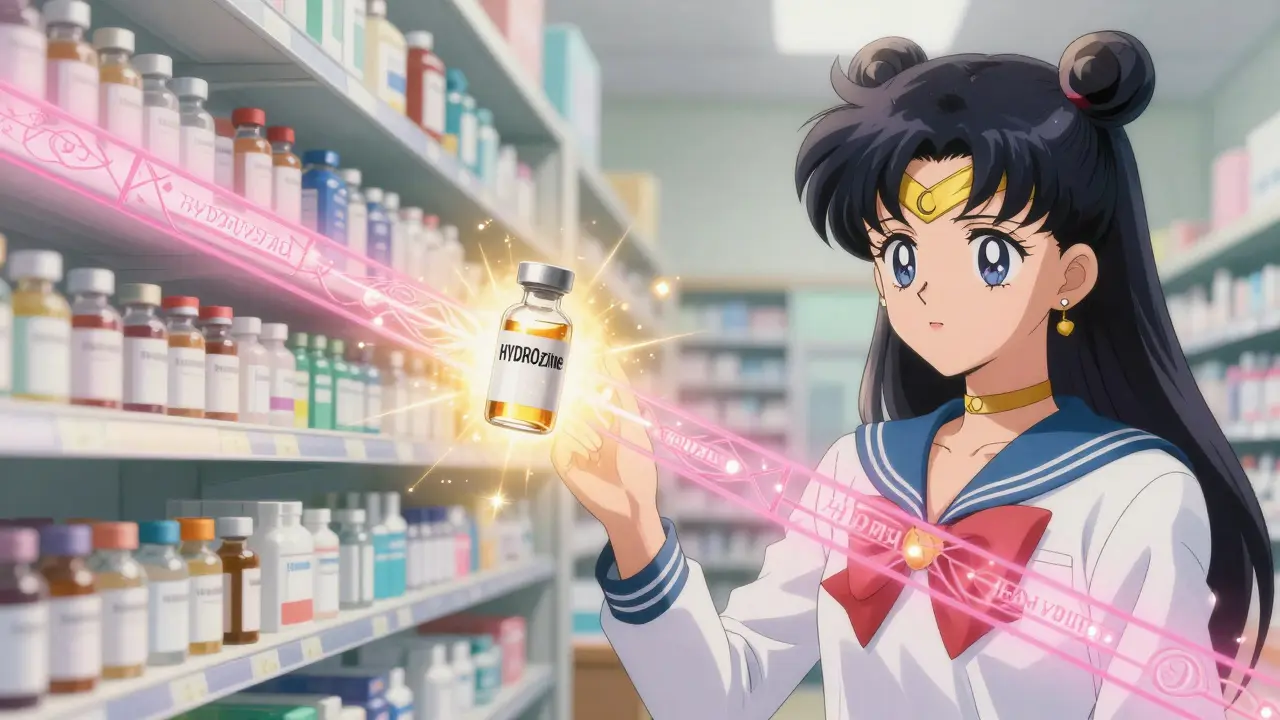
Every year, thousands of patients in the U.S. receive the wrong medication-not because of a doctor’s mistake, but because two pills look too similar on the shelf. A vial of hydralazine next to a bottle of hydroxyzine. A box of spironolactone beside spiramycin. These aren’t typos. They’re packaging disasters waiting to happen. And in pharmacies, where speed and volume rule the day, this kind of confusion kills.
According to the Institute for Safe Medication Practices (ISMP), about 18% of all medication errors reported in the U.S. come from look-alike packaging or similar drug names. That’s roughly 10,000 errors annually. Some lead to hospitalization. Others lead to death. The U.S. Food and Drug Administration (FDA) estimates that 20% of these errors stem purely from confusing packaging design-not the drug names themselves. So how do you stop it? It’s not about working harder. It’s about working smarter.
Start with Physical Separation
One of the simplest, cheapest, and most effective fixes is physical separation. Keep look-alike drugs as far apart as possible in storage. No, not just on different shelves. On different racks. In different drawers. In different zones of the pharmacy.
A 2020 study from the University of Arizona found that separating high-risk drug pairs reduced dispensing errors by 62%. That’s not a small win. That’s life-saving. Imagine a pharmacy where insulin glargine and insulin lispro aren’t just stored in separate areas-they’re in entirely different cabinets with color-coded labels. Or where heparin and saline flushes are kept on opposite sides of the automated dispensing cabinet (ADC). That’s not luxury. That’s baseline safety.
But space is tight in many pharmacies, especially community ones. The fix? Shelf dividers. They cost $200 to $500 per pharmacy. You can buy them online. Install them in an afternoon. And suddenly, you’ve created a visual barrier that tells staff: “These aren’t the same. Don’t mix them.”
Use Tall Man Lettering-But Do It Right
Tall Man Lettering (TML) isn’t new. It’s been around since the early 2000s. But it’s still underused. TML highlights differences in similar drug names by capitalizing the parts that differ. For example:
- DOPamine vs. DoBUTamine
- HYDROxyzine vs. HYDRAZINE
- BUPRENORphine vs. BUTORPHANOL
ISMP’s 2019 analysis showed TML reduces selection errors by 47%. The FDA recommends it for all high-risk pairs. But here’s the catch: if your EHR system doesn’t display TML consistently, it’s useless. A 2022 survey found only 68% of hospitals use standardized TML formats. And if your pharmacy’s computer shows “Dopamine” while the label says “DOPamine,” you’ve created more confusion than clarity.
Make sure your pharmacy management system supports TML. If it doesn’t, demand it from your vendor. Epic, Cerner, and other major systems have had this feature for years. If your system is outdated, it’s not just a tech issue-it’s a patient safety issue.
Barcode Scanning Is Non-Negotiable
Barcode scanning is the safety net no pharmacy should go without. When a pharmacist scans a drug, the system checks it against the prescription. If it doesn’t match? An alarm sounds. No guesswork. No assumption. Just a clear stop.
The Agency for Healthcare Research and Quality (AHRQ) found that when barcode scanning is fully integrated into the workflow, medication administration errors drop by 86%. That’s not a suggestion. That’s a mandate for any pharmacy serious about safety.
But here’s the problem: staff bypass it. They scan the box instead of the vial. They swipe a barcode twice because they’re in a rush. A 2021 study from UC San Francisco found that 5-12% of scans are skipped or done incorrectly. So you can’t just install scanners. You have to enforce them.
Make scanning mandatory. Tie it to your quality assurance checklist. Audit it weekly. Reward compliance. And if someone consistently skips it? Talk to them. Don’t punish-educate. Most people don’t skip scans because they’re lazy. They skip them because they’ve never seen a real error happen. Show them what went wrong in another pharmacy. Make it real.
Combine Strategies-And Watch Errors Drop
None of these strategies work alone. Not really.
A 2023 study in the American Journal of Health-System Pharmacy found that pharmacies using all three-physical separation, TML, and barcode scanning-reduced look-alike errors by 94%. That’s almost complete elimination. That’s not magic. That’s systems thinking.
Take Mayo Clinic’s 2023 case study. They separated heparin and saline products. They enabled TML across all EHR displays. And they made barcode scanning mandatory. Result? Zero look-alike errors over 12 months. Not one. And they saved $287,000 in prevented errors-more than six times what they spent to implement the program.
That’s the return on investment. It’s not just about safety. It’s about money. And reputation. And trust.
Don’t Forget New Drugs and Drug Shortages
Most pharmacies have a process for reviewing new drugs when they’re added to the formulary. But how many check for look-alike risks?
Erin Fox, PharmD, at University of Utah Health, says: “When a new product arrives, especially during a drug shortage, you have to re-evaluate. You might be swapping out one drug for another that looks identical to something else on your shelf.”
That’s why ISMP updates its List of Confused Drug Names quarterly. In January 2024, they added 17 new pairs-including buprenorphine and butorphanol. If your pharmacy hasn’t reviewed this list in the last six months, you’re at risk.
Set a calendar reminder. Every quarter, run a quick audit. Pull up your top 20 most dispensed drugs. Compare them to ISMP’s latest list. If something matches? Move it. Label it. Scan it.
Train Staff Like Their Lives Depend on It
Most pharmacists and technicians know about look-alike drugs. But they don’t always act on it. Why? Because they’re tired. Overworked. Undertrained.
A 2023 national survey found that 78% of pharmacy directors say staff resistance is the biggest barrier to implementing safety measures. But resistance isn’t laziness. It’s lack of context.
Don’t just hand out a pamphlet. Show them videos of real errors. Bring in a patient who was harmed. Let them read the incident report. Make them feel the weight of what’s at stake.
And don’t wait for an error to happen to train them. Train before it happens. Run drills. Simulate a wrong dispensing. See how long it takes them to catch it. Make it part of orientation. Make it part of monthly safety meetings.
What’s Next? The Future Is Here
The FDA just released draft guidance in February 2024 requiring standardized Tall Man Lettering for 25 high-risk drug pairs. The National Council for Prescription Drug Programs (NCPDP) is rolling out a standardized LASA data format by late 2025. And pilot programs at Johns Hopkins are using AI to scan packaging images and flag look-alikes before they even hit the shelf.
This isn’t science fiction. It’s the next step. And pharmacies that wait for regulation to force them into action will be the ones that pay the price-in lawsuits, in reputational damage, and in lives lost.
The tools are here. The data is clear. The cost of doing nothing? Far higher than the cost of fixing it.
What is the most common cause of look-alike packaging errors in pharmacies?
The most common cause is the visual similarity between drug packaging-especially when drugs with similar names are stored next to each other. Examples include hydralazine and hydroxyzine, or spironolactone and spiramycin. Poor labeling, inconsistent Tall Man Lettering, and lack of physical separation significantly increase the risk.
How effective is Tall Man Lettering at preventing errors?
Tall Man Lettering reduces selection errors by 47% according to ISMP’s analysis of 15 hospital systems. It works best when consistently applied across all systems-prescribing, labeling, and electronic health records. However, it only addresses name confusion and does not prevent errors caused by similar packaging design.
Can barcode scanning eliminate all look-alike errors?
No, but it comes close. When properly used, barcode scanning reduces medication administration errors by 86%. However, errors still occur if staff bypass the system, scan the wrong barcode, or if the system isn’t integrated with the prescription. It’s a powerful tool, but not a standalone solution.
What’s the cheapest way to start preventing look-alike errors?
The cheapest and fastest step is physical separation using shelf dividers, which cost $200-$500. Combine that with reviewing ISMP’s quarterly List of Confused Drug Names. Both require no technology and can be done immediately. These two steps alone can cut error rates by 30-50% in many settings.
Why do some pharmacies still not use these safety measures?
Budget constraints, outdated EHR systems, lack of space, and staff resistance are the main barriers. Community pharmacies are less likely to implement advanced tech like barcode scanning due to cost. But even small changes-like labeling, separation, and staff training-can make a big difference without major investment.
Tom Forwood
February 8, 2026 AT 03:31Chelsea Cook
February 9, 2026 AT 00:26Sam Dickison
February 10, 2026 AT 18:50Tori Thenazi
February 12, 2026 AT 02:17John McDonald
February 13, 2026 AT 12:15Jessica Klaar
February 15, 2026 AT 02:30Monica Warnick
February 15, 2026 AT 22:57Brett Pouser
February 16, 2026 AT 01:07Karianne Jackson
February 17, 2026 AT 08:55PAUL MCQUEEN
February 17, 2026 AT 20:39Kathryn Lenn
February 18, 2026 AT 14:24John Watts
February 18, 2026 AT 16:42Andy Cortez
February 18, 2026 AT 23:12Randy Harkins
February 19, 2026 AT 02:42Tori Thenazi
February 20, 2026 AT 15:47