
Missed Dose Decision Helper
Important Medical Disclaimer
This tool provides general guidelines based on standard medical literature (NHS, FDA). It is not a substitute for professional medical advice. Always consult your doctor or pharmacist for specific instructions regarding your prescription.
Have you ever woken up in a panic because you realized you forgot your morning pill? You are not alone. In fact, nearly half of adults on long-term medication regimens struggle with sticking to their schedules. This isn't just about discipline; it’s a massive public health issue that costs the healthcare system billions and puts patients at real risk. But here is the good news: you don’t need to guess what to do next. There is a clear, evidence-based path forward for almost every type of medicine.
The old advice to "take it as soon as you remember" is dangerously vague. Taking a missed dose too late can lead to an overdose, while skipping it entirely might leave your condition untreated. The right move depends entirely on what kind of medication you are taking. Let’s break down exactly how to handle a missed dose based on the specific drug class, using guidelines from major health organizations like the NHS and the FDA.
The Golden Rule: When in Doubt, Skip It
Before we dive into specific drugs, there is one universal principle that applies to 99% of medications: never double up. The Scottish Patient Safety Programme confirmed that doubling doses should be avoided for almost all medicines. The only common exception is hormonal contraception, which we will cover later.
If you realize you missed a dose and more than half of the dosing interval has passed, skip the missed dose completely. Resume your regular schedule with the next dose. For example, if you take a medication twice a day (every 12 hours) and you miss the 8 AM dose but remember at 6 PM, it is closer to your next 8 PM dose. Skip the 8 AM dose. Taking both would put too much drug in your system at once, increasing the risk of side effects or toxicity.
This rule exists because most drugs have a "therapeutic window." Too little, and they don’t work. Too much, and they become toxic. Your body needs time to clear the medication. Rushing this process by doubling up rarely helps and often harms.
Anticoagulants: Blood Thinners Require Precision
Blood thinners are high-alert medications. Missing a dose can increase your risk of stroke or blood clots, but taking extra can cause dangerous bleeding. The protocol changes depending on whether you are on older warfarin therapy or newer direct oral anticoagulants (DOACs).
| Medication Type | Action if Remembered Early | Action if Remembered Late |
|---|---|---|
| Warfarin | If remembered before midnight, take it. | If after midnight, skip it. Never double dose. |
| DOACs (Apixaban, Rivaroxaban) | Take if within 6 hours of scheduled time. | Skip if more than half the interval has passed. |
For Warfarin, NHS guidelines are strict. If you miss a dose and remember it before midnight, you can still take it. However, if you wake up the next morning and realize you missed last night’s dose, skip it entirely. Do not try to catch up. Warfarin stays in your system for days, so missing one dose doesn’t instantly stop its effect, but doubling up spikes your INR (International Normalized Ratio), raising bleeding risks.
Newer drugs like apixaban or rivaroxaban have shorter half-lives. The American College of Chest Physicians recommends taking the missed dose if you remember within six hours of when you were supposed to take it. If it’s been longer than that, skip it. The goal is to keep the drug levels steady without spiking them.
Diabetes Medications: Timing Is Everything
Diabetes management is complex because different medications affect blood sugar in different ways. Insulin, in particular, requires careful timing relative to meals.
For rapid-acting insulin (like Humalog), the American Diabetes Association states you should take it within 15 minutes of eating. If you forget and eat first, take it as soon as you remember, but do not wait until your next meal. Never double the dose to "make up" for the missed one. Hypoglycemia (low blood sugar) is a severe risk here.
Long-acting insulins (like Lantus) are different. If you miss your evening injection by more than two hours, consult your healthcare provider before administering it. Taking it too late can cause low blood sugar overnight while you sleep.
Oral medications vary too. Metformin is forgiving; you can usually take it up to two hours late without issue. However, sulfonylureas (like glipizide) stimulate insulin production regardless of food intake. If you miss a dose, skip it. Taking it later could cause your blood sugar to drop dangerously low, especially if you haven’t eaten.

Cardiovascular Drugs: Protecting Your Heart Rhythm
Heart medications often have narrow therapeutic indices, meaning the difference between a helpful dose and a harmful one is small. Beta-blockers, ACE inhibitors, and antiarrhythmics fall into this category.
If you miss a beta-blocker (like metoprolol), take it if you remember within four hours. If it’s closer to your next dose, skip it. Doubling up can cause bradycardia (dangerously slow heart rate). ACE inhibitors (like lisinopril) follow similar logic but are slightly less urgent due to wider safety margins.
Antiarrhythmics like amiodarone are stricter. The European Heart Rhythm Association mandates immediate clinical consultation for any missed dose. These drugs prevent irregular heartbeats, and missing even one can trigger a rebound arrhythmia. Don’t guess here-call your doctor.
Diuretics (water pills) present a unique problem: nocturia. If you miss your morning furosemide, take it only if you remember before 2 PM. Taking it later will make you urinate frequently throughout the night, disrupting your sleep and potentially causing dehydration.
Seizure Medications: Consistency Prevents Seizures
For people with epilepsy, consistency is critical. The American Epilepsy Society notes that missing even one dose of antiepileptics like levetiracetam or valproate increases seizure risk significantly. Pharmacokinetic modeling shows a 27-43% higher risk per missed dose.
The rule here is the "50% interval" guideline. If you remember the missed dose within 50% of the dosing interval (for example, within 6 hours for a twice-daily medication), take it immediately. If it’s been longer than that, skip it to avoid toxicity. Missing two consecutive doses requires immediate contact with your neurologist. Stability in blood levels is the key to preventing seizures.
Special Cases: Contraceptives, Antibiotics, and Immunosuppressants
Some medications have unique rules that defy the general "skip it" advice.
Hormonal Contraceptives: This is the main exception to the no-double-dosing rule. If you miss one active pill in a combined oral contraceptive pack, the CDC recommends taking two pills as soon as you remember (the missed one plus the current one). Use backup contraception for seven days. If you miss two or more, the protocol becomes more complex and varies by brand, so check the leaflet or call your pharmacist.
Antibiotics: Time-dependent antibiotics (like penicillins) need to be taken regularly to keep bacteria suppressed. Take the missed dose if you remember within two hours. If it’s later, skip it. Concentration-dependent antibiotics (like aminoglycosides) require provider contact if missed, as blood levels must be monitored. Also, finish your full course even if you feel better; stopping early contributes to antimicrobial resistance.
Immunosuppressants: Transplant patients taking tacrolimus or similar drugs must contact their transplant team immediately for any missed dose. Studies show a 4.7-fold increased risk of acute rejection within 30 days of nonadherence. There is no room for self-management here.
Tools to Help You Stay on Track
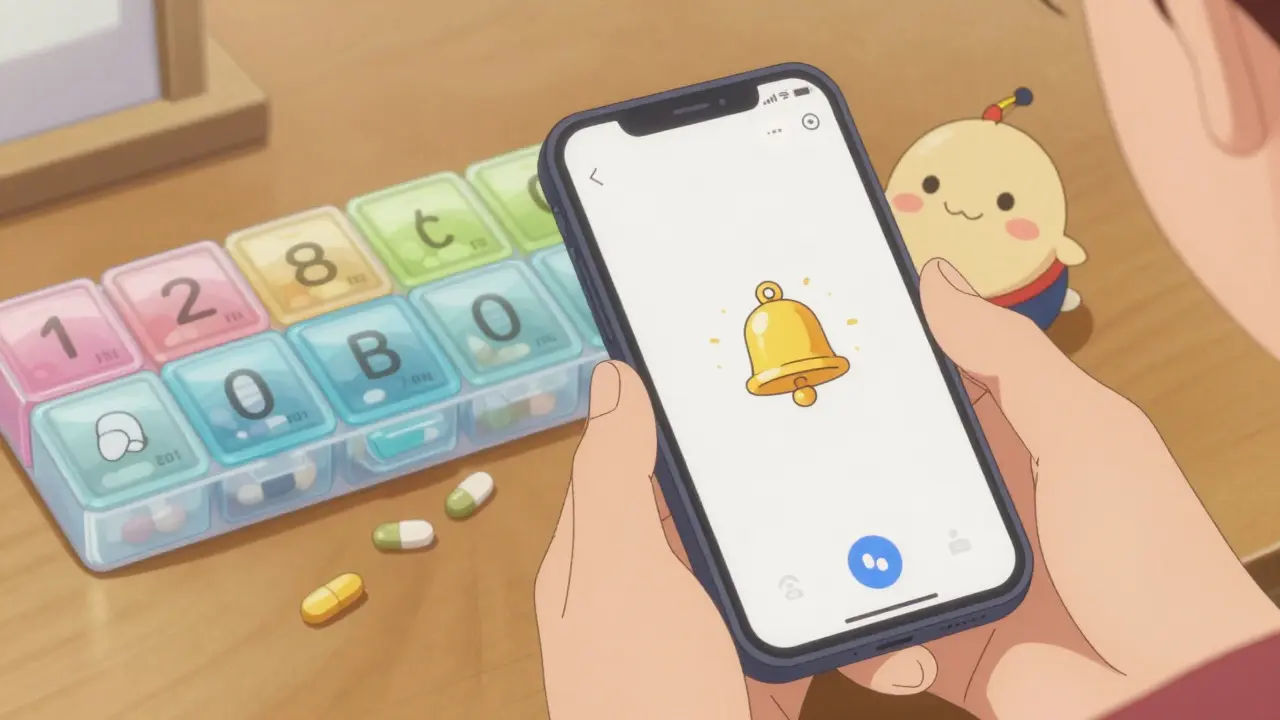
Prevention is better than cure. Technology has made staying adherent easier than ever. Smartphone apps like Medisafe have shown to reduce missed doses by over 38%. They send reminders and log when you take your meds.
Pill organizers with time-specific compartments also help, improving adherence by 27%. If you are on multiple medications, consider asking your pharmacist for a blister pack service. They pre-sort your pills into daily doses, removing the guesswork entirely.
Finally, educate yourself. Ask your doctor or pharmacist specifically: "What should I do if I miss a dose of this specific medication?" Write that answer down and keep it with your prescription bottle. Knowledge reduces anxiety and keeps you safe.
Can I take two pills at once if I missed one yesterday?
Generally, no. For 99% of medications, doubling up can cause toxicity or severe side effects. The only common exception is combined oral contraceptives, where taking two pills is recommended if one is missed. Always check with your pharmacist or doctor for specific instructions.
What if I miss a dose of my blood pressure medication?
If you remember within 4 hours, take it. If it’s closer to your next dose, skip it. Never double the dose, as this can cause your heart rate to drop too low or your blood pressure to plummet, leading to dizziness or fainting.
Is it safe to skip a dose of antibiotics?
If you remember within 2 hours, take it. If later, skip it and resume your normal schedule. Do not double up. However, ensure you finish the entire prescribed course to prevent antibiotic resistance and recurrence of infection.
What should I do if I miss a dose of insulin?
For rapid-acting insulin, take it as soon as you remember if you haven’t eaten yet. If you’ve already eaten, take it immediately but monitor your blood sugar closely. For long-acting insulin, if it’s been more than 2 hours, consult your doctor before injecting to avoid hypoglycemia.
How can I prevent missing doses in the future?
Use smartphone reminder apps, set alarms on your phone, or use a weekly pill organizer. Linking medication times to daily habits (like brushing teeth) can also help. Ask your pharmacist about automated dispensing systems if you take multiple medications.