Salt Substitute Safety Calculator
Your Medication Status
Kidney Function
Salt Substitute Use
Safety Results
Please complete the form to see your safety assessment
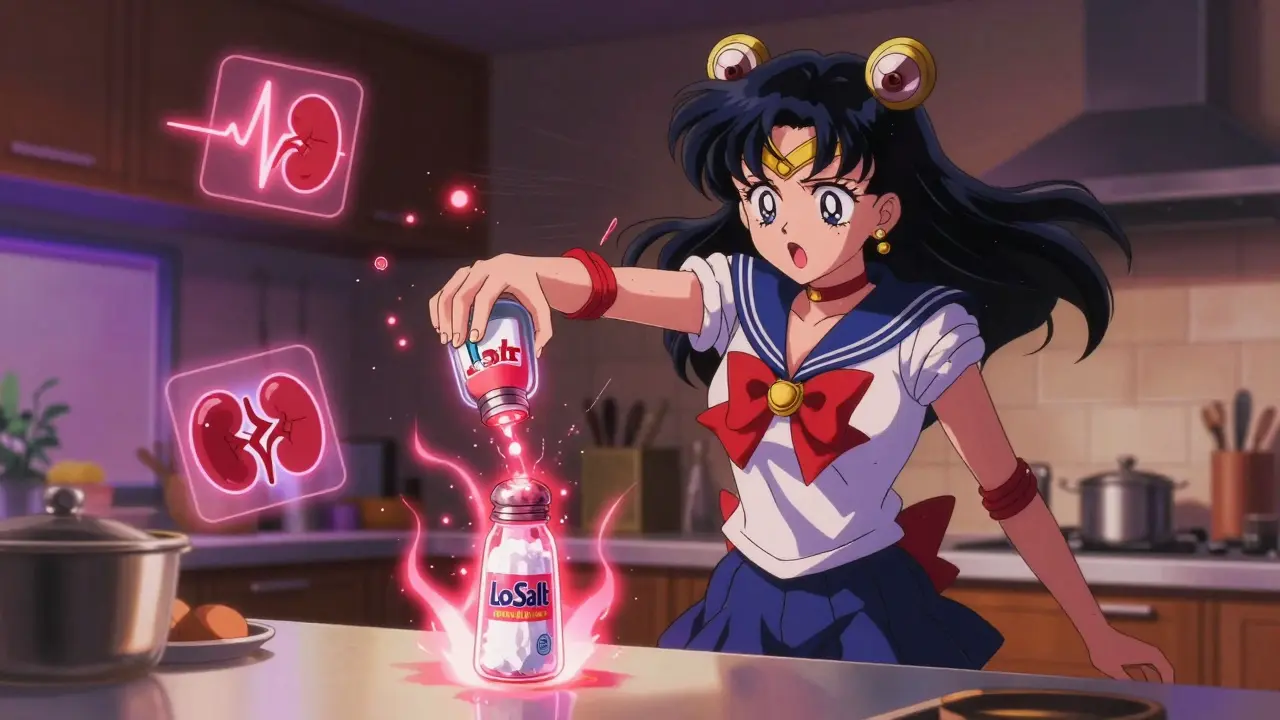
Most people think swapping regular salt for a "healthier" salt substitute is a smart move-especially if they’re trying to lower their blood pressure. But if you’re taking an ACE inhibitor or an ARB, that swap could be silently pushing your potassium levels into dangerous territory. This isn’t a rare side effect. It’s a quiet, often unnoticed risk that sends people to the ER every year.
What’s in those "lite" salt packets?
Salt substitutes like LoSalt, NoSalt, or Heart Salt don’t just reduce sodium-they replace it with potassium chloride. A typical half-and-half blend contains 50% sodium chloride and 50% potassium chloride. Pure substitutes can be as high as 66% potassium chloride. That means every teaspoon you use adds about 400-600 mg of potassium to your diet. For someone with healthy kidneys, that’s fine. For someone on blood pressure meds like lisinopril, losartan, or enalapril? It’s a ticking time bomb.ACE inhibitors and ARBs work by blocking a hormone system that normally tells your kidneys to get rid of potassium. When that system is suppressed, potassium builds up. Add a salt substitute on top, and your body has no way to flush the extra potassium out. The result? Hyperkalemia-serum potassium levels above 5.0 mmol/L. At 6.5 mmol/L or higher, you risk cardiac arrest. One documented case in 2004 showed a 72-year-old man with mild kidney trouble and a potassium level of 7.8 mmol/L after using LoSalt while on nabumetone and an ACE inhibitor. He suffered cardiac arrest.
Who’s at the highest risk?
You don’t need to have full-blown kidney disease to be in danger. About 1 in 7 U.S. adults has an estimated glomerular filtration rate (eGFR) below 60 mL/min/1.73m², meaning their kidneys can’t efficiently remove potassium. That’s 14.5% of the population. Add to that the fact that 40% of people with high blood pressure are on ACE inhibitors or ARBs, and you’ve got a massive overlap.Diabetics are especially vulnerable. Up to 20% of people with diabetes and kidney disease have hyporeninemic hypoaldosteronism-a condition where the body doesn’t produce enough aldosterone to help excrete potassium. The American Diabetes Association warns this group faces a "disproportionately high" risk when combining salt substitutes with these medications.
Even if you think you’re fine, your doctor might not know you’re using these products. A 2023 study in JAMA Internal Medicine found 78% of patients on ACE inhibitors had no idea dietary potassium could raise their risk. That’s not because they’re careless-it’s because no one told them.
What do the studies say?
It’s not all bad news. In healthy people with normal kidney function, potassium-enriched salt substitutes have real benefits. A 2025 study in JAMA Network Open followed 21,000 people for five years and found a 14% drop in stroke recurrence among those using substitutes with 25% potassium chloride. Blood pressure went down. No major spikes in potassium.But here’s the catch: that study excluded people with advanced kidney disease. When you look at the same group-people with CKD stage 3 or higher-the numbers flip. A 2019 meta-analysis of over 1.2 million people found that hyperkalemia events jumped from 0.8 per 100 person-years in the general population to 8.7 per 100 person-years in those with kidney disease who were also on ACE inhibitors or ARBs.
That’s a tenfold increase. And it’s not theoretical. Reddit threads and Drugs.com reviews are full of stories: "Woke up in the ER with potassium at 6.3," "Muscle weakness, irregular heartbeat after switching to potassium salt." These aren’t outliers. They’re predictable outcomes.

What about herbs and spices?
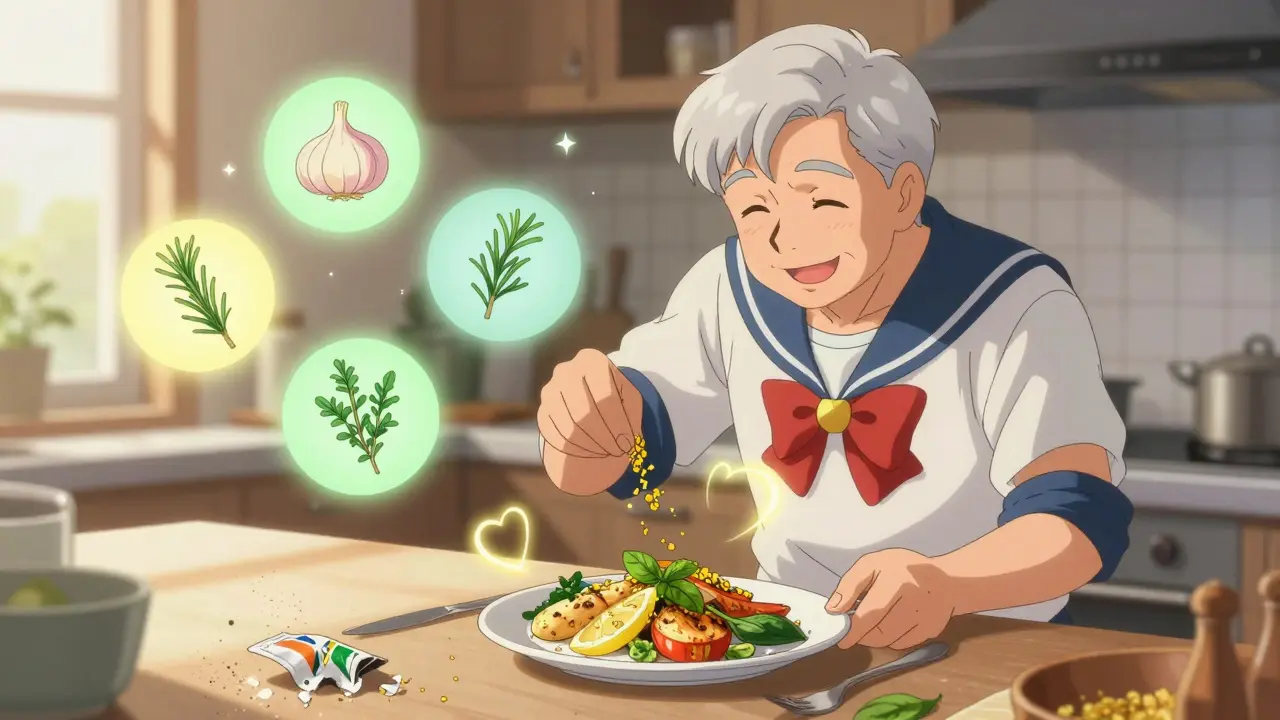
If you’re worried about potassium, there’s a safer way to cut sodium: use herbs, spices, lemon juice, garlic, or vinegar. Products like Mrs. Dash offer flavor without the potassium. You won’t drop sodium as dramatically as with a potassium substitute-you’ll get about 15-20% reduction instead of 30-50%. But you also won’t risk your heart.And here’s the thing: cooking from scratch with fresh ingredients naturally lowers sodium. Most of the sodium in our diets comes from processed foods-75%, according to the American Heart Association. So if you’re eating canned soups, frozen meals, or packaged snacks, no salt substitute will fix that. You need to change the food itself.
What do the experts say?
There’s a split in the medical community. Dr. Sarah Anderer, lead author of the 2025 JAMA study, says potassium substitutes are safe and effective for most people. Dr. Mark S. Segal, a nephrologist, disagrees. He argues the data doesn’t apply to patients with kidney disease or those on RAAS inhibitors. The FDA agrees with the caution. In September 2023, Dr. Lisa M. Wruck told Congress that labeling on potassium salt substitutes is "inadequate." Only 3 out of 12 major brands explicitly warn against use with ACE inhibitors or ARBs.Canada mandated warning labels in January 2024. The U.S. hasn’t. The FDA proposed new labeling rules in May 2024, but they won’t be final until mid-2026. Until then, the burden is on you and your doctor to connect the dots.
What should you do?
If you’re on an ACE inhibitor or ARB, here’s what to do right now:- Check your salt container. Look at the ingredients. If it says "potassium chloride," stop using it.
- Ask your doctor for a blood test. Ask for your serum potassium level. Normal is 3.5-5.0 mmol/L. Anything above 5.0 is a red flag.
- Don’t assume you’re safe. Even if you feel fine, potassium buildup doesn’t always cause symptoms until it’s too late.
- Switch to herbs and spices. Use garlic powder, paprika, black pepper, dried herbs, or citrus zest. You’ll still cut sodium-just without the risk.
- Ask your pharmacist. When you pick up your ACE inhibitor or ARB, ask: "Could any of my supplements or salt replacements interact with this?"
The National Kidney Foundation recommends that doctors screen for salt substitute use at every visit. Only 37% of providers do. That means you have to be your own advocate.
What about cost and availability?
Potassium salt substitutes cost about 1.5 times more than regular salt. In the U.S., you’ll pay $2.99-$5.99 for a 12-ounce container. Regular iodized salt? Less than $2. Herbs and spices cost even less per use. And they don’t come with a warning label that says "may cause sudden death if you have kidney problems."Some people say potassium salt tastes metallic. That’s true. About 28% of Amazon reviews mention that. But taste isn’t the real issue. The real issue is whether your heart can handle it.
The bottom line
Salt substitutes aren’t inherently bad. For most people, they’re a helpful tool. But for 1 in 7 adults with reduced kidney function-and especially for those on ACE inhibitors or ARBs-they’re a hidden danger. The science is clear: combining these two can lead to fatal hyperkalemia. Yet, most people don’t know it.You don’t need to give up flavor. You don’t need to eat bland food. You just need to know what’s in your salt shaker-and whether your medications make it unsafe.
If you’re on blood pressure medication and you’ve been using a salt substitute, stop. Get your potassium checked. Talk to your doctor. Switch to herbs. Your heart will thank you.
Can I use salt substitutes if I’m on lisinopril?
No, you should avoid salt substitutes that contain potassium chloride if you’re taking lisinopril or any other ACE inhibitor. These medications reduce your body’s ability to remove potassium. Adding potassium from salt substitutes can cause dangerous buildup, leading to hyperkalemia, which may trigger irregular heart rhythms or cardiac arrest. Even if you feel fine, high potassium often has no symptoms until it’s too late. Always check the ingredient label and ask your doctor before using any salt substitute.
How do I know if my salt substitute has potassium chloride?
Look at the ingredients list on the packaging. If it says "potassium chloride," "potassium salt," or "KCl," it contains potassium. Common brands like LoSalt, NoSalt, and Heart Salt use potassium chloride as their main ingredient. "Lite salt" usually means it’s half sodium chloride and half potassium chloride. If the label doesn’t list potassium chloride, it may still contain it-some products use vague terms like "mineral salt blend." When in doubt, avoid it or ask your pharmacist.
What are safer alternatives to salt substitutes?
Use herbs, spices, lemon juice, garlic, onion powder, vinegar, or mustard to flavor food. Products like Mrs. Dash are sodium-free and potassium-free. Cooking from scratch with fresh vegetables, lean meats, and whole grains also reduces sodium naturally. You won’t get the same sodium reduction as with potassium salt substitutes, but you’ll avoid the risk of hyperkalemia entirely. Many people find that after a few weeks, they enjoy the natural flavors more than salty food.
How often should I get my potassium levels checked?
If you’re on an ACE inhibitor or ARB and you’ve ever used a potassium-containing salt substitute, get your potassium checked right away. After that, if you’re not using any potassium sources, get tested at least once a year. If you have kidney disease (eGFR below 60), your doctor may recommend testing every 3-6 months. High potassium often shows no symptoms, so regular blood tests are the only way to catch it early.
Is it safe to use salt substitutes if I don’t have kidney disease?
For people with normal kidney function and no other risk factors, potassium-enriched salt substitutes are generally safe and may even lower blood pressure and reduce stroke risk, according to a 2025 JAMA study. But you still need to be cautious. If you’re taking any medication that affects potassium levels-like certain diuretics, NSAIDs, or even some supplements-it’s best to check with your doctor first. Even healthy kidneys can struggle if you’re consuming too much potassium all at once.
Ajay Brahmandam
December 22, 2025 AT 10:58Just found out my mom’s been using LoSalt for years while on lisinopril. She’s fine now, but this post gave me chills. We’re switching to garlic powder and lemon zest tonight. No more guessing games with salt shakers.
Thanks for laying this out so clearly.
jenny guachamboza
December 23, 2025 AT 00:09THE GOVERNMENT IS HIDING THIS!! 🤯
They want us all to die of heart attacks so Big Pharma can sell more meds!!
Why does Canada have warnings but not us?? COINCIDENCE?? I THINK NOT!!
Also, I think potassium chloride is secretly made by aliens who hate sodium. 🛸
Gabriella da Silva Mendes
December 24, 2025 AT 03:43Ugh, another fear-mongering article. People have been using salt substitutes for decades and we’re still here. My grandma used NoSalt since the 80s and she lived to 94. You’re overcomplicating things.
Also, why do doctors always assume we’re stupid? If I’m on a blood pressure med, I already know my body’s messed up. I don’t need a 10-page lecture on potassium.
And stop telling me to cook from scratch. I work 60 hours a week. I don’t have time to chop garlic like some Pinterest mom.
Also, why is this even a thing? Why not just ban salt substitutes entirely if they’re so dangerous? Hypocrites.
Kiranjit Kaur
December 25, 2025 AT 06:14So glad I found this before I switched to that "lite" salt I bought last week! 🙏
I’m diabetic and on losartan-I was literally about to start using it because I thought it was "healthier."
Now I’m grabbing herbs from the market tomorrow. Fresh oregano, cumin, chili flakes-no chemicals, no risks. My mom taught me this in India: flavor comes from love, not sodium or potassium chloride. 💛
Thank you for sharing this. I’m sharing it with my whole family now.
Sam Black
December 26, 2025 AT 20:21Let’s be real-this isn’t about salt. It’s about how broken our healthcare system is.
We’re expected to self-educate on pharmacokinetics while drowning in processed food marketing. Meanwhile, the FDA drags its feet for two more years on labeling? That’s not oversight-that’s negligence dressed up as bureaucracy.
And the worst part? The people most at risk? They’re the ones who can’t afford to buy fresh herbs, can’t read labels because of low vision, or don’t have a doctor who asks about their salt shaker.
This isn’t a medical issue. It’s a social justice issue wrapped in a salt packet.
Johnnie R. Bailey
December 27, 2025 AT 12:33There’s a quiet irony here: we’ve been told for decades that salt is the devil, so we reach for "healthier" alternatives. But the real villain isn’t sodium-it’s industrial food. We’re trying to fix a symptom while ignoring the disease.
Using herbs isn’t just safer-it’s more *human*. It reconnects us to food as something made, not manufactured. The fact that we’ve forgotten that says more about our culture than any potassium level ever could.
And yes, I’ve seen the JAMA study. But correlation isn’t causation, and population-level data doesn’t always translate to the individual on lisinopril with a 58 eGFR.
So check your potassium. Yes. But also ask: why are we being sold solutions that require us to become pharmacologists just to eat dinner?
Tony Du bled
December 27, 2025 AT 16:20My pharmacist flagged this last month. I didn’t even know I was using a potassium salt. Thought it was just "low sodium."
Turns out I’d been using it for 3 years. Got my levels checked-5.2. Just barely over. Scared the hell out of me.
Now I use Mrs. Dash. Tastes fine. My wife says I’ve gotten pickier about food. Maybe. But I’m alive.
Art Van Gelder
December 28, 2025 AT 04:57Let me tell you about my uncle. 71, hypertensive, on enalapril. Used LoSalt religiously because his doctor told him "cut the salt." Never mentioned potassium. One morning, he couldn’t lift his arm. Called 911. Paramedics got him to the hospital in 12 minutes. Potassium was 7.1. He flatlined twice on the way. Survived. Now he’s on a feeding tube because his kidneys are shot.
This isn’t a "risk." It’s a slow-motion execution disguised as wellness. And nobody’s talking about it except people who’ve been through it.
Doctors don’t ask. Pharmacies don’t warn. Labels don’t scream. And we’re supposed to just... know?
My uncle didn’t have a chance. And neither will millions of others unless someone forces change. This post? It’s a lifeline. Thank you.