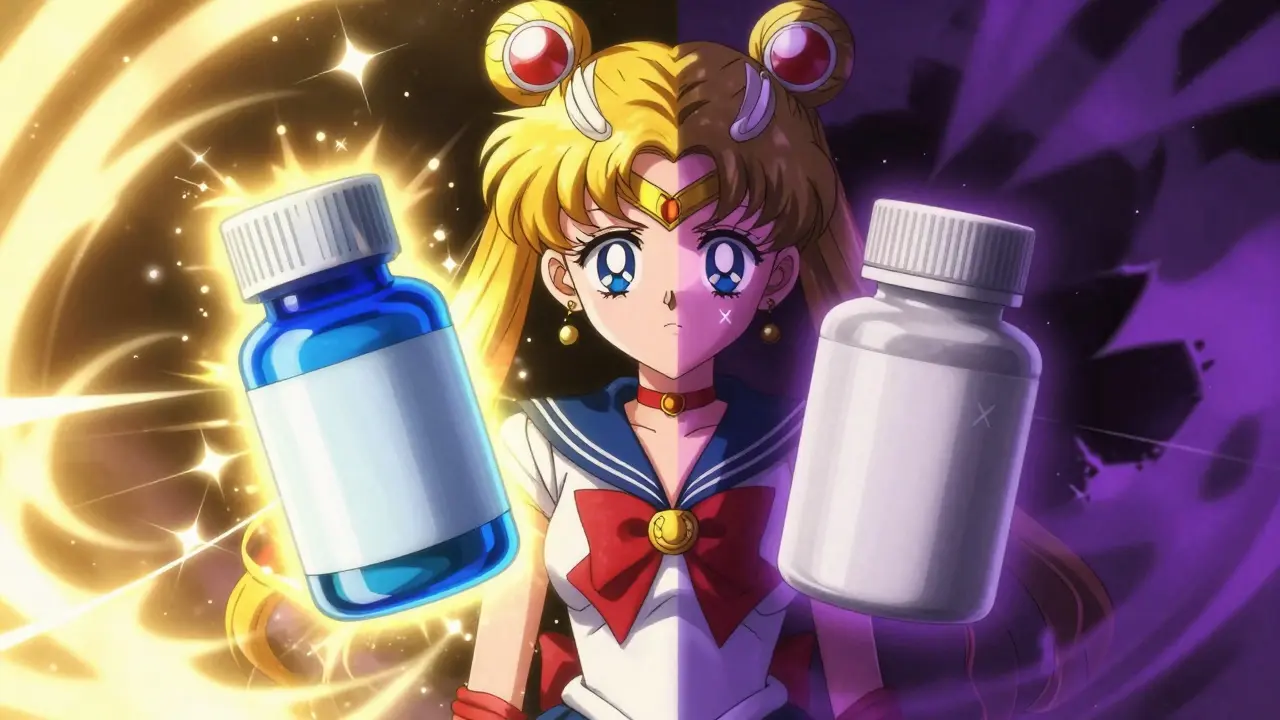
Imagine taking a pill that is chemically identical to the one you’ve taken for years. The dosage is the same. The active ingredient is the same. Yet, you feel worse. Your pain returns, your anxiety spikes, or your blood pressure rises. You aren’t imagining it-the feeling is real. But the cause isn’t the chemistry in the tablet; it’s the label on the bottle.
This is the core tension between generic medications are pharmaceutical drugs equivalent to brand-name drugs in dosage form, safety, strength, route of administration, quality, performance characteristics, and intended use and the human brain’s powerful expectation mechanisms. We often assume that if a drug works, it works because of its molecules. But neuroscience tells us otherwise. Our beliefs about what we are taking-specifically whether it is a "premium" brand or a "cheap" generic-trigger measurable biological responses. This phenomenon, known as the placebo and nocebo effect, can make or break treatment outcomes, regardless of the actual pharmacological power of the medicine.
The Science Behind the Label
It helps to understand that the brain is not just a passive observer of medical treatment; it is an active participant. When you take a medication, your brain predicts how it will feel based on cues like price, packaging, and name. These predictions release neurotransmitters like endorphins (for pain) or dopamine (for mood), which physically alter your symptoms.
A landmark study published in Health Psychology by Kate Faasse and colleagues at the University of Auckland revealed just how strong this link is. In their research, participants with headaches were given placebos-inert pills with no active ingredients. Some were labeled with famous brand names, while others had generic labels. The result? The brand-labeled placebos provided headache relief equal to actual ibuprofen. The generic-labeled placebos worked significantly less well. This wasn't just a slight difference; it was a massive gap driven entirely by perception.
Neuroimaging studies back this up. Functional MRI scans show that when patients believe they are taking a high-quality brand-name drug, areas of the brain associated with pain regulation, such as the dorsolateral prefrontal cortex, light up more intensely. Specifically, these regions activate 27% more strongly compared to when patients think they are taking a generic version. Your brain literally changes its activity pattern based on the logo on the box.
Why Generics Trigger the Nocebo Effect
If belief can heal, doubt can harm. This is the nocebo effect is a phenomenon where negative expectations about a treatment lead to adverse symptoms or reduced efficacy, even if the treatment itself is harmless or beneficial. While the placebo effect boosts healing, the nocebo effect undermines it. For generic drugs, the nocebo effect is a major hurdle.
Many patients associate lower cost with lower quality. It’s a natural heuristic: we expect expensive things to be better. A study in the Journal of the American Medical Association demonstrated this clearly. Participants who believed a placebo cost $2.50 per dose experienced 64% greater pain reduction than those who thought the identical pill cost just $0.10. When applied to generics, which often cost pennies compared to brands, this price-quality bias kicks in hard.
The impact varies by medication type. Analgesics (painkillers) show the largest differential, with a significant drop in perceived effectiveness when switched to generics. Cardiovascular medications also see issues, though slightly less pronounced. However, the psychological toll is highest in conditions requiring long-term adherence, like depression or chronic pain. In antidepressant trials, patients receiving generic-labeled sertraline reported 22% higher dropout rates due to perceived inefficacy compared to those taking the exact same chemical compound under a brand name.
| Metric | Brand-Name Labeled Placebo | Generic Labeled Placebo |
|---|---|---|
| Pain Reduction (VAS mm) | 45.3mm (equivalent to Ibuprofen) | 28.1mm |
| Brain Activation (Pain Centers) | High (Baseline + 27%) | Lower |
| Antidepressant Dropout Rate | Standard | 22% Higher |
| Cost Perception Impact | Positive Expectation | Negative Expectation (Nocebo) |

Real-World Consequences: Adherence and Health Outcomes
The gap between lab results and living rooms is where the real problem lies. Online forums and patient communities are flooded with stories of people who swear generics don’t work for them. On Drugs.com, nearly 80% of users reporting a switch from brand to generic described reduced efficacy. One user noted their blood pressure rose from 130/80 to 145/92 after switching to a generic levothyroxine, despite the dosing being identical.
These anecdotes matter because they drive behavior. If you feel worse, you stop taking the med. Or you ask your doctor for the brand name, driving up costs unnecessarily. Data shows that brand-name users demonstrate 18.3% higher 12-month adherence rates for cardiovascular medications compared to generic users, purely due to psychological confidence in the product.
This has economic implications too. The U.S. generic drug market generates billions in savings, but psychological factors cost an estimated $1.4 billion annually in unnecessary brand-name prescriptions and treatment switches. Patients pay more, insurers pay more, and the healthcare system strains under the weight of avoidable inefficiencies.
Managing Psychological Factors: A Practical Guide
So, how do we fix this? We can’t change the fact that generics are cheaper, nor should we want to-they are essential for accessible healthcare. But we can manage the psychology around them. Here is how patients and providers can bridge the gap.
1. Reframe the Narrative Around Bioequivalence
Understanding bioequivalence is the demonstration that two drug products have similar bioavailability when administered at the same molar dose of active pharmaceutical ingredient is crucial. The FDA requires generics to have a 90% confidence interval of 80-125% for absorption rates (AUC and Cmax) compared to the brand. This means the generic delivers the same amount of drug into your bloodstream within a very tight window. When doctors explain this clearly-not just saying "it's the same," but explaining *how* it's proven to be the same-patients feel more secure. A 2021 study in JAMA Internal Medicine found that a simple 3-minute educational intervention reduced nocebo responses by 47%.
2. Acknowledge the Feeling, Validate the Fear
Dismissing a patient’s concern by saying "it’s all in your head" is counterproductive. It validates the nocebo effect. Instead, acknowledge that the transition might feel different psychologically. Tell them: "The chemistry is identical, but your brain might react differently to the new label. Let’s monitor you closely for two weeks." This sets realistic expectations and reduces anxiety, which in turn reduces the nocebo response.
3. Maintain Consistency in Appearance
Visual cues trigger expectations. Studies show that changing a pill’s color or shape increases nocebo responses by 29%. Regulatory bodies like the FDA are now pushing for manufacturers to maintain consistent appearances for generics where possible. As a patient, if you notice a sudden change in your pill’s look, talk to your pharmacist. Sometimes, staying with the same manufacturer of the generic can help maintain psychological continuity.
4. Use Digital Tools for Expectation Modulation
New interventions are emerging. The "Expectation Modulation Protocol," a digital therapeutic module currently under review, uses brief, targeted messaging to reframe patient expectations before they start a new generic regimen. Early trials showed it reduces nocebo responses by 53%. While not yet widely available, looking for apps or resources that provide psychoeducation on medication adherence can help prepare your mindset for the switch.
When to Stick with Brands (and When Not To)
Is it ever worth paying for the brand? Generally, no. The financial burden is immense. Generic atorvastatin, for example, costs roughly $0.08 per pill, while the brand Lipitor can cost nearly $5. Over a year, that’s hundreds of dollars saved for the exact same cholesterol-lowering benefit.
However, there are rare exceptions. Narrow therapeutic index drugs-like certain anti-seizure medications or immunosuppressants-require extremely precise blood levels. While generics are still approved, some specialists prefer keeping patients on a single source (brand or specific generic manufacturer) to avoid any minor fluctuations in absorption that could theoretically affect sensitive systems. Even then, the issue is often batch-to-batch consistency rather than brand vs. generic per se. Always consult your specialist before making costly decisions based on fear.
Conclusion: Trust the Science, Manage the Mind
The placebo and nocebo effects remind us that medicine is both art and science. The science of generics is solid: they are safe, effective, and rigorously tested. The art lies in managing the human mind that takes them. By understanding that our expectations shape our physiology, we can take control of the narrative. You don’t have to love the generic label, but you can trust the molecule inside it. With proper communication and realistic expectations, you can get the full benefit of your medication without paying the premium for a logo.
Are generic drugs exactly the same as brand-name drugs?
Generics contain the same active ingredients, dosage, strength, and route of administration as brand-name drugs. They must meet strict FDA bioequivalence standards, meaning they deliver the same amount of drug into your bloodstream within a narrow range (80-125%). The only differences may be in inactive ingredients (like fillers or dyes), which generally do not affect efficacy but can rarely cause allergies.
Why do I feel worse when I switch to a generic?
This is likely the nocebo effect. Negative expectations about generics-often fueled by lower cost or different appearance-can trigger physiological stress responses that mimic side effects or reduce perceived efficacy. Studies show that up to 30% of patients experience this psychological dip, even though the chemical composition remains identical.
Can the placebo effect make a generic work better?
Yes. If you believe a generic will work well, your brain can enhance its effects through neurobiological pathways, such as releasing endorphins for pain relief. Research indicates that positive framing and education about bioequivalence can significantly boost the effectiveness of generic medications.
Should I stay on brand-name medication if I’m doing well?
For most medications, switching to a generic is safe and recommended due to cost savings. However, for narrow therapeutic index drugs (like some seizure meds), your doctor might advise staying on a specific product to ensure stability. Always discuss switching with your healthcare provider rather than deciding alone.
How can my doctor help me adjust to a generic?
Your doctor can provide a brief educational intervention explaining bioequivalence, validate your concerns without dismissing them, and offer a close monitoring period (e.g., 2 weeks) after the switch. This approach has been shown to reduce nocebo responses by nearly half and improve adherence.