Palliative Care Symptom Balance Calculator
Find the right balance between relief and side effects
This tool helps you understand how different symptom management approaches might affect a patient. Based on the article content, we focus on the delicate balance between symptom relief and potential side effects of medications.
Symptom Information
Medication Information
When someone is living with a serious illness, the goal shifts from curing to comfort. Palliative and hospice care aren’t about giving up-they’re about making every day as clear, calm, and comfortable as possible. But here’s the hard truth: the very medicines that ease pain, breathlessness, or nausea can also make a person drowsy, confused, or even more nauseous. Finding the right balance isn’t just a medical decision-it’s a human one, shaped by what matters most to the patient and their family.
What’s the Difference Between Palliative and Hospice Care?
Palliative care starts the moment a serious diagnosis is made. It can run alongside chemotherapy, dialysis, or surgery. Its job? To manage symptoms-pain, fatigue, shortness of breath, anxiety-and help people live as fully as they can, even while fighting illness. Think of it as a second team, working alongside your oncologist or cardiologist, not replacing them.
Hospice care is a subset of palliative care. It’s for people with a prognosis of six months or less, when curative treatment is no longer the goal. The focus shifts entirely to comfort, dignity, and presence. It’s not about giving up life-it’s about reclaiming it in the time that remains. Hospice teams often include nurses, social workers, chaplains, and volunteers who come to the home, nursing facility, or hospice center to provide round-the-clock support.
Both use the same tools: medications, non-drug therapies, and deep listening. But hospice is the point where the line between treatment and comfort becomes clear-and where the balance between relief and side effects becomes the most delicate.
The Four Big Symptoms-and How They’re Managed
Four symptoms dominate the end-of-life experience: pain, shortness of breath, nausea, and agitation. Each has a standard approach, but the real skill lies in adjusting doses without tipping into side effects.
Pain: Opioids Are First-Line, But Not Always Simple
Morphine, oxycodone, hydromorphone-these are the go-to drugs for moderate to severe pain. But they’re not one-size-fits-all. A 70-year-old with kidney disease might need half the dose of a younger person. Too much? They’ll drift into confusion or stop breathing. Too little? Pain keeps them awake, scared, and unable to eat or talk with loved ones.
Best practice? Start low. Go slow. Use a 0-10 pain scale every time you adjust the dose. Document the location, type (sharp? burning?), and what makes it better or worse. A 2021 audit in North West England found that using structured pain assessments cut medication errors by 22%. A simple body diagram-where patients point to where it hurts-improves communication by over 30%.
Shortness of Breath: Opiates Work Better Than You Think
Many people fear giving opioids for breathlessness because they think it’ll slow breathing. But research from the American Academy of Family Physicians shows low-dose opioids are rated “B” evidence for easing this symptom-meaning they’re proven effective and safe in end-of-life care. Oxygen doesn’t always help. Breathing exercises? Sometimes. But a small dose of morphine can quiet the feeling of suffocation better than anything else.
Key point: It’s not about making someone sleepy. It’s about making them feel safe. A calm voice, a fan blowing gently, a quiet room-these work too. But when the air feels thick and heavy, opioids can be the difference between panic and peace.
Nausea and Vomiting: It’s Not Just Stomach Trouble
Nausea in advanced illness often isn’t from the stomach. It’s from brain changes, bowel blockages, or even anxiety. The first-line drug? Metoclopramide or ondansetron. But if the gut is blocked (common in ovarian or bowel cancers), corticosteroids like dexamethasone are more effective than octreotide-which has limited benefit.
Side effect alert: Some anti-nausea drugs cause drowsiness or twitching. If a patient starts jerking their head or can’t sit still, it might not be the illness-it’s the medicine. Switching to a different class of drug, like haloperidol, can help. But haloperidol needs an EKG check first. Once comfort is reached, you can stop the monitoring.
Agitation and Delirium: Calm Before the Storm
Delirium-sudden confusion, restlessness, or hallucinations-happens in up to 90% of dying patients. It’s terrifying for families. The first step? Rule out causes: infection, constipation, urinary retention, or medication buildup. Then, use tools like the CAM-ICU or RASS score to measure severity every 4 hours.
Haloperidol or risperidone are first-line treatments. But here’s the catch: if you don’t recheck the patient every few hours, you’ll over-sedate them. A UPenn study showed that when nurses followed a strict 30-minute assessment schedule, breakthrough agitation dropped by 52%. The goal isn’t to make them quiet-it’s to make them comfortable enough to hold a hand, hear a voice, or rest without fear.
When the Medicine Makes Things Worse
It’s a cruel irony: the drugs meant to help can become the problem. Sedation that lasts too long. Constipation that turns into pain. Dry mouth that makes swallowing impossible. These aren’t rare-they’re predictable.
For example, opioids cause constipation in nearly everyone. Laxatives are part of the daily routine-not an afterthought. But if you give too much, you get diarrhea, cramping, and more discomfort. The solution? A bowel regimen: daily stool softeners, scheduled laxatives, and a daily check-in: “Have you passed stool today?”
Same with dry mouth. Sipping ice chips, swabbing the mouth with wet cloths, or using saliva substitutes beats sugary drinks that cause decay. For skin breakdown from incontinence? Barrier creams, scheduled repositioning, and absorbent pads-not just cleaning and hoping.
Side effects aren’t accidents. They’re signals. If a patient is sleeping more than usual, check for opioid buildup. If they’re agitated at night, check for urine retention. If they’re refusing food, check for nausea or mouth sores. Every change is a clue.
Non-Drug Tools Matter Just as Much
Medicines aren’t the whole story. In fact, many families report that the quiet moments-holding hands, playing favorite music, smelling lavender oil, or just sitting in silence-were what mattered most.
Research from the NIH shows non-pharmacological methods reduce symptom severity. A fan for breathlessness. A warm blanket for shivering. Gentle massage for muscle tension. Guided breathing for anxiety. Even pet therapy has been shown to lower heart rate and blood pressure in dying patients.
And spiritual distress? It can make pain feel 50% worse. A chaplain who listens without trying to fix, or a family member who says, “I’m here,” can be more healing than any pill.
The best care teams don’t just hand out prescriptions. They sit. They listen. They adjust. They ask: “Is this helping? Or is it just keeping you quiet?”
How Care Teams Get It Right
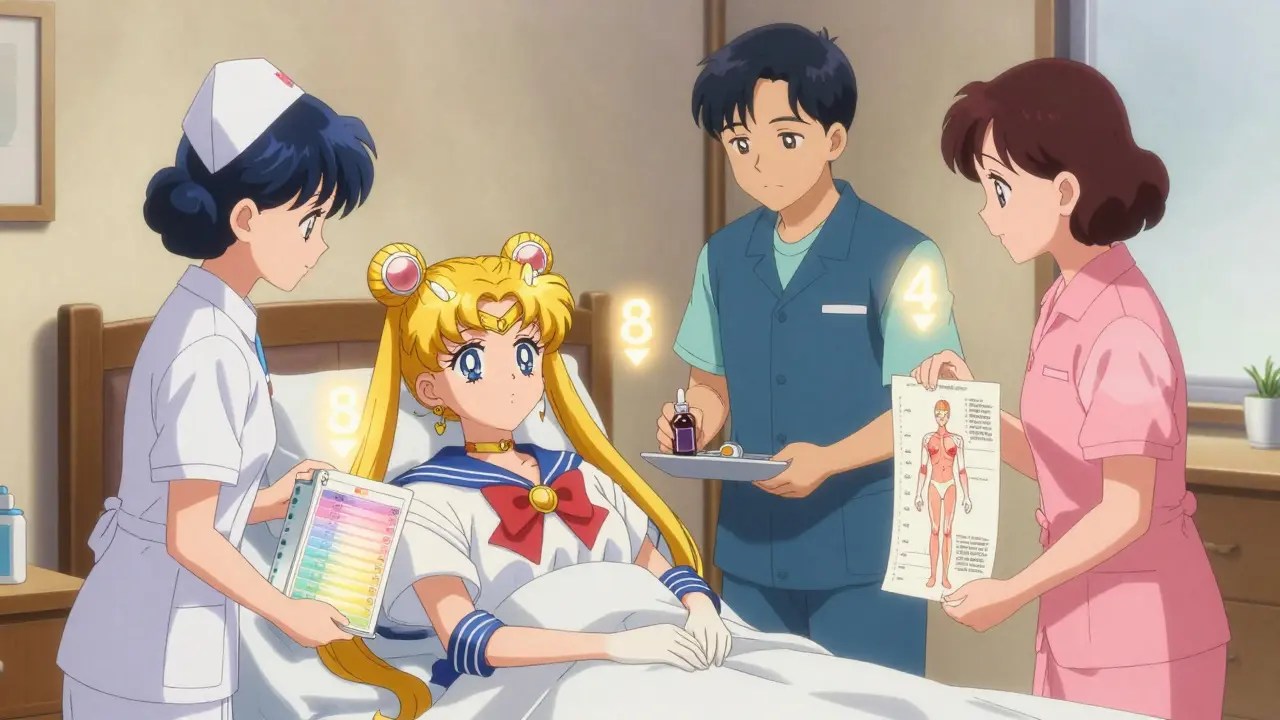
There’s no single guideline that works everywhere. The NHS uses detailed pain maps. Dana-Farber breaks symptoms into color-coded books. UPenn demands hourly assessments. But all agree on three things:
- Start low, go slow
- Measure before you medicate
- Reassess every time you change something
Training takes 6 to 12 months. Nurses need to know how opioids are processed in failing kidneys. Social workers need to talk to families who say, “I don’t want him drugged up.” Chaplains need to sit with people who fear they’re dying alone.
Documentation isn’t busywork. It’s the safety net. If you don’t write down that the pain went from 8 to 4 after morphine, you can’t tell if the next dose is too much. A 2022 Canadian study found that 43% of clinicians felt burdened by paperwork-but those who used structured forms made fewer mistakes.
Technology is helping. Digital symptom trackers show real-time trends. A patient using a tablet to rate their pain each morning gives the team a clearer picture than a family member’s memory. Pilot studies show 18% better symptom control with these tools.
What Families Need to Know
Many families believe that if a loved one is sleeping a lot, they’re being overmedicated. But in reality, deep rest is often the body’s way of healing. If the person wakes up when you speak, answers softly, or smiles at a photo-they’re not drugged. They’re resting.
Ask these questions:
- Is my loved one more comfortable now?
- Are they able to talk, touch, or be touched?
- Do they seem scared or peaceful?
It’s not about being alert. It’s about being at peace.
And if you’re told, “We need to increase the morphine,” ask: “What are we trying to ease? Pain? Breathlessness? Restlessness?” If the answer isn’t clear, push for it. You’re not being difficult. You’re being part of the team.
The Future of Comfort
By 2027, tele-palliative care will reach 40% of rural patients who now have no access. Genetic testing might soon tell us who’s more likely to overdose on opioids or need higher doses. New guidelines due in 2025 will integrate digital tools and patient-reported outcomes.
But the heart of it hasn’t changed. It’s still about listening. Adjusting. Watching. Reassessing. It’s about knowing when to give more-and when to stop.
There’s no perfect balance. But there is a good one. And it’s found not in a protocol, but in a quiet room, a held hand, and a team that refuses to let comfort be an afterthought.
Is hospice care only for people who are dying?
Hospice care is for people with a life expectancy of six months or less, when curative treatment is no longer the goal. But that doesn’t mean they’re actively dying. Many people live for months or even longer on hospice, enjoying quiet time with family, managing symptoms, and avoiding hospital trips. Hospice isn’t about giving up-it’s about choosing comfort over intensity.
Can palliative care be started at any time?
Yes. Palliative care can begin the day someone gets a serious diagnosis-whether it’s cancer, heart failure, COPD, or kidney disease. It works alongside treatments like chemotherapy or surgery. You don’t have to wait until things get worse. Early palliative care improves quality of life and can even extend survival by helping patients stay stronger longer.
Do opioids make people die sooner?
No. When used properly, opioids relieve pain and breathlessness without speeding up death. Studies show that people who get adequate pain control live longer, not shorter, because they’re less stressed, eat better, and sleep more. Fear of opioids often leads to under-treatment, which causes more suffering-and that’s what shortens life, not the medicine.
What if my family doesn’t want my loved one to be sedated?
It’s common for families to fear sedation. But sedation isn’t the goal-comfort is. If your loved one is in pain or struggling to breathe, being awake might mean suffering. The team will adjust doses slowly, monitor closely, and stop if the person becomes too sleepy. You can always ask: “Can we try less medication and see if they’re still comfortable?” The answer is almost always yes.
How do I know if the care team is doing a good job?
Look for three things: 1) They ask about symptoms daily-not just when you complain. 2) They explain why they’re changing a medication. 3) They check in with you, not just the patient. If they’re using a pain scale, documenting changes, and offering non-drug options (music, massage, quiet time), they’re doing it right. If they’re just handing out pills without talking, ask for a care plan meeting.
What Comes Next
If you’re caring for someone with a serious illness, start by asking for a palliative care consult-even if you’re not ready for hospice. You don’t need to wait for permission. Most hospitals have teams ready to help. Community hospices offer free home visits. And online tools from the Center to Advance Palliative Care are free for families and clinicians alike.
Comfort isn’t a destination. It’s a daily practice. And it’s never too late to begin.
Tim Hnatko
March 6, 2026 AT 20:22Been a hospice nurse for 12 years. The biggest mistake families make? Thinking sedation = giving up. It’s not. It’s letting someone breathe without fighting. I’ve seen people smile for the first time in weeks after we lowered their morphine just enough. Comfort isn’t about being awake-it’s about being at peace.
Aaron Pace
March 6, 2026 AT 23:08Yessss 🙌 I’ve been there with my mom. They gave her too much at first and she looked like a zombie. Then we dialed it back and she held my hand for 20 mins. That’s all I needed. 💔❤️
Joey Pearson
March 7, 2026 AT 23:03Stop treating comfort like a trade-off. You don’t have to choose between pain and presence. Good teams do both. And if yours isn’t? Ask for a meeting. Demand better. You’re not being difficult-you’re being brave.
Roland Silber
March 8, 2026 AT 16:55One thing no one talks about enough: constipation. Opioids wreck your gut. I’ve seen patients in agony from it, then get relief with a simple senna + Miralax combo. It’s not glamorous, but it’s essential. Make it part of the daily routine-like brushing teeth. And document it. If they haven’t moved in 48 hours, that’s a red flag, not a ‘wait and see.’
Also, dry mouth? Ice chips > sugary drinks. Swabbing with damp cloths costs nothing but helps more than half the meds.
And yes, non-drug stuff works. My grandma listened to Frank Sinatra every night. Said it made her feel like she was 25 again. No pill does that.
Patrick Jackson
March 10, 2026 AT 07:27Let me tell you something that keeps me up at night-not the pain, not the fear… but the silence. The way families sit there, holding hands, not saying a word, because they think they have to be ‘strong.’ But strength isn’t stoicism. Strength is saying, ‘I’m scared too.’
I watched a man hold his wife’s hand and whisper, ‘I don’t know how to do this without you.’ And she smiled. Not because she was okay. But because he finally let it out.
Medicines? They’re tools. But the real healing? It’s in the cracks between the words. The pause before ‘I love you.’ The tear that falls on the blanket. The way the room smells like lavender and old books.
We treat dying like a medical event. It’s not. It’s a sacred, messy, human thing. And we owe it to each other to show up-not with protocols-but with presence.
So if you’re reading this… if you’re sitting with someone right now… don’t just hold their hand. Hold their story too.
Adebayo Muhammad
March 10, 2026 AT 20:20Let’s be real-this whole ‘palliative care’ thing is a capitalist loophole. Hospitals make more money keeping people alive on chemo than they do with hospice. So they push ‘early intervention’ like it’s a virtue. But the truth? They’re just shifting costs. You think nurses really care about your ‘comfort’? They’re just trying to hit their KPIs.
And opioids? They’re not ‘safe.’ They’re addictive. And the fact that you’re being told ‘they don’t speed up death’ is a lie wrapped in a clinical study. Who funded that study? Big Pharma. Of course they say it’s fine.
My cousin died of a morphine overdose. They called it ‘natural.’ It wasn’t. It was negligence dressed up as compassion.
Pranay Roy
March 10, 2026 AT 20:45They say hospice is about comfort but everyone knows it’s the first step to euthanasia. You think they’re just helping people die peacefully? No. They’re training families to accept death as inevitable. Next thing you know, they’ll be pushing ‘assisted dying’ as ‘self-care.’
And why do they always say ‘six months’? Because that’s the Medicare cutoff. This isn’t medicine-it’s bureaucracy with a heart emoji.
My uncle lived 14 months on hospice. They said he had 2. They were wrong. That’s because they’re not doctors-they’re accountants with stethoscopes.
Joe Prism
March 11, 2026 AT 17:11My dad was Nigerian. He refused morphine until the last day. Said, ‘Pain is God’s way of reminding you you’re still alive.’ We respected that. But when he finally took it? He looked at me and said, ‘I didn’t know peace could feel like this.’
Comfort isn’t universal. It’s cultural. And that’s okay.
Bridget Verwey
March 13, 2026 AT 13:00Oh honey, you think the nurses are just handing out pills? Please. They’re playing Jenga with your loved one’s consciousness. One wrong move and boom-no more giggles, no more recognizing your face. If your team isn’t checking in every shift with a smile and a question-fire them. Or at least ask for a new one. You deserve better.
Andrew Poulin
March 15, 2026 AT 06:49Stop overthinking this. If they’re sleeping and breathing fine? Don’t wake them. If they’re in pain? Give the morphine. If they’re nauseous? Try the dexamethasone. Done. No drama. No guilt. Just do the damn thing.
Weston Potgieter
March 16, 2026 AT 08:29Y’all are making this way too complicated. It’s just morphine. It’s just a bed. It’s just a fan. Stop pretending this is rocket science. People die. You give them comfort. You don’t need a 12-month training course. You need a heart. And a willingness to sit in the silence.
Vikas Verma
March 18, 2026 AT 02:52Based on the clinical parameters outlined, the administration of pharmacological interventions must be calibrated according to renal and hepatic clearance metrics. Failure to adhere to the recommended titration protocols results in suboptimal symptom control and increased incidence of iatrogenic complications. Furthermore, non-pharmacological adjuncts such as aromatherapy and music therapy demonstrate statistically significant reductions in cortisol levels per NIH meta-analysis 2021.
Sean Callahan
March 19, 2026 AT 08:32I’ve been there. I cried so hard I couldn’t breathe. Then I sat there for hours just holding her. She didn’t say a word. But she squeezed my hand. That was enough. I still think about it every day. I miss her. I miss the way she laughed. I miss her smell. I miss everything.
phyllis bourassa
March 19, 2026 AT 22:04You know what’s really sad? That we’ve turned death into a checklist. ‘Did you offer music? Did you document the pain scale? Did you check for constipation?’
Meanwhile, the person who’s dying just wants to know if someone remembers their name.