Opioid Risk Assessment Tool
Select Patient Risk Factors
Check all applicable factors for the patient:
Quick Reference
- Normal Respiratory Rate 12–20/min
- Depression Threshold < 8–10/min
- Normal SpO2 95–100%
- Critical SpO2 < 85%
- Naloxone Onset Immediate
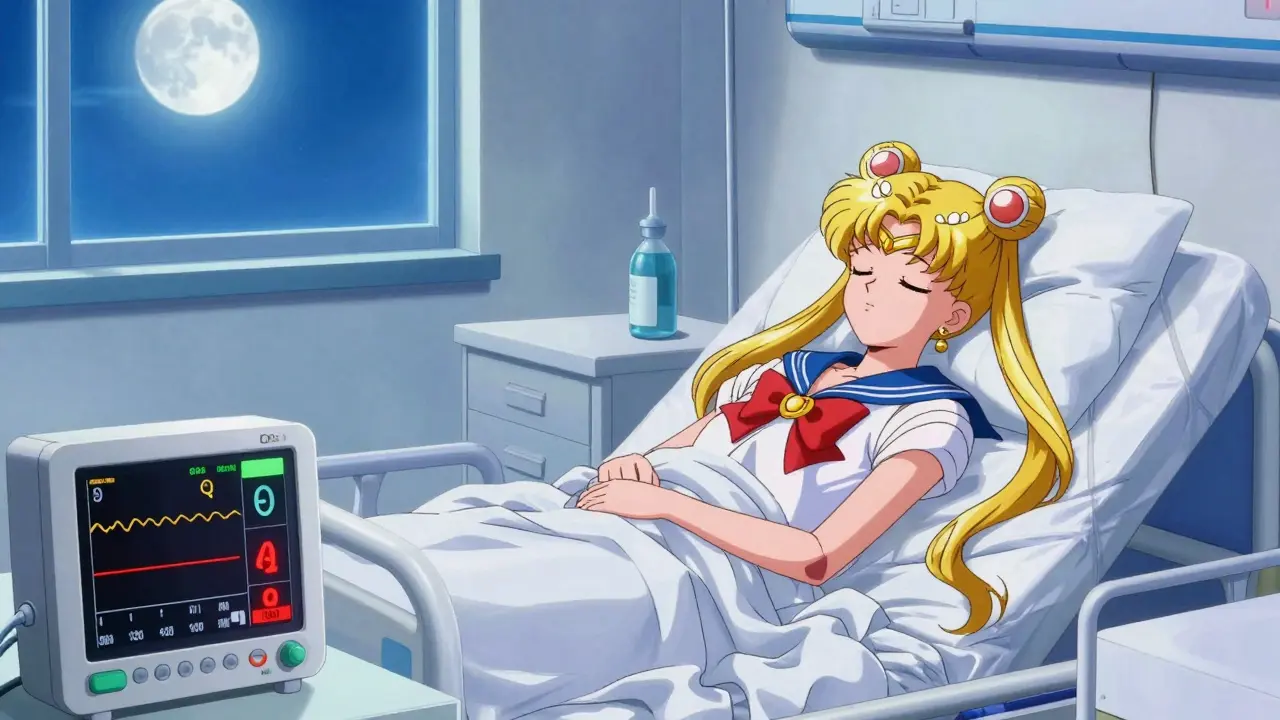
Imagine a patient recovering from surgery. They are resting quietly. Their breathing is slow. To an untrained eye, they look peaceful. In reality, their body might be silently shutting down. This is respiratory depression, a critical and potentially fatal side effect of opioid medications. It is not just "sleeping it off." It is a medical emergency where the brain forgets to tell the lungs to breathe.
Opioid-induced respiratory depression (OIRD) is the leading cause of death associated with opioid analgesics in clinical settings. According to data from the Anesthesia Patient Safety Foundation (APSF), approximately 0.3% of postoperative patients in the United States require rescue with naloxone annually. That translates to roughly 20,000 patients per year facing this life-threatening complication. The good news? OIRD is largely preventable if you know what to look for and how to act fast.
What Is Opioid-Induced Respiratory Depression?
To understand the danger, you need to understand the mechanism. Opioids work by binding to mu-opioid receptors in the brainstem, specifically in the medulla oblongata. This area controls your automatic breathing drive. When opioids flood these receptors, they blunt the brain's response to high levels of carbon dioxide (hypercapnia) and low levels of oxygen (hypoxia).
In a healthy person, rising CO2 triggers an urgent urge to breathe deeper and faster. Under the influence of opioids, that alarm system goes silent. The patient continues to breathe, but the rate slows significantly, and the depth becomes shallow. Over time, oxygen saturation drops, and carbon dioxide builds up to toxic levels. Without intervention, this leads to hypoxia, brain damage, cardiac arrest, and death.
| Parameter | Normal Range | Respiratory Depression Threshold |
|---|---|---|
| Respiratory Rate | 12-20 breaths/min | < 8-10 breaths/min |
| Oxygen Saturation (SpO2) | 95-100% | < 85-90% |
| End-Tidal CO2 (EtCO2) | 35-45 mmHg | > 50 mmHg |
| Responsiveness | Arousable, oriented | Lethargic, difficult to rouse |
Critical Signs and Symptoms to Watch For
You cannot rely on a single sign. Respiratory depression is a cluster of symptoms. The Cleveland Clinic and other major health institutions identify specific patterns that precede catastrophic failure. If you are caring for someone on opioids, watch for these red flags:
- Slow Breathing (Bradypnea): This is the hallmark sign. A respiratory rate below 8 to 10 breaths per minute is a critical warning. In confirmed OIRD cases, slow breathing is present 100% of the time.
- Shallow or Irregular Breathing: Look at the chest rise. Is it barely moving? Are there long pauses between breaths (apnea)?
- Low Oxygen Saturation: A pulse oximeter reading dropping below 90%, and critically below 85%, indicates severe desaturation. Note: Supplemental oxygen can mask this sign while CO2 continues to rise.
- Lethargy and Confusion: About 78% of patients report tiredness or lethargy. Disorientation occurs in 53% of cases. If the patient is hard to wake up or doesn't make sense when awake, this is a major concern.
- Nausea and Vomiting: Reported in 65% of OIRD cases. While common with opioids, combined with slow breathing, it signals toxicity.
- Pinpoint Pupils (Miosis): Constricted pupils are a classic sign of opioid overdose, though not always present in mild depression.
- Tachycardia or Bradycardia: Heart rate changes occur in about 37% of cases, often as a secondary response to hypoxia.
Who Is at Highest Risk?
Not everyone reacts the same way to opioids. Certain patient profiles carry exponentially higher risks. Understanding these factors helps in preemptive screening.
The Canadian Journal of Pain (2020) and APSF data highlight several key risk multipliers:
- Opioid Naïveté: Patients who have not been taking opioids regularly face a 4.5x higher risk. Their bodies lack tolerance to the respiratory depressant effects.
- Advanced Age: Patients over 60 years old have a 3.2x higher risk due to slower metabolism and increased sensitivity.
- Female Sex: Women face a 1.7x higher risk, possibly due to differences in pharmacokinetics and body composition.
- Concomitant CNS Depressants: This is the most dangerous combination. Mixing opioids with benzodiazepines, alcohol, or other sedatives increases the risk of OIRD by 6.3x to 14.7-fold. The drugs synergize, crushing the respiratory drive together.
- Comorbidities: Conditions like Obstructive Sleep Apnea (OSA), chronic obstructive pulmonary disease (COPD), or obesity hypoventilation syndrome increase risk by 2.8x per additional comorbidity.

The Monitoring Gap: Why It Happens in Hospitals
You might wonder, "If we are in a hospital, aren't we safe?" Unfortunately, gaps in monitoring persist. Dr. Nikolaus Gravenstein from the University of Florida points out a startling statistic: if vital signs are checked only every 4 hours, the patient remains unmonitored 96% of the time. Respiratory depression can develop rapidly within minutes of a dose, especially with intravenous administration.
Furthermore, alarm fatigue is a real issue. In 68% of hospital units, staff suffer from alarm fatigue, leading to delayed responses. Additionally, only 42% of nurses correctly identify early OIRD signs in simulation testing, according to APSF data. This highlights the need for better training and technology.
Prevention and Early Detection Strategies
Prevention starts before the first dose. Here is how healthcare providers and caregivers can mitigate risk:
- Risk Stratification: Use tools like the FDA-approved Opioid Risk Calculator (ORC). It uses 12 clinical variables to predict individual risk with 84% accuracy. Identify high-risk patients (those with ≥2 risk factors) for enhanced monitoring.
- Appropriate Monitoring Technology:
- Without supplemental oxygen: Pulse oximetry is standard (89% sensitivity). Set alarms for SpO2 < 90%.
- With supplemental oxygen: Capnography is superior (94% sensitivity). Oxygen masks the drop in saturation, but capnography detects the rise in CO2. Set alarms for EtCO2 > 50 mmHg or RR < 10.
- Dosing Protocols: Avoid fixed-schedule dosing in opioid-naïve patients. Use patient-controlled analgesia (PCA) with lockout intervals to prevent self-overdose. Implement mandatory 2-hour post-dose monitoring for high-risk patients.
- Staff Education: Mandatory OIRD recognition training for all clinical staff has been shown to reduce incidence by 47% in leading hospitals.

Emergency Response: Naloxone Administration
If respiratory depression is identified, immediate action is required. The definitive treatment is naloxone, an opioid antagonist that reverses the effects of opioids.
However, naloxone must be used carefully. It is not a simple "on/off" switch. Rapid reversal can precipitate acute opioid withdrawal, causing pain, agitation, vomiting, and even cardiac stress, particularly in cancer pain patients. Best practices include:
- Titration: Start with small doses (e.g., 0.04 mg IV) and titrate up until adequate ventilation resumes. The goal is to restore breathing, not necessarily to fully reverse analgesia.
- Monitoring After Reversal: Naloxone wears off faster than many opioids. Patients must be monitored for "re-narcotization" where respiratory depression returns after the naloxone clears.
- Supportive Care: Assist ventilation with bag-valve-mask if necessary while awaiting drug effect.
The Future of OIRD Management
The landscape of patient safety is evolving. The APSF’s "No Patient Shall Be Harmed" initiative aims for 100% implementation of risk-stratified monitoring by 2025. New technologies are emerging, including AI-powered predictive systems that can detect OIRD 15 minutes before clinical symptoms appear.
Pharmaceutical research is also advancing toward "biased agonists"-opioid formulations that provide pain relief without triggering the same degree of respiratory depression. These are currently in Phase III trials. Meanwhile, regulatory bodies like CMS have classified severe OIRD as a "never event," meaning hospitals will not be reimbursed for complications arising from it, driving further investment in prevention protocols.
Key Takeaways for Patients and Families
If you or a loved one is prescribed opioids, knowledge is your best defense:
- Never mix opioids with alcohol or benzodiazepines unless explicitly directed and monitored by a doctor.
- Ask your provider about your personal risk factors.
- Learn to recognize the signs: slow breathing, difficulty waking up, and blue lips or fingertips.
- Keep naloxone accessible if prescribed for home use, and ensure family members know how to use it.
How quickly does opioid-induced respiratory depression develop?
It can develop rapidly, often within minutes of administering an intravenous dose. For oral medications, it may take longer, typically peaking within 30 to 60 minutes after ingestion. However, individual metabolism varies, so continuous monitoring is essential during the peak effect window.
Can supplemental oxygen prevent respiratory depression?
No, supplemental oxygen does not prevent respiratory depression. It only treats the resulting low oxygen levels (hypoxia). In fact, it can be dangerous because it masks the drop in oxygen saturation, which is a key warning sign. Without oxygen therapy, the patient would feel short of breath and try to breathe more. With oxygen, they may remain comfortable while carbon dioxide builds up to toxic levels (hypercapnia), leading to unconsciousness and arrest.
Is capnography necessary for all patients on opioids?
Capnography is particularly crucial for patients receiving supplemental oxygen, as it detects rising carbon dioxide levels that pulse oximeters miss. For patients not on oxygen, pulse oximetry is generally sufficient. However, for high-risk patients (e.g., those with sleep apnea or taking benzodiazepines), capnography is recommended regardless of oxygen status due to its higher sensitivity (94%) compared to pulse oximetry.
What is the difference between respiratory depression and sleep?
In normal sleep, breathing remains regular and responsive to chemical changes in the blood. You can easily wake a sleeping person. In respiratory depression, breathing is abnormally slow (less than 8-10 breaths per minute) and shallow. The patient is difficult or impossible to arouse, may exhibit pinpoint pupils, and has reduced responsiveness to pain or stimuli. If you cannot wake the person or their breathing is dangerously slow, treat it as an emergency.
How long does naloxone last?
Naloxone has a short half-life, typically lasting 30 to 90 minutes. Most opioids, such as morphine or fentanyl, last longer than naloxone. This means the opioid effects can return after the naloxone wears off, a phenomenon known as re-narcotization. Patients must be monitored continuously for at least four times the duration of the naloxone's expected effect to ensure they do not slip back into respiratory depression.