Opioid Itch Risk & Treatment Checker
Step 1: Administration Route
How is the opioid medication being administered?
Step 2: Symptoms
Are you experiencing itching without hives or swelling?
Risk Assessment
Based on intrathecal administration, there is a 70-100% chance of experiencing pruritus.
Recommended Management
| Treatment | Efficacy | Note |
|---|
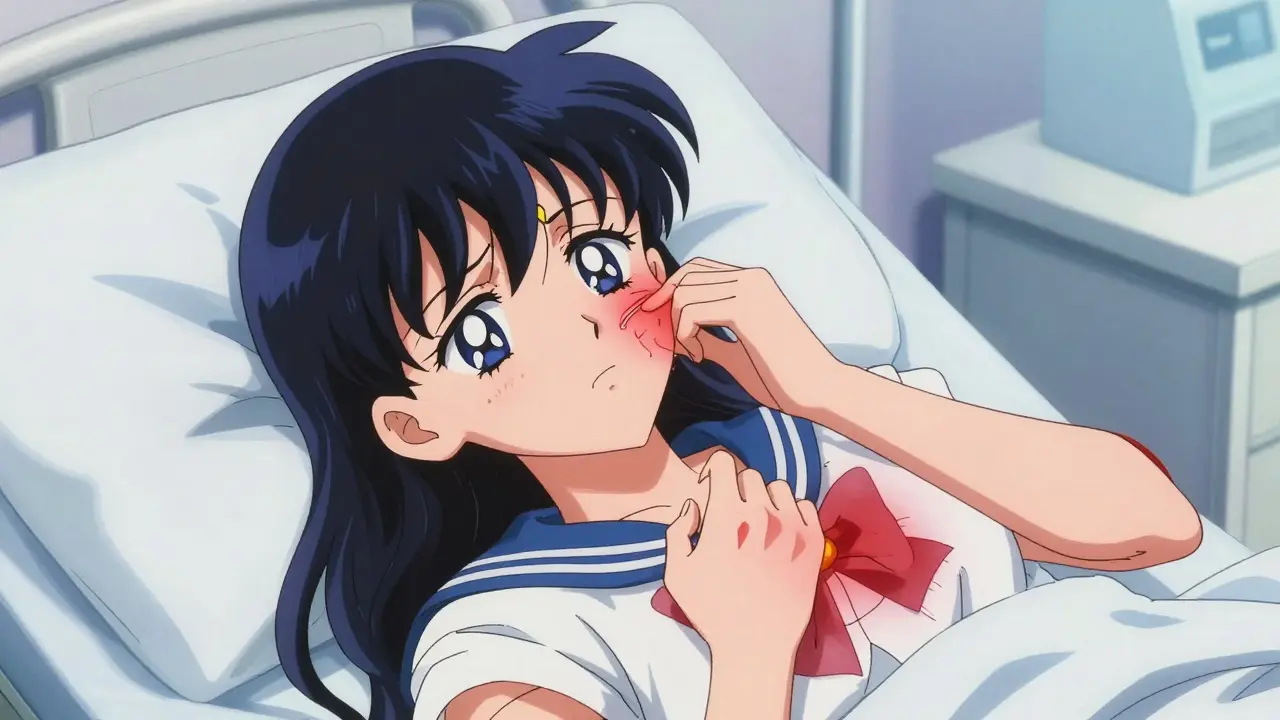
Imagine you are in the recovery room after surgery. The pain is finally under control thanks to opioids, a class of powerful pain-relieving medications. But then, it starts. An intense, crawling sensation on your face or chest that makes you want to scratch until the skin breaks. You aren't allergic. You aren't sweating. This is opioid-induced pruritus, a specific medical condition defined as an unpleasant, irritating sensation provoking an urge to scratch directly caused by opioid administration. It is not just an annoyance; for many patients, it is a severe disruption that can lead to premature discontinuation of necessary pain relief.
For decades, the standard response from medical staff was simple: "It's just histamine." They would administer an antihistamine like diphenhydramine and hope for the best. If you have experienced this, you likely know that approach rarely works. Why? Because modern science has uncovered that the itch signal travels through a completely different highway in your nervous system than the one triggered by pollen or pet dander. Understanding this distinction is the key to finding real relief.
The Myth of Histamine Release
To understand why itching happens, we have to look back at how doctors first tried to explain it. In 1986, McLelland published a landmark article in JAMA Dermatology titled 'The Mechanism of Morphine-Induced Urticaria.' At the time, the prevailing theory was that opioids like morphine, a classic opioid analgesic caused mast cells in the skin to burst open and release histamine, much like a bee sting does. This made logical sense because morphine is known to trigger non-immunological histamine release from mast cells, a process documented by Barke and Hough in their 1993 review in Life Sciences.
However, this explanation left huge gaps. If histamine were the sole culprit, antihistamines should stop the itch every time. Clinical data shows they succeed in only 20-30% of cases. Furthermore, Oxford Academic’s 2003 analysis in QJM explicitly stated that "histamine release from dermal mast cells is not responsible for itch induced by clinical doses" of opioids. This created a major controversy in the field. While histamine might play a minor role in some visible skin reactions (urticaria), it cannot explain the overwhelming majority of internal itching sensations patients feel.
The Real Culprit: Mu-Opioid Receptors and Nerves
If it isn't histamine, what is causing the itch? The answer lies deep within your nervous system. Contemporary research, particularly a comprehensive 2018 study published in Nature Scientific Reports, reveals a dual-pathway mechanism where the central player is the mu-opioid receptor (MOR), a protein found on nerve cells that binds with opioids to relieve pain.
Here is the paradox: Opioids bind to these receptors to block pain signals, but in certain nerve fibers, that same binding triggers an itch signal instead. The 2018 study used DAMGO, a highly selective MOR agonist, to prove that peripheral nerve fibers emanating from TRPV1-expressing dorsal root ganglion (DRG) neurons are the direct pathway for this itch. When researchers stimulated these nerves, patients felt intense itching. When they blocked them, the itch disappeared.
This neural mechanism explains why the itch often appears on the face and upper torso-areas with high density of these specific nerve endings. It also explains why the onset is rapid, often occurring within 15-30 minutes of intravenous administration. The signal doesn't travel through the bloodstream via histamine; it travels along the nerves themselves. Dr. Arendt-Nielsen and his team concluded that these nerve fibers are essential for the itch response, fundamentally shifting the paradigm away from purely chemical explanations toward a neurological one.

Why Location Matters: Routes of Administration
Not all opioids cause itching equally, and how you receive the drug changes the risk significantly. According to Okutani et al.’s 2023 review in the European Journal of Pain, incidence rates vary wildly by administration route:
- Intrathecal (spinal) morphine: Causes pruritus in 70-100% of patients. This is common in labor epidurals and major surgeries.
- Intravenous (IV) administration: Affects 30-50% of patients.
- Oral administration: Affects only 10-30% of patients.
This gradient makes perfect sense when you consider the concentration of the drug near the spinal cord nerves. Intrathecal injections place the opioid directly into the fluid surrounding the spinal cord, bathing the DRG neurons in high concentrations of the drug. Oral pills dilute the effect significantly before it reaches those specific nerve pathways. This is why obstetrics departments report 3.2 times more pruritus interventions than orthopedic services-they use more neuraxial (spinal/epidural) opioids.
Management Approaches That Actually Work
Knowing the mechanism allows us to treat the problem effectively. Since antihistamines target the wrong pathway, we need drugs that interact with the mu-opioid receptor or the kappa-opioid receptor without destroying the pain relief. Here is a breakdown of the most effective strategies based on current clinical evidence.
| Treatment Class | Specific Drug | Efficacy Rate | Key Benefit | Major Drawback |
|---|---|---|---|---|
| First-Gen Antihistamine | Diphenhydramine | 20-30% | Widely available | Causes significant drowsiness; low efficacy |
| Mu-Antagonist | Naloxone (low dose) | 60-80% | Rapid reversal of itch | Risk of reversing pain relief if dosed too high |
| Mixed Agonist/Antagonist | Nalbuphine | 85% | Preserves analgesia; fast acting (5 mins) | Requires IV access |
| Kappa-Agonist | Butorphanol | High (Score 8.2 to 2.1) | Strong itch reduction | Potential for nausea |
| Local Anesthetic | Lignocaine (IV) | 70% | Non-opioid option | Requires cardiac monitoring |
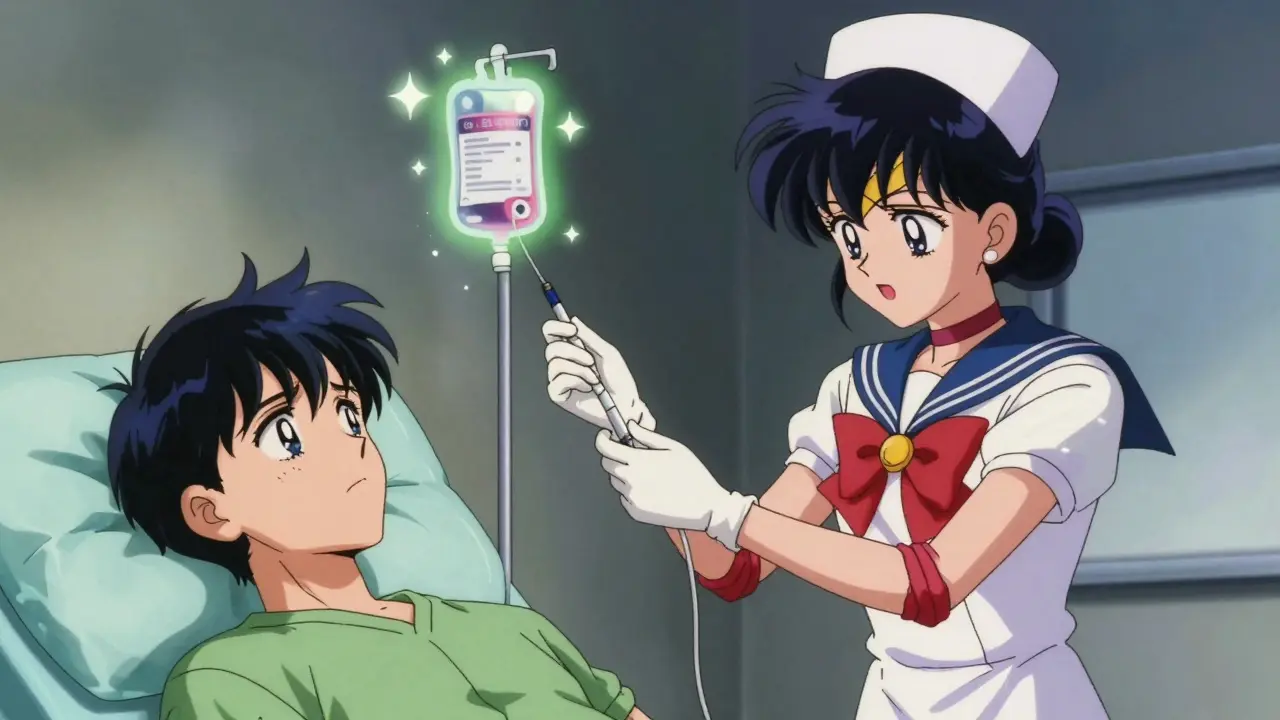
The gold standard in many hospitals today is nalbuphine, a mixed mu-opioid antagonist and kappa-opioid agonist. As reported in Acta Anaesthesiologica Scandinavica (2010), nalbuphine demonstrates 85% efficacy at doses of 5-10 mg IV. It works by blocking the mu-receptors (stopping the itch signal) while activating kappa-receptors (maintaining some pain relief). A nurse practitioner with 12 years' experience noted that it works within 5 minutes without waking patients, unlike diphenhydramine which causes 45 minutes of drowsiness.
Another effective option is low-dose naloxone, an opioid antagonist typically used to reverse overdoses. When administered at very low doses (0.25 mcg/kg/min), it reduces pruritus scores by 60-80% without compromising analgesia. The key here is precision. Too much naloxone will reverse the pain medication entirely, sending the patient back to severe pain. This narrow therapeutic window requires careful titration by skilled clinicians.
Clinical Implementation and Pitfalls
Even with effective drugs, implementation fails if timing and diagnosis are off. The learning curve for effective intervention involves understanding the critical timing window: antipruritic agents must be administered within 5-10 minutes of symptom onset for optimal efficacy. Institutions that have implemented standardized protocols, such as the University of Copenhagen's 'Pruritus First Response Algorithm,' report a 40% reduction in rescue medication needs.
A major pitfall is misdiagnosis. Thirty-two percent of clinicians initially misdiagnose severe opioid-induced pruritus as anaphylaxis (a severe allergic reaction), according to Anesthesia & Analgesia (2019). This leads to unnecessary epinephrine administration, which carries its own risks. Differentiating between the two is critical: opioid itch usually affects the face and upper body (92% of cases) and lacks other signs of allergy like throat swelling or difficulty breathing. Documentation standards must capture these specific characteristics to ensure correct treatment.
The Future of Treatment
We are currently seeing a shift toward more targeted therapies. The global pruritus therapeutics market, valued at $3.2 billion in 2022, is driving innovation. One promising development is CR845 (difelikefalin), a peripherally restricted kappa opioid agonist. In a 2023 Phase II trial (NCT05217891), it showed a 65% pruritus reduction without crossing the blood-brain barrier, meaning it treats the itch without causing sedation or affecting mental clarity.
The European Pain Federation’s 2023 position statement recommends routine pruritus risk assessment for all patients receiving neuraxial opioids. By 2028, experts predict that mu-antagonist/kappa-agonist combinations will become standard in 75% of major medical centers. While second-generation antihistamines may maintain a niche role for patients with comorbid allergies, the future clearly belongs to receptor-subtype selective modulation.
Does opioid-induced itching mean I am allergic to the medication?
No. Opioid-induced pruritus is a pharmacological side effect caused by the activation of mu-opioid receptors in the nervous system, not an immune system reaction. True allergic reactions are rare and typically involve hives, swelling, or breathing difficulties, whereas opioid itch is primarily a sensory nerve response concentrated on the face and upper torso.
Why don't antihistamines work for opioid itch?
Antihistamines block histamine receptors, but recent research shows that opioid-induced itching is primarily driven by neural pathways involving mu-opioid receptors and TRPV1-expressing neurons, not histamine release from mast cells. Therefore, antihistamines only help in about 20-30% of cases where histamine plays a minor secondary role.
What is the fastest way to stop opioid-induced itching?
Nalbuphine is often considered the fastest and most effective treatment, working within 5 minutes when administered intravenously. Low-dose naloxone infusions are also highly effective, reducing symptoms by up to 80% without significantly impacting pain relief when dosed correctly.
Is spinal (intrathecal) morphine more likely to cause itching?
Yes. Intrathecal morphine causes pruritus in 70-100% of patients, compared to 30-50% for intravenous and 10-30% for oral administration. This is because the drug is placed directly near the spinal nerves that transmit itch signals, resulting in higher local concentrations at the mu-opioid receptors.
Can opioid-induced itching be prevented?
While it cannot always be completely prevented, risk can be minimized by using multimodal analgesia (combining opioids with non-opioid pain relievers) to lower the total opioid dose. Additionally, proactive protocols that anticipate itching in high-risk scenarios (like cesarean sections) allow for earlier intervention with drugs like nalbuphine before the itch becomes severe.
Brian Irwin
May 31, 2026 AT 08:51man this hits home hard. had back surgery last year and the itching was absolute hell. they kept giving me benadryl like it was gonna fix anything but i just felt like a zombie with an itch i couldnt scratch. glad to see someone finally explaining why that approach is so useless
Rosy Centire
May 31, 2026 AT 09:48It is frankly unacceptable that medical professionals continue to rely on outdated pharmacological interventions when the neurological mechanisms are so clearly documented in contemporary literature. The persistence of prescribing diphenhydramine for opioid-induced pruritus demonstrates a startling lack of engagement with current peer-reviewed research, particularly the seminal work regarding mu-opioid receptor pathways. Patients deserve evidence-based care, not historical anecdotes disguised as standard protocol.
William Storm
June 1, 2026 AT 12:48One must ponder... does the modern obsession with 'mechanisms' truly enhance the patient experience? Or do we merely complicate the simple act of suffering with jargon-laden explanations that serve only to inflate the egos of those who write them? The itch remains. The pain remains. The solution, perhaps, lies not in blocking receptors, but in accepting the inevitable discomfort of existence itself.
Wendy Engelmann
June 3, 2026 AT 02:04i think its interesting how our bodies react differently to these drugs. some people get dizzy others get itchy. its all part of the human experience really. no need to overthink it too much
Lisa Thomas
June 4, 2026 AT 02:01OMG this is so true!!! 😱 I literally scratched my face raw after my c-section because they thought it was an allergy!! Why do doctors still not know this?? It’s crazy! 🤯
Nicholas Bowling
June 4, 2026 AT 11:58nah you guys are missing the point. the real issue is that opioids are evil and we should just suck it up through natural pain. all this fancy science is just big pharma trying to sell more pills. wake up sheeple
Jay Foreman
June 5, 2026 AT 02:42Look, I’m not saying I’m a doctor or anything, but I’ve seen enough hospital dramas to know that nalbuphine is the way to go. It’s wild how many places still use benadryl. It’s like they’re trying to put you to sleep instead of fixing the problem. We need to hold these institutions accountable for their laziness.
Cathy N
June 6, 2026 AT 12:56i appreciate the detailed breakdown here. it helps to understand why my previous experiences were so frustrating. thanks for sharing this info
Adelaide Motata
June 6, 2026 AT 20:31u ppl r clueless. its obvious histamine is involved u just dont know ur biology. stop reading random articles and listen to experts who actually have degrees unlike whoever wrote this garbage
Mike Crump
June 7, 2026 AT 02:47G’day mates! This is a fantastic read. As an Aussie who’s been on both sides of the surgical table, I can vouch for the sheer misery of that facial itch. It’s like having a million ants marching across your nose. Great job highlighting the difference between spinal and IV routes – that context is crucial for anyone heading into a procedure.
Samantha Arbuckle
June 7, 2026 AT 18:35this is such important info!! 💡 everyone needs to know this before surgery. thank you for breaking it down so clearly! let's spread the word so patients can advocate for themselves! ✨🙌
Stephanie Francis
June 8, 2026 AT 03:13I must respectfully disagree with the notion that this is a minor inconvenience. For many, it is a significant source of distress that undermines the entire purpose of pain management. We must demand better protocols from healthcare providers immediately. :)
Jonathan Paul
June 9, 2026 AT 22:09bro u guys are obsessed with this itch stuff. its just nerves doing what they do. stop making it a big deal and take the pill. also the author sounds like a pretentious nerd who reads too much wikipedia. get a life man
Roderick Gooden
June 10, 2026 AT 04:07While I agree with the general sentiment regarding the inadequacy of antihistamines, one must consider the broader implications of introducing kappa-agonists into a clinical setting where monitoring resources may be limited, thereby potentially creating a new set of complications that outweigh the benefits of reduced pruritus, especially when considering the individual variability in metabolic processing of these compounds among different demographic groups which has not been fully elucidated in large-scale longitudinal studies.