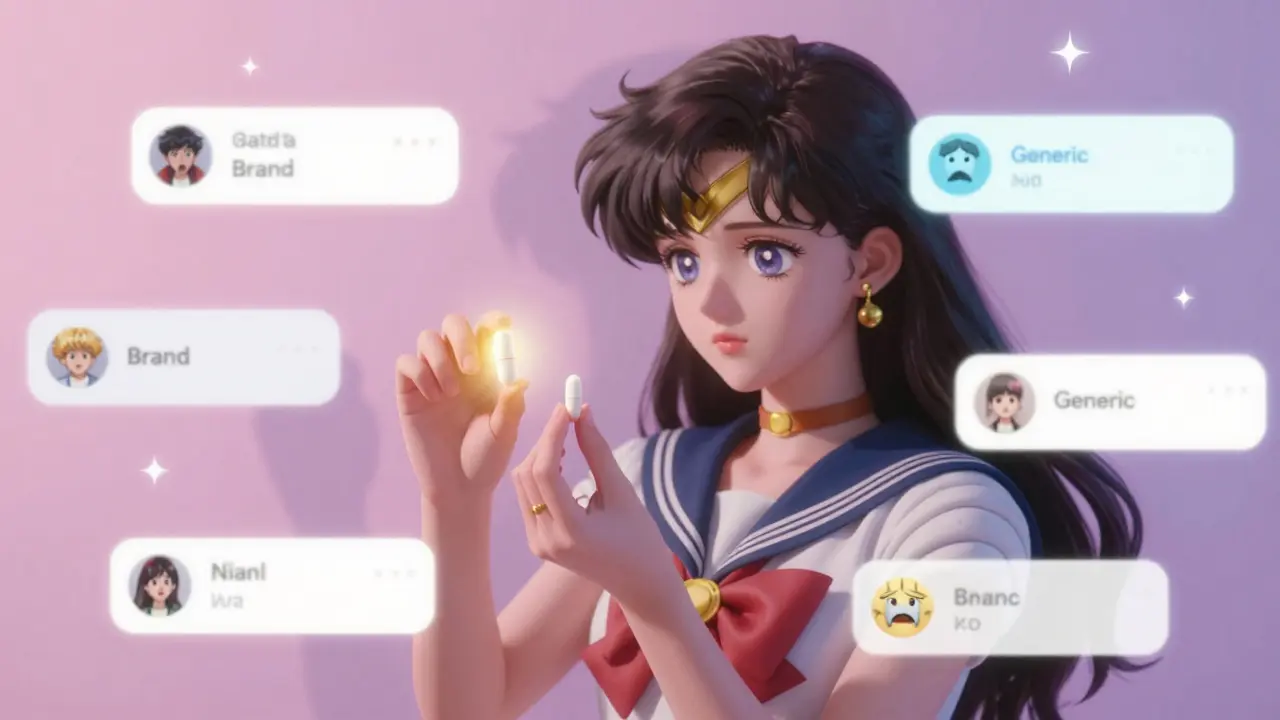
When you pick up a prescription, do you ever stop to think about whether the pill in your hand is really the same as the one your doctor prescribed? Most people don’t. But for millions, a simple switch from a brand-name drug to its generic version triggers anxiety, confusion, or even fear. And it’s not because of science-it’s because of online reviews.
Generic drugs are not knockoffs. They’re not cheap copies. They’re the exact same medicine, made to the same strict standards. The FDA requires that generics contain the same active ingredient, in the same strength, and work the same way in the body as the brand-name version. Bioequivalence tests show they must deliver 80% to 125% of the brand’s effect-meaning the difference is statistically negligible. Yet, despite this, nearly 35% of patients believe generics are less effective. Why? Because someone online said so.
What Patients Are Saying Online
Scroll through Reddit’s r/pharmacy or PatientsLikeMe, and you’ll find thousands of stories. Some say: "My doctor switched me to generic Lyrica and my nerve pain came back. I swear the generic doesn’t work." Others say: "I saved $2,000 a year on sertraline and felt zero difference." Both are real. But the negative ones? They spread faster.
A review analysis of over 6,000 posts from 2020 to 2023 found that 47% of negative comments mentioned "different side effects," and 33% claimed the generic "just didn’t work." These aren’t rare outliers. They’re patterns. And they’re shaping how people make decisions-sometimes even before they talk to a doctor.
Here’s the twist: the same person who says their generic painkiller didn’t help might have been taking a different manufacturer’s version. Or maybe their body reacted to a new filler ingredient-like a dye or binder-that’s allowed under FDA rules. But online, that gets framed as "generics are fake." No context. No science. Just fear.
The Cost of Doubt
This isn’t just about feelings. It’s about health outcomes.
A study published in the European Journal of Public Health tested this by giving patients identical tramadol-same dose, same manufacturer-but labeled either "brand" or "generic." Those who thought they were getting the brand took fewer extra pills, reported less pain, and finished their full 7-day course 22% more often. The medication was exactly the same. The only difference? What they believed.
This is the nocebo effect in action: when you expect something to fail, your body responds as if it did. And online reviews are fueling it.
Patients who distrust generics are 19% less likely to stick to their treatment plan. That means more hospital visits, more emergency care, and more long-term damage from untreated conditions. The Congressional Budget Office estimates this perception gap costs the U.S. healthcare system over $14 billion a year.
Who Believes What-and Why
Not everyone thinks the same way. And it’s not just about income or education.
People aged 65 and older are far more skeptical than those under 35. A 2020 study found only 42% of seniors trusted generics, compared to 68% of young adults. Why? Older patients often remember when generics were less reliable. They’ve seen pills change color, shape, or size before. They’ve been burned.
Meanwhile, younger patients are more likely to trust reviews from strangers online than advice from their doctor. A 2023 survey showed 41% of patients under 40 said they’d Google their medication before taking it. And if they saw a post saying "generic X made me feel awful," they’d hesitate-even if their doctor said it was safe.
Doctors and pharmacists? They know better. But even they aren’t immune. One in three doctors still believe generics are less effective. Why? Because they hear it from patients. And patients hear it from the internet.
How Providers Can Turn the Tide
Here’s the good news: communication works.
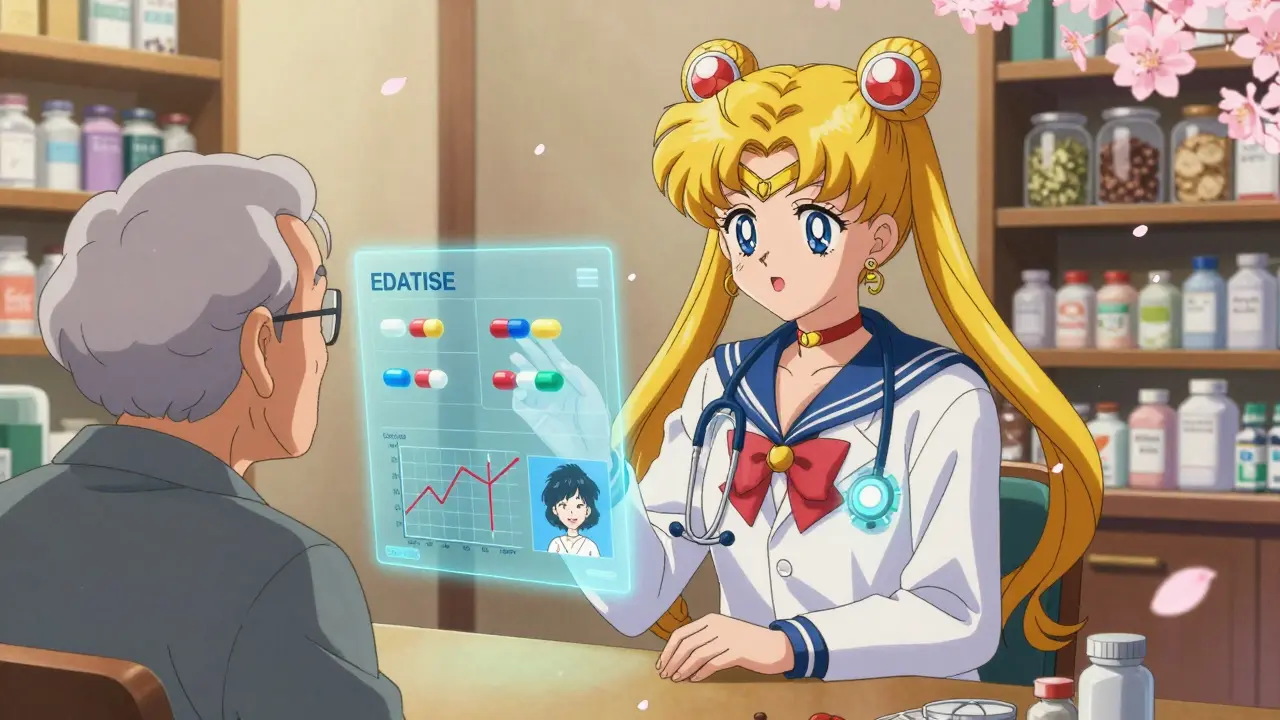
When pharmacists spend just 90 seconds explaining how generics are tested, patient acceptance jumps by nearly 40%. A Kaiser Permanente trial gave out simple handouts with facts like: "Same active ingredient. Same FDA approval. 80-85% cheaper." Within six months, patient questions about generics dropped by over half.
But time is the enemy. The average doctor has 1.7 minutes to discuss a new prescription. That’s not enough to explain bioequivalence or address deep-seated fears.
Some clinics are fixing this with tech. One system now sends patients a short video-under two minutes-before their refill is ready. It shows the FDA testing process, real patient stories, and a side-by-side comparison of brand and generic pills. Results? Adherence rose 18%.
And then there’s the power of authority. When a doctor says, "I take this same generic for my high blood pressure," patient trust shoots up. Personal stories from providers carry more weight than brochures.
What’s Being Done-And What’s Coming
The FDA is finally stepping in. In 2023, they launched a national campaign: "Generics: Same Medicine, Lower Cost." It’s running on social media, TV, and pharmacy kiosks. Early results show a 22% increase in consumer confidence.
Some drug companies are going further. Authorized generics-made by the original brand-name company but sold without the logo-are growing 38% a year. They’re not cheaper than regular generics, but they feel safer to patients. "It’s the same pill, just without the brand name," one pharmacist told me. "People trust it more. And that’s what matters."
Future tools are even more promising. Blockchain systems are being tested to let patients scan a pill’s barcode and see its full manufacturing history-from factory to pharmacy. Pilot programs have hit 98% accuracy. Imagine knowing exactly where your medicine came from. That kind of transparency could change everything.

What You Should Do
If you’re switching to a generic:
- Ask your pharmacist: "Is this the same as the brand?" They’ll show you the FDA approval code.
- Check the label. The active ingredient must match exactly. The rest? Color, shape, filler-they don’t affect how it works.
- If you feel different after switching, don’t assume it’s the drug. Talk to your provider. It could be stress, diet, sleep, or even a new supplement.
- Don’t let one bad review scare you. Look for patterns. If 10 people say it worked fine, that’s more reliable than one person saying it didn’t.
If you’re a healthcare provider:
- Don’t assume patients understand bioequivalence. Use simple words: "This pill has the same active ingredient as the brand. The FDA tests it to make sure it works just as well."
- Share your own experience: "I’ve been on this generic for years. No difference for me."
- Keep handouts in your office. A 30-second conversation can change a patient’s whole attitude.
Why This Matters
Generics aren’t just cheaper. They’re life-changing. They let people with diabetes, heart disease, depression, and chronic pain get the medicine they need without choosing between pills and rent.
But if fear keeps people from taking them, we’re not saving money-we’re sacrificing health.
The truth is simple: generics work. They’re safe. They’re tested harder than most people realize.
What’s not simple? The noise. The fear. The stories that spread faster than facts.
Online reviews aren’t going away. But we can change how we respond to them. Not by ignoring them. By answering them-with facts, with empathy, and with real human stories.
Tom Bolt
March 11, 2026 AT 11:34Shourya Tanay
March 12, 2026 AT 21:52Adam Kleinberg
March 14, 2026 AT 12:35Chris Bird
March 15, 2026 AT 21:11Mike Winter
March 17, 2026 AT 05:18Randall Walker
March 19, 2026 AT 00:53Miranda Varn-Harper
March 19, 2026 AT 04:06Alexander Erb
March 19, 2026 AT 08:13Donnie DeMarco
March 20, 2026 AT 17:47LiV Beau
March 21, 2026 AT 01:37Denise Jordan
March 21, 2026 AT 03:33Kenneth Zieden-Weber
March 22, 2026 AT 20:46