
You know those tiny bumps on your arms that look like goosebumps but never seem to disappear? You might have heard them called "chicken skin." In medical terms, this is known as Keratosis Pilaris is a very common, harmless skin condition where excess keratin blocks hair follicles, creating rough patches on the skin. KP usually appears on your upper arms, thighs, or cheeks. While it doesn't hurt or cause health problems, the rough texture can feel unpleasant and might make you self-conscious about showing skin. The good news is that while there isn't a permanent cure, there are effective ways to smooth out your skin and manage the symptoms.
Many people worry these bumps mean something serious, but dermatologists agree they are generally benign. According to data from DermNet NZ, this condition affects up to 70% of teenagers and around 40% of adults. It often shows up in childhood and tends to get worse during puberty. Interestingly, symptoms often fade on their own by the time you reach age 30, but some people keep dealing with it well into adulthood. The key thing to remember is that keratosis pilaris treatments focus on management rather than elimination. You can significantly improve how your skin looks and feels, but consistency is everything because the bumps often come back if you stop your routine.
Why Do These Bumps Appear?
To understand how to fix the problem, you need to know what causes it. Our skin constantly sheds dead cells, a process controlled by a protein called keratin. Normally, these cells float off easily. However, in people with this condition, the body produces too much keratin. This extra protein builds up and forms a plug inside the hair follicle. Imagine a hair getting stuck in a clogged pipe; that's essentially what happens under the surface of your skin. Because the hair is trapped, it creates that tiny, raised bump you can see and feel.
This blockage is linked closely to genetics. Research indicates that roughly 50-70% of cases are inherited through an autosomal dominant pattern. Mutations in the filaggrin gene, which helps maintain the skin barrier, play a major role. If your parents had rough, bumpy skin on their arms, it is highly likely you could have it too. The condition also frequently overlaps with other skin issues. About half of the people who have atopic eczema also experience these bumps, and many report having ichthyosis vulgaris, a dry skin condition.
Environment matters just as much as genetics. You might notice your skin gets much drier and rougher in the winter months. This happens because low humidity strips moisture from the top layer of the skin, making the keratin harder and more likely to clump together. Humidity levels below 40% relative humidity often trigger flare-ups. Dry air combined with hot showers can strip natural oils, making the texture feel even sandier. This seasonal variation is why so many people struggle to keep their skin smooth year-round without adjusting their habits.
Active Ingredients That Work
When you walk into a pharmacy, you'll see countless creams claiming to fix bumpy skin, but not all ingredients work the same way. The goal is to break down the keratin plug and hydrate the skin enough to let new cells shed normally. Chemical exfoliants are usually better than physical scrubs, which can actually irritate the area and make redness worse. Here is a breakdown of the most effective ingredients found in modern skincare:
| Ingredient Type | Recommended Strength | Time to See Results | Best For |
|---|---|---|---|
| Lactic Acid | 10-12% | 4-6 weeks | Gentle exfoliation and hydration |
| Urea | 10-20% | 8 weeks | Reducing thick scaling |
| Glycolic Acid | 8-12% | 12 weeks | Deep surface smoothing |
| Salicylic Acid | 2% | 6-8 weeks | Pore unclogging |
| Tretinoin | 0.025-0.1% | 3-6 months | Stubborn cases |
Lactic acid is often the first choice for daily maintenance. Creams containing 10-12% lactic acid typically show improvement in skin texture after four to six weeks. They work by gently dissolving the bonds between dead skin cells while keeping the skin hydrated. Brands like AmLactin have become staples for this reason, often rated highly by users who notice significant smoothing over two months. If you have sensitive skin, starting with lower concentrations allows your barrier to build tolerance.
Urea is another powerhouse ingredient. It acts as a humectant, meaning it draws water into the skin, and it also helps break down keratin. A concentration of 10-20% is effective for reducing the visible scales in about 65% of users. If your skin feels extremely dry, urea-rich lotions can be less irritating than pure acids. Many dermatologists suggest combining these products, perhaps using an acid wash in the evening and a urea cream in the morning.
For more persistent cases, prescription-strength options exist. Retinoids like tretinoin accelerate cell turnover, preventing plugs from forming in the first place. However, these take longer to work-often three to six months-and can cause initial irritation. About 40% of users report stinging or redness when they first start retinoids. It's crucial to introduce them slowly, maybe every other night at first. Despite the side effects, clinical reviews note that 70% of patients see significant clearing with long-term use.
Building a Effective Skincare Routine
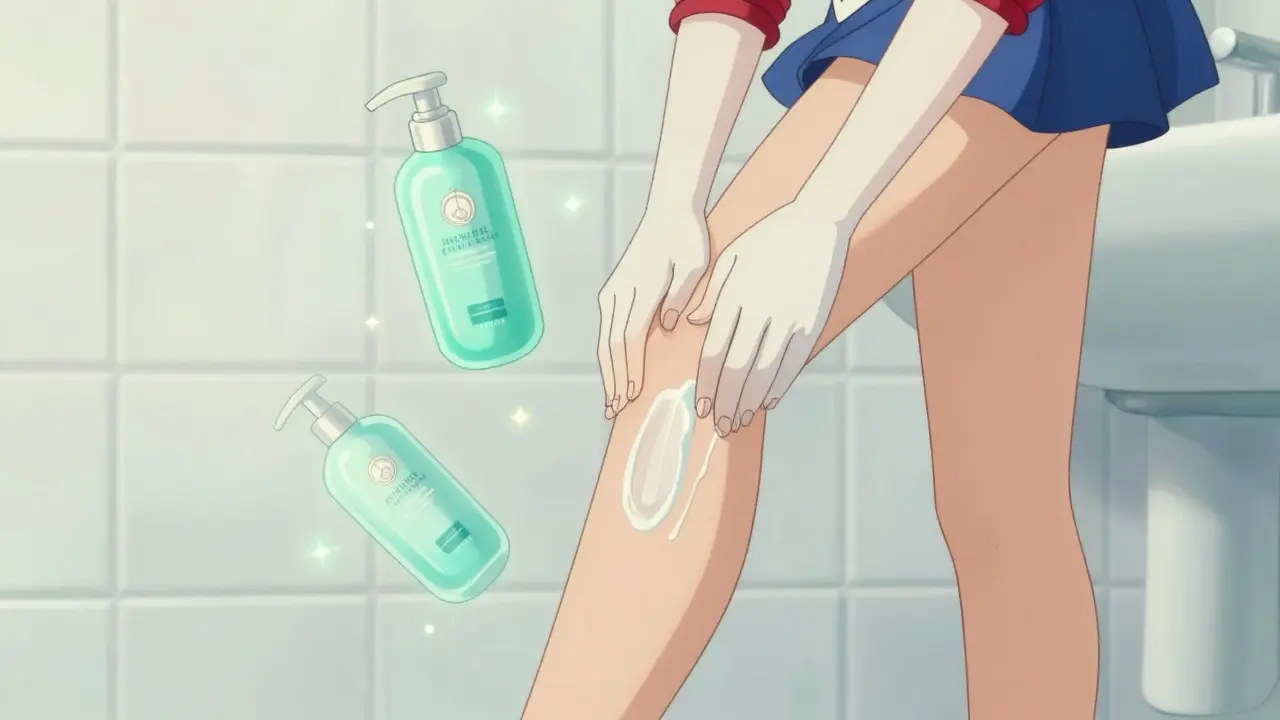
Knowing what to buy is only half the battle; how you apply it makes a huge difference. Dermatologists recommend applying active treatments to slightly damp skin within three minutes of showering. When your skin is still moist, the outer layer absorbs products up to 50% better. Hot water, however, is your enemy. It strips the natural lipid barrier, leading to more inflammation. Stick to lukewarm water and keep your showers short to maintain moisture balance.
Consistency is the hardest part of the journey. A study tracking patient adherence found that less than 40% of people kept up with twice-daily application after just three months. This leads to relapse, as symptoms typically return within two to four weeks of stopping treatment. To make this sustainable, try incorporating your exfoliating lotion into an existing habit, like right before bed. Also, invest in a high-quality moisturizer containing ceramides. Layering a ceramide cream after your treatment helps seal in the hydration and repair the barrier function compromised by the acids.
Clothing choices also impact the severity of the bumps. Tight fabrics can rub against the affected areas, causing friction that worsens the inflammation. Wearing loose cotton clothing reduces irritation in the majority of patients. Additionally, controlling indoor humidity helps immensely during winter. Using a humidifier to keep home humidity between 40-50% can decrease winter flare-ups significantly. Small environmental changes often yield bigger results than switching brands of lotion alone.

When Should You See a Doctor?
While this condition is mostly cosmetic, certain signs indicate you might need professional help. If your skin becomes extremely inflamed, painful, or develops signs of infection, a primary care provider can prescribe stronger topical steroids or antibiotics. Laser therapy, such as pulsed-dye laser, can reduce redness by up to 75% for some individuals. This option is usually reserved for stubborn inflammation because it is expensive and rarely covered by insurance due to the cosmetic nature of the treatment.
Another reason to consult a specialist is distinguishing this condition from others. Sometimes acne or eczema mimics the appearance of these bumps. A professional diagnosis ensures you aren't treating the wrong issue. For instance, using heavy acne medication on keratosis pilaris might dry out the skin too much, worsening the texture. Doctors can also test for underlying genetic factors if you are interested in newer personalized treatments currently in development.
Is keratosis pilaris contagious?
No, this condition is completely non-contagious. You cannot spread it to someone else through touch or sharing towels. It is a genetic disorder related to how your skin produces protein, not an infection caused by bacteria or viruses.
Will it ever go away completely?
For many people, the condition improves significantly after age 30. Studies show about 28% achieve complete clearance by then. However, for others, it remains a lifelong concern requiring ongoing maintenance rather than a one-time fix.
Are harsh scrubs bad for bumpy skin?
Yes, aggressive scrubbing can damage the skin barrier and increase redness. Experts advise using chemical exfoliants instead of physical scrubs to gently remove the blockages without irritating the surrounding tissue.
How fast do I expect to see results?
Be patient. Most over-the-counter lotions need 4 to 8 weeks of consistent use to show visible improvement. Prescription strength medications may take 3 to 6 months to fully normalize the skin texture.
Does diet affect the bumps?
There is no direct link between diet and the formation of these bumps. However, staying hydrated and maintaining a balanced diet supports overall skin health, which can indirectly help manage dryness and irritation associated with the condition.
emma ruth rodriguez
March 31, 2026 AT 07:24Clinical observations indicate that adherence to treatment protocols remains significantly lower than prescribed regimens suggest; specifically, patient compliance drops precipitously after ninety days of consistent application.
Therefore, integrating moisturizing agents with ceramides serves as a critical barrier repair mechanism against chemical exfoliation induced irritation.
The data supporting lactic acid efficacy requires careful consideration of pH balance in topical formulations.
Urea concentrations above twenty percent may induce erythema if applied on compromised skin barriers.
Furthermore, the synergistic effect of combining retinoids with hydrating humectants often mitigates the transient irritation associated with cellular turnover acceleration.
It is imperative to maintain indoor relative humidity levels to prevent transepidermal water loss during colder seasons.
Medical literature consistently supports a gradual introduction of active ingredients to establish epidermal tolerance.
Failure to monitor for signs of contact dermatitis can lead to exacerbation of the keratin plugs.
Proper diagnosis remains essential to rule out ichthyosis vulgaris which presents with similar clinical features.
Hence, patients should consult dermatologists if topical management fails to yield improvement after six months of diligent therapy.
Victor Ortiz
April 1, 2026 AT 03:50While the post mentions humidity levels below forty percent triggering flare-ups, this metric ignores the complex interplay of local atmospheric pressure and wind chill factor affecting skin conductivity.
Your source from DermNet NZ is useful but lacks nuance regarding individual metabolic rates influencing keratin production speed.
Most consumers fail to understand that genetic expression varies wildly even with identical filaggrin mutations present in family trees.
It is frankly amusing that people focus solely on lotions rather than correcting their dietary vitamin A intake first.
You really think a commercial cream solves a deep structural protein issue?
The underlying genetic architecture is far more deterministic than any topical intervention could ever manage effectively.
I suppose anecdotal evidence will outweigh biochemical pathways in popular discussion forums.
Stop relying on marketing hype and read the actual peer-reviewed studies on transdermal delivery systems.
Ruth Wambui
April 2, 2026 AT 22:08It is highly suspicious that mainstream medicine focuses entirely on hydration products while ignoring how environmental pollutants plug pores initially.
These massive conglomerates want us believing we are broken so we buy infinite solutions for normal human variance.
The 'beneficial' bacteria living on our skin get killed off by all this harsh acidic washing nonsense daily.
We are essentially fighting our own biology because corporations sold us the concept of smooth perfection.
Keratosis pilaris is just nature telling us to stop over-exfoliating with industrial chemicals derived from petroleum waste streams.
True healing comes from restoring natural oils that were stolen by aggressive hygiene standards imposed by media giants.
Question why these symptoms appeared alongside increased plastic consumption in modern households globally.
The truth is buried under layers of glycolic acid sales pitches designed to keep you dependent forever.
Amber Armstrong
April 4, 2026 AT 09:43I remember getting diagnosed with this condition when I was barely fourteen years old back home.
My mom always tried to scrub it off during showers with rough towels constantly.
That only made the redness look much worse apparently later on down the line.
Now I finally understand why she was trying so hard to fix the texture.
But the feeling underneath still feels like sandpaper sometimes on my upper arms.
I never felt truly comfortable wearing shorts outside in the hot summer weather.
People would secretly stare if they saw my legs sitting in the park bench.
I think that is why the social anxiety creeps up unexpectedly too during meetings.
Finding the right lotion eventually changed absolutely everything for my daily life.
It takes forever to slowly build up tolerance to strong acids in the morning.
My skin gets extremely red and stings easily if I push too hard too fast.
Winter is definitely the absolute hardest season to endure by far without help.
You have to really layer different products properly to seal moisture away.
A humidifier helps way more than most people realize during cold snaps.
I genuinely hope this information helps someone else feel less alone in the struggle.
Jonathan Sanders
April 4, 2026 AT 10:13Oh wow such trauma bonding over goosebumps now how adorable is that really.
You spend hours analyzing your reflection instead of actually living the life you have.
It is funny how much money people pour into vanity rituals for invisible flaws.
Maybe the universe gives you bumps to remind you that skin is just meat bag packaging anyway.
So much energy wasted worrying about pores that nobody actually looks at closely.
Keep crying about chicken skin while the rest of us deal with real problems existing.
This whole culture of hyper-grooming is exhausting to witness honestly.
Rick Jackson
April 5, 2026 AT 06:03Skin represents the final boundary between the internal self and the external world environment.
If we accept our biological imperfections then the anxiety fades into background noise.
The pursuit of flawlessness is simply a distraction from deeper existential acceptance practices.
Imperfect textures tell stories about how our bodies adapted to specific challenges over time.
Perhaps the goal should be harmony with physiology rather than total domination over it.
Michael Kinkoph
April 6, 2026 AT 18:38It is absolutely scandalous that individuals ignore such crucial dermatalogical basics!!
Why do people wait until inflammation sets in before taking action?!
Consistency is a virtue that clearly eludes the masses in this era of instant gratification!!!
You are responsible for maintaining your own biological machinery or face consequences!!!
Moral discipline extends into your bathroom cabinet choices as well!
Beccy Smart
April 8, 2026 AT 05:52Just realized mine is actually genetic and not dirt 😌💅