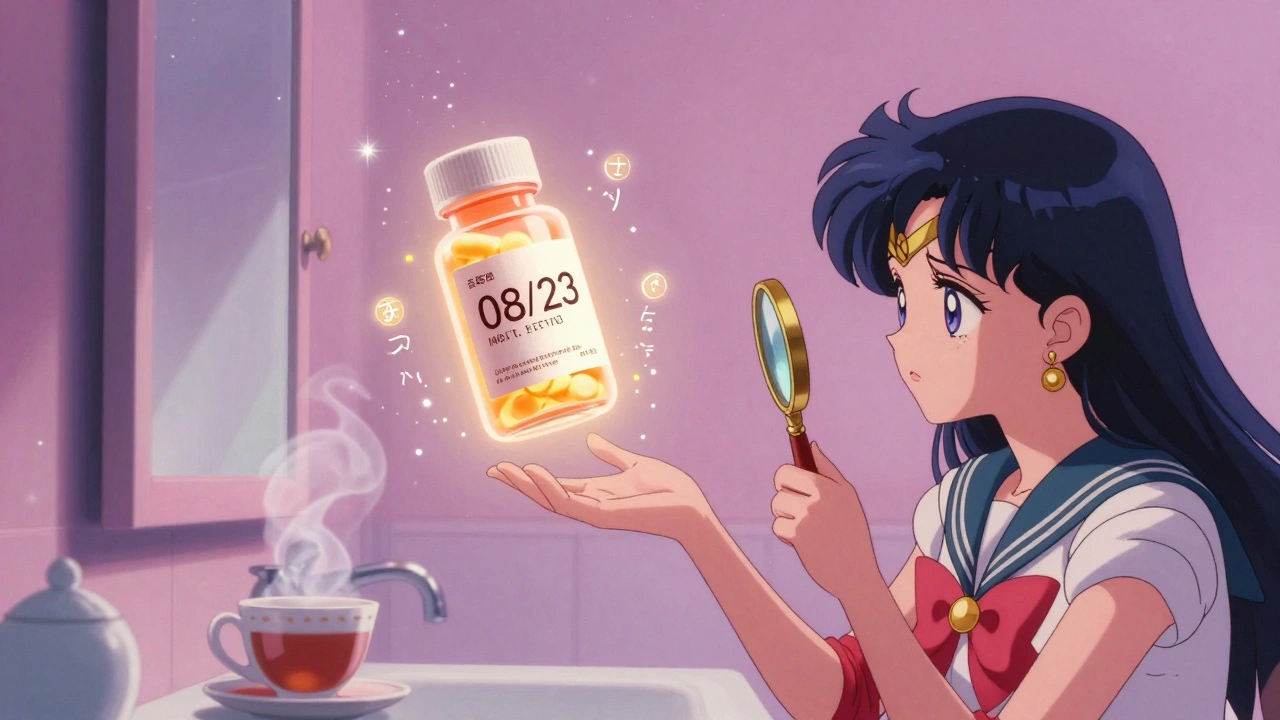
It’s easy to overlook the tiny date on the side of your pill bottle. But that date isn’t just paperwork-it’s your safety line. Taking medicine past its expiration date might seem harmless, especially if it still looks fine. But here’s the truth: expiration dates aren’t arbitrary. They’re the last day the manufacturer guarantees your medicine will work as intended and stay safe to use. Ignoring them can mean your antibiotics don’t kill the infection, your insulin doesn’t control your blood sugar, or worse-your body reacts to degraded chemicals.
What Does an Expiration Date Actually Mean?
Expiration dates on medication aren’t like milk cartons that suddenly go bad. They’re based on strict stability testing. Manufacturers put pills, liquids, and injections through heat, humidity, and light tests to see how long they keep their strength and purity. The date you see is the final day they’re sure it still works exactly as labeled.
In the U.S., the FDA has required expiration dates since 1979. In the EU, the format is day/month/year (like 15/09/2025). In China, it’s year/month/day. But no matter where you are, the rule is the same: if the date has passed, the drug’s effectiveness and safety aren’t guaranteed.
Most medications last 1 to 5 years from manufacture. Eye drops? Often 6 months to 2 years. Injections? Usually 2 to 5 years. Topical creams and patches? Around 1 to 3 years. These aren’t guesses-they’re science-backed limits.
How to Spot Different Expiration Date Formats
Not every label looks the same. You might see:
- Exp: 08/23
- Expiry: August 2023
- Use by: 2025-12-15
- Exp date: 15.08.23
When you see just a month and year-like 08/23-it means the medicine expires on the last day of that month. So 08/23 means August 31, 2023. If you see a full date like 2025-12-15, it’s clear: December 15, 2025.
Look for words like “Expiry,” “Expires,” “Use by,” or “Exp.” These all mean the same thing. If the label says “Discard after” or “Do not use after,” that’s the pharmacy’s own date-not the manufacturer’s. And those can be shorter.
Pharmacy Labels vs. Manufacturer Dates: Which One Do You Follow?
This is where most people get confused. When you pick up a prescription, the pharmacy puts their own label on the bottle. That label often says “Discard after 1 year” or “Use within 14 days.” That’s called a beyond-use date. It’s not the same as the manufacturer’s expiration date.
Why the difference? Once a pill bottle is opened, or a liquid is mixed, it’s exposed to air, moisture, and bacteria. Even if the original bottle says “Exp: 2027,” the pharmacy may say “Discard: Dec 2025” because that’s how long they know the medicine stays safe after being dispensed.
For example, antibiotic suspensions (liquid antibiotics) often expire just 14 days after being mixed-even if the original bottle says 3 years. Insulin, eye drops, and some heart medications have similar short beyond-use windows.
Always check both labels. If the pharmacy date is earlier, trust that one. If you’re unsure, ask your pharmacist to write the manufacturer’s expiration date on the bottle too. Don’t assume the pharmacy date is the final word.
Which Medications Are Dangerous After Expiration?
Most pills won’t turn toxic after their expiration date. In fact, the FDA’s Shelf Life Extension Program found that 90% of stockpiled drugs remained effective years past their date-when stored perfectly. But that doesn’t mean you should take expired medicine at home.
Some drugs are risky. Taking expired versions can be life-threatening:
- Insulin-can lose potency, leading to dangerous blood sugar spikes
- Birth control pills-may not prevent pregnancy if they’ve degraded
- Thyroid medications-even small drops in strength can cause fatigue, weight gain, or heart issues
- Anti-platelet drugs (like aspirin for heart health)-if they’re weak, you’re unprotected from clots
There’s one infamous case: old tetracycline antibiotics were linked to kidney damage when expired. But that was from 1960s manufacturing. Modern versions don’t have this problem. Still, don’t risk it. If it’s expired, don’t take it.
What Happens When Medicine Expires?
You might think expired pills just stop working. It’s worse than that.
First, they lose potency. An expired antibiotic might only kill half the bacteria. That leaves the toughest ones alive-and they multiply. That’s how antibiotic resistance starts. You don’t just get sicker-you make superbugs.
Second, liquids and suspensions can grow bacteria. Even if they look clear, microbes may have taken over. Eye drops are especially dangerous here. Using contaminated drops can lead to corneal ulcers-and even blindness.
Third, chemicals can break down. Painkillers like ibuprofen might turn into harmless compounds after a few months past expiry. But over years? They can form unknown byproducts. No one knows what those do to your liver or kidneys.
People with weak immune systems, kidney disease, or liver problems are at higher risk. Their bodies can’t handle even small changes in drug chemistry.
How to Store Medication to Keep It Fresh
Your medicine’s expiration date assumes it was stored correctly. If you leave it in a hot bathroom or a sunny windowsill, it degrades faster-sometimes in weeks.
Follow these rules:
- Keep medicines in a cool, dry place-like a bedroom drawer, not the bathroom.
- Avoid direct sunlight. Light can break down chemicals.
- If the label says “Refrigerate,” put it in the fridge. Don’t freeze unless it says so.
- Keep bottles tightly closed. Moisture is the enemy.
- Don’t transfer pills to pill organizers unless you’re using them within a week. Long-term storage in plastic containers can expose them to air and humidity.
Some new packaging uses thermochromic ink that changes color if the medicine got too hot. Merck started using this on insulin in late 2022. It’s a good sign the industry is catching on.
What to Do When You Find Expired Medicine
Never flush pills down the toilet or toss them in the trash without mixing them with something unappealing. That’s bad for the environment and dangerous if pets or kids get into it.
Instead:
- Take them to a pharmacy drop-off program. Most chain pharmacies in the UK and US have take-back bins.
- Check with your local council for hazardous waste collection days.
- If you must throw them away, mix pills with coffee grounds or cat litter, seal them in a bag, and put them in the trash.
Keep the original packaging if you can. It has the lot number-critical if there’s a recall. And if you’re unsure whether a medicine is expired, call your pharmacist. They’ve seen it all.
How to Stay on Top of Your Medications
Here’s a simple habit that saves lives:
- Every 3 months, take out all your meds-prescription and OTC-and check the dates.
- Mark the discard date on your calendar 1 month before expiration for critical drugs.
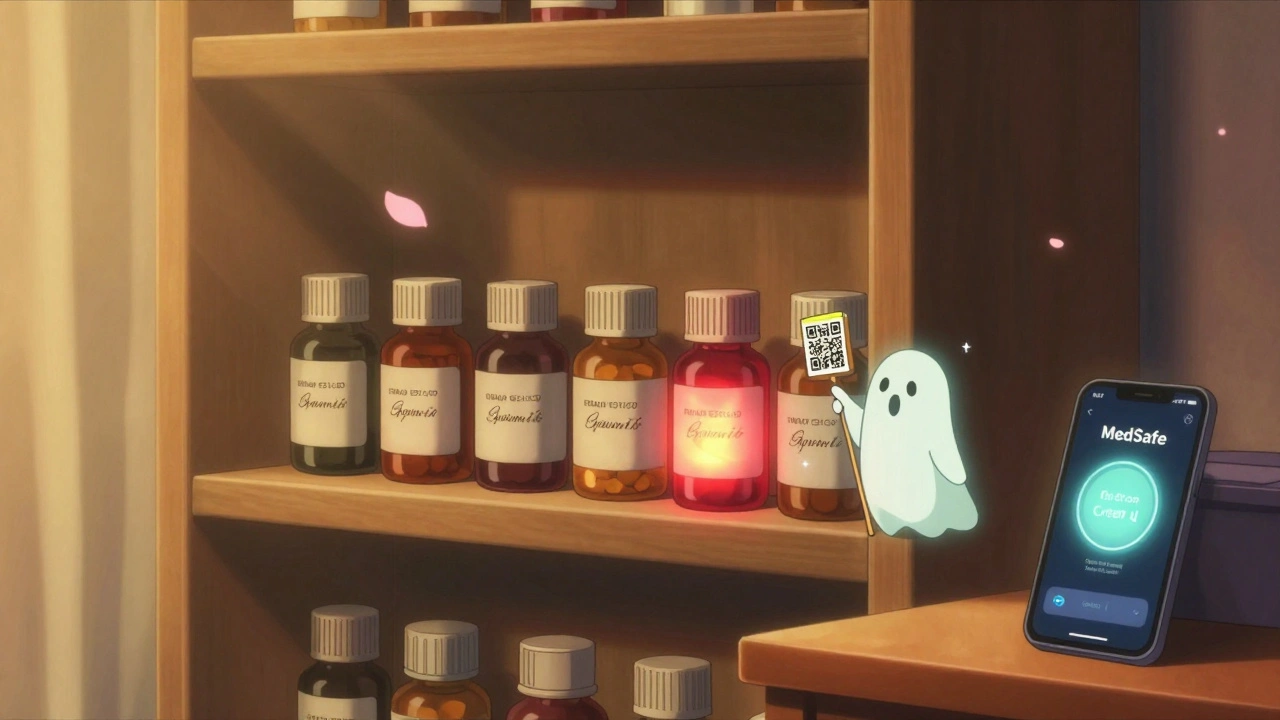
- Use apps like MedSafe or MyTherapy to set expiry reminders.
- When you get a new prescription, ask the pharmacist: “Is this the manufacturer’s date or your beyond-use date?”
Older adults are most at risk. A 2022 study found 68% of seniors thought “use by” meant the drug became poisonous right after the date. It doesn’t. But it also doesn’t work as well. That’s why confusion kills.
And don’t be cheap. A $20 pill that doesn’t work is worse than a $20 pill that does. You might end up in the hospital.
What’s Changing in Medication Labeling?
The FDA now encourages QR codes on packaging that link to digital expiration info and storage tips. The European Medicines Agency requires expiration dates printed in color-changing ink that alerts you if the drug got too hot. Smart labels with time-temperature sensors are being tested by big pharma companies.
But until those are everywhere, you still need to read the label. Don’t wait for tech to fix human error. Learn how to read the date. Check the storage. Ask questions.
Medicines aren’t like batteries you can just swap out. They’re chemicals designed to interact with your body. If they’ve changed, your body might not handle it.
Lara Tobin
December 14, 2025 AT 00:29Just found an old bottle of amoxicillin from 2021 in my bathroom cabinet... yikes. I'm tossing it today. Thanks for the reminder that 'still looks fine' doesn't mean 'still safe.' 😔
Keasha Trawick
December 15, 2025 AT 04:03Let’s be real-pharmaceuticals are essentially alchemical substances engineered to hijack your biochemistry. When they degrade, you’re not just getting ‘less effective’-you’re inviting molecular chaos into your bloodstream. That expired insulin? It’s not lazy, it’s treasonous to your pancreas. And don’t get me started on the silent apocalypse of bacterial resistance brewing in your gut because you took a weak antibiotic. We’re not just talking about wasted money-we’re talking about Darwinian fallout.
Bruno Janssen
December 15, 2025 AT 08:06I used to keep all my meds in the bathroom. Now I feel like a fool. And now I’m paranoid every time I open a bottle. Why didn’t anyone tell me this sooner?
Scott Butler
December 15, 2025 AT 22:02Why do we even let drug companies set these dates? In America, we’re told to trust the system, but they’re just trying to sell more pills. I’ve taken expired meds for years and never had an issue. If you’re scared of your own medicine, maybe you shouldn’t be taking it at all.
Deborah Andrich
December 16, 2025 AT 07:58My grandma died because she took expired blood pressure pills thinking they were fine. She didn’t know the difference between pharmacy dates and manufacturer dates. Please, if you’re reading this-check your meds. Talk to your pharmacist. Don’t wait until it’s too late. We’ve all got someone we love who needs this info.
Richard Ayres
December 17, 2025 AT 13:34This is an exceptionally well-researched and necessary guide. The distinction between manufacturer expiration dates and beyond-use dates is one of the most overlooked public health nuances. I’ve shared this with my entire family, especially my elderly relatives who rely on multiple prescriptions. Thank you for emphasizing the environmental responsibility aspect as well-proper disposal is just as critical as proper usage.
Rawlson King
December 17, 2025 AT 20:33Canada has stricter labeling laws. We don’t get these ambiguous ‘08/23’ formats. Everything is clear: YYYY-MM-DD. If your country can’t even print a date properly, maybe your medicine shouldn’t be trusted either.
kevin moranga
December 17, 2025 AT 21:34Hey, I used to be the guy who kept his meds in the glovebox of his truck. Then I got diagnosed with Type 2 and realized I was basically playing Russian roulette with my health. Now I’ve got a little medicine drawer in my bedroom with a humidity pack and a checklist. Took me 3 months to get into the habit, but now I feel like a superhero. You can do this too. Start small-just check one bottle this week. You got this.
Alvin Montanez
December 18, 2025 AT 05:00People are so lazy these days. You think a little expiration date is hard to read? You don’t want to ask your pharmacist? You’d rather risk your life because you’re too busy scrolling TikTok? I’ve seen people take expired antibiotics for their kids. That’s not just irresponsible-it’s criminal. If you can’t be bothered to read a label, maybe you shouldn’t be in charge of your own health. Stop being a burden on the system.
Cole Newman
December 19, 2025 AT 13:17Bro I just opened a bottle of Advil from 2020 and it still tastes the same. You telling me I’m gonna die because I took a pill that’s 4 years old? Nah. I’ve got more faith in my body than you do. Also, why do you care so much? Are you paid by Pfizer or something?
Casey Mellish
December 19, 2025 AT 18:52As an Aussie, I’ve always found the U.S. pharmacy system fascinating-especially the ‘beyond-use date’ thing. In Australia, pharmacists are required by law to write both the manufacturer’s expiry and the dispensing expiry on the label. No ambiguity. We also have nationwide take-back programs in every pharmacy. Maybe we should export this model? Knowledge shouldn’t be a privilege-it should be standard. And yes, I’m that guy who checks his meds every season. I’m not weird-I’m just prepared.