Throwing away old pills might seem like a simple chore, but if you skip one step, you could be putting your identity at risk. Prescription bottles don’t just contain empty plastic-they hold your name, address, doctor’s name, diagnosis, and even the exact medication you take. That’s enough information for someone to steal your identity, forge prescriptions, or even get drugs in your name. And it’s happening more than you think.
Why Privacy Matters More Than You Realize
Every year, millions of prescription bottles end up in landfills with personal information still visible. A 2021 study in the Journal of the American Pharmacists Association found that 42% of pill bottles thrown in household trash still had readable labels. That means strangers could pull your name and prescription details from your trash can and use them to commit fraud.
Identity theft isn’t just about credit cards. Someone could use your prescription info to get opioids, antidepressants, or controlled substances under your name. One woman reported on Drugs.com that after tossing her oxycodone bottle without removing her details, someone used her information to get more pills-and then filed $1,200 in fraudulent insurance claims. That’s not rare. The HHS Office for Civil Rights calls improper disposal of prescription labels one of the top 10 privacy risks in healthcare today.
What Information Is on Your Prescription Label?
It’s not just your name. Prescription labels typically include:
- Your full name
- Your address
- The name of your doctor
- The pharmacy name and phone number
- The prescription number (Rx#)
- The medication name and dosage
- The date filled and refill instructions
This isn’t just contact info-it’s a detailed medical profile. Under HIPAA, this is classified as Protected Health Information (PHI). Healthcare providers are required to protect it. But when you throw the bottle away? That responsibility falls on you.
What the FDA and DEA Say About Safe Disposal
The FDA, DEA, and EPA all agree: you must remove or destroy personal information before tossing medication containers. The FDA’s official guidance, updated in October 2022, says clearly: “Scratch out all personal information on the prescription label of the empty pill bottle or medicine packaging to make it unreadable.”
The DEA adds that any disposal method must prevent unauthorized access to personal data. That’s why their National Prescription Drug Take Back Days-held twice a year-have collected over 9.5 million pounds of medications since 2010. At these events, your meds are collected in sealed bins, and no one ever sees your name.
But what if you can’t get to a take-back site? Here’s what you need to do at home.
Step-by-Step: How to Dispose of Medications Safely at Home
Follow these five steps every time you clean out your medicine cabinet:
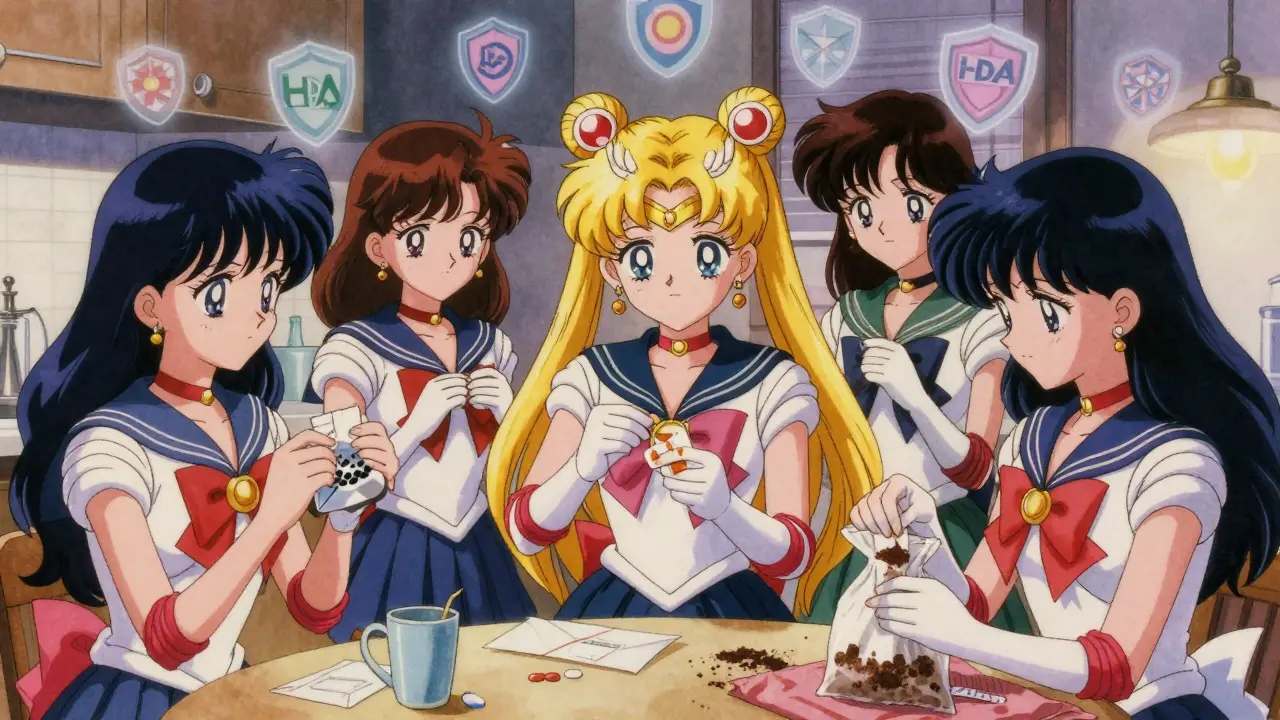
- Take pills out of the original bottle. Don’t just toss the bottle. Empty the contents into a sealable plastic bag or container.
- Mix them with something unappetizing. Add used coffee grounds, cat litter, dirt, or even spicy mustard. This makes the mixture unappealing to kids, pets, or people digging through trash.
- Seal it tightly. Use a zip-top bag or a container with a lid. Tape it shut if needed.
- Destroy the label. This is the most important step. Use a permanent marker to black out your name, address, Rx number, and doctor’s info. Or, soak the label in water, peel it off, and shred it. If it’s stubborn, use a utility knife or scissors to cut it into pieces.
- Throw it in the trash. Put the sealed mixture and the destroyed container in your regular garbage-not the recycling bin.
Pro tip: Use a Sharpie Industrial marker. Regular markers can smear. Industrial ones are designed to stick to plastic and dry fast. A pack costs under $5 and lasts for years.
When to Flush Medications (And When Not To)
The FDA maintains a Flush List of 15 medications that are so dangerous if accidentally ingested-especially by children-that you should flush them down the toilet immediately. These include powerful opioids like fentanyl patches, certain painkillers, and seizure medications.
As of May 2024, the list includes:
- Fentanyl patches
- Remifentanil
- Methylphenidate transdermal system
- Tapentadol
- Alprazolam extended-release
Check the FDA’s website or use the free DisposeRx app to see if your medication is on the list. If it is, flush it-then destroy the bottle label before throwing it away.
Best Privacy-Protecting Disposal Options
Not all disposal methods are equal when it comes to privacy. Here’s how they stack up:
| Method | Privacy Level | Cost | Best For |
|---|---|---|---|
| DEA Take-Back Events | ★★★★★ | Free | Everyone-highest security |
| Mail-Back Envelopes (e.g., Walgreens) | ★★★★★ | $2.99-$6.99 | Homebound, elderly, rural areas |
| Pharmaceutical Deactivation Pouches (e.g., DisposeRx) | ★★★★☆ | $1.50-$3.00 | Those who want one-step disposal |
| At-Home Trash (with label removal) | ★★☆☆☆ | Free | Only if you follow all steps |
| At-Home Trash (no label removal) | ★☆☆☆☆ | Free | Never do this |
Mail-back envelopes are a great option if you can’t get to a drop-off site. Companies like Walgreens offer them for under $7. You put your meds inside, seal it, and mail it to a licensed facility. Your name never leaves your hands.
Deactivation pouches are newer and gaining popularity. You pour your pills in, add water, shake, and the pouch chemically neutralizes the drugs. The bottle label? Still needs to be destroyed-but you’ve handled the meds safely without opening them.
Common Mistakes People Make
Even people who mean well mess this up. Here are the most common errors:
- Just tossing the bottle. 68% of people skip removing label info, according to Mayo Clinic.
- Putting bottles in recycling. Pharmacies don’t recycle them. The plastic is contaminated.
- Thinking flushing is always okay. Only flush if it’s on the FDA Flush List. Otherwise, it harms water systems.
- Waiting until the bottle is empty. Don’t wait. Remove labels as soon as you finish the prescription.
- Assuming pharmacies handle it. Most pharmacies won’t take back bottles unless it’s a take-back event.
A 2023 University of Michigan study found that 47% of people struggled to remove sticky labels from plastic bottles. Solution? Soak them in warm, soapy water for 10 minutes. The label should peel off easily.
Why This Is Getting Harder for Older Adults
Privacy protection sounds simple-until you’re 75 and have arthritis, poor eyesight, or memory issues. A Kaiser Family Foundation survey found that 37% of adults over 65 feel confused about how to properly dispose of meds.
That’s why some pharmacies now offer pre-labeled disposal kits with large-print instructions. Some community centers even host monthly disposal events with volunteers who help seniors destroy labels and pack meds safely.
If you’re helping an older relative, do it with them. Don’t just assume they know what to do. Walk them through it once. Then check in a few weeks later.
What’s Changing in 2025 and Beyond
Privacy-focused disposal is no longer optional-it’s becoming standard. By 2026, most new medication packaging will include built-in privacy features: labels that self-destruct when wet, QR codes that erase data after scanning, or blister packs with tear-off sections for personal info.
Smart kiosks are also coming. Some pharmacies are testing machines where you drop in your bottle, scan a code, and the machine automatically destroys the label and neutralizes the pills. These are expected to be in 40% of major pharmacies by 2027.
Legislation is catching up too. The Safe Drug Disposal Act of 2024, currently in Congress, would fund $50 million a year for community disposal programs-with privacy protection built into every grant.
Final Reminder: It Only Takes 5 Minutes
Protecting your privacy when disposing of medications isn’t about being paranoid. It’s about being smart. You wouldn’t leave your Social Security card in the trash. Don’t leave your medical history there either.
Next time you finish a prescription, grab a marker. Take five minutes. Scratch out the name. Tear off the label. Mix it with coffee grounds. Seal it. Toss it.
That’s it. You’ve protected your identity. You’ve kept your meds out of the wrong hands. And you’ve done something simple that most people forget to do.
Can I recycle empty pill bottles?
No. Even if the plastic is recyclable, the labels contain your personal health information, and the bottles may still have residue from medications. Most recycling centers reject them. Destroy the label and throw the bottle in the trash.
What if I can’t find a take-back site near me?
Use a mail-back envelope from a pharmacy like Walgreens or CVS. They cost under $7 and are shipped directly to a secure disposal facility. You can also buy deactivation pouches online or at pharmacies. Both options keep your info private without requiring a trip.
Is it safe to flush medications?
Only if the medication is on the FDA’s Flush List. Flushing other drugs harms water supplies. For everything else, mix with coffee grounds or cat litter, seal it, and throw it in the trash.
How do I know if my medication is on the FDA Flush List?
Check the FDA’s website or download the free DisposeRx app. It lets you scan the barcode on your bottle and tells you whether to flush, take to a drop-off, or dispose at home. You can also call your pharmacist-they know the list.
What should I do with expired vitamins or supplements?
They’re not regulated like prescription drugs, but they still contain personal info on the label. Remove or black out your name and address, then throw them in the trash with something unappetizing like dirt or coffee grounds. Don’t flush them.
Do I need to remove the label if I’m using a deactivation pouch?
Yes. The pouch destroys the medication, but not the label. You still need to scratch out or cover your name, address, and Rx number before tossing the empty bottle. Otherwise, someone could still steal your info.
Is it illegal to throw away prescription bottles with labels intact?
No, it’s not illegal for individuals to do so. But under HIPAA, healthcare providers and pharmacies are required to protect your information. If you’re a provider or pharmacy, failing to destroy PHI on labels can lead to fines. For patients, it’s a privacy risk-not a legal one.
Betty Bomber
January 27, 2026 AT 18:42I used to just toss my pill bottles until my sister got her identity stolen because of it. Now I use a Sharpie Industrial marker-no smearing, no hassle. Five minutes and I’m done. Seriously, why don’t more people do this?
Robin Van Emous
January 28, 2026 AT 16:03It’s wild how something so simple gets ignored. I mean, we lock our doors, we use passwords, we encrypt our emails… but we leave medical records in the trash like it’s nothing. It’s not paranoia-it’s basic hygiene.
Angie Thompson
January 28, 2026 AT 16:22OMG YES!! 🙌 I just did this last week with my mom’s leftover gabapentin. Soaked the label in warm water, peeled it off like a sticker, mixed the pills with cat litter, sealed it in a ziplock… felt like a privacy ninja. 🥷💊 #SmallActsBigImpact
Mohammed Rizvi
January 30, 2026 AT 01:35People think privacy is a luxury. Nah. It’s the bare minimum. You wouldn’t leave your house key under the mat. Why leave your diagnosis there? I’ve seen people just dump bottles in recycling bins like they’re doing the planet a favor. Nope. That’s just giving hackers a free ID kit.
Shawn Raja
January 31, 2026 AT 23:40It’s funny how we’ll spend hours setting up two-factor auth but won’t scratch out a name on a bottle. We live in a world where your phone knows your heartbeat, your location, your Spotify history… but you think a pill bottle is harmless? The real vulnerability isn’t the data-it’s the apathy.
Ryan W
February 2, 2026 AT 01:00According to HIPAA Title 45 CFR § 164.502, PHI must be rendered unreadable, indecipherable, and unrecoverable upon disposal. The FDA’s guidance is legally non-binding, but the standard of care is clear. Failure to comply with industry best practices constitutes negligence. If you're not using a deactivation pouch or take-back program, you're contributing to systemic risk. Stop being lazy.
Allie Lehto
February 4, 2026 AT 00:05Ugh. I’m so tired of people being so careless. I told my neighbor to destroy her labels and she said, ‘It’s just a bottle.’ Like, honey, your bipolar diagnosis is on that label. Your doctor’s name is on it. Someone could fake a script for Xanax and blame you. And then you’re the one in court. 😭
TONY ADAMS
February 4, 2026 AT 05:05bro why are you even talking about this? just flush it. who cares if someone finds your bottle? i’ve thrown away like 200 bottles and no one’s ever stolen my identity. you guys are paranoid. also why are you using a sharpie? just burn the bottle.
Napoleon Huere
February 5, 2026 AT 20:16There’s a quiet dignity in destroying your own medical footprint. We don’t think about it, but every pill bottle is a chapter of your life-written in plastic and ink. To erase it properly? That’s not just security. It’s closure. It’s saying: ‘I no longer need this part of me.’
Shweta Deshpande
February 6, 2026 AT 00:11Thank you so much for writing this! I’m from India and we don’t have take-back programs here, but I’ve started soaking labels in warm soapy water and peeling them off-then I tear them into tiny pieces and mix the meds with rice or spices. My aunt thinks I’m overdoing it, but I told her, ‘Better safe than sorry!’ Now she does it too 😊 We’re all learning, one bottle at a time!
Aishah Bango
February 6, 2026 AT 05:26People who don’t destroy their labels are literally enabling drug dealers. It’s not just about identity theft-it’s about fueling the opioid crisis. If you’re too lazy to scratch out your name, you’re complicit. End of story.
Simran Kaur
February 7, 2026 AT 21:30I just cried reading this. My dad passed last year and I found his medicine cabinet still full of bottles-labels untouched. I spent hours soaking them, shredding them, mixing them with coffee grounds. It felt like cleaning up his last secrets. I wish someone had told me this sooner. Thank you for making me feel less alone.
Neil Thorogood
February 9, 2026 AT 15:26So I tried the deactivation pouch thing. It’s kinda cool, like a magic potion. 🧪 But guess what? The label still had my name on it. So I cut it up with scissors like a forensic detective. 🕵️♂️ Now I do both: pouch + label murder. You’re welcome, future dumpster divers.