Imagine this scenario: You hand a patient their prescription, but instead of the familiar blue oval pill they’ve taken for years, it’s a white capsule. The price on the receipt is significantly lower, but the patient looks worried. "Is this really going to work?" they ask. This moment is critical. How you respond determines whether they take the medication consistently or stop altogether.
As healthcare providers, we know that generic medications are pharmaceutical products containing the same active ingredients as brand-name drugs, approved through rigorous regulatory processes just as effective as their brand-name counterparts. Yet, bridging the gap between clinical evidence and patient perception remains one of our biggest challenges. Effective communication isn't just about saving money; it's about maintaining trust and ensuring health outcomes.
The Science Behind the Switch
To convince a skeptical patient, you first need to be convinced yourself-not just by the data, but by understanding what that data actually means. When the FDA approves a generic drug, it doesn't guess. It requires proof of bioequivalence, which is a measure showing that a generic drug delivers the same amount of active ingredient into the bloodstream in the same timeframe as the brand-name reference product.
Here is the concrete reality: The FDA mandates that the 90% confidence intervals for the ratio of geometric means must fall within 80-125% of the reference product. In plain English? The generic works exactly like the brand. It has the same strength, dosage form, and route of administration. The only differences lie in inactive ingredients-things like dyes, binders, or fillers-which explain why the pill might look different or taste slightly distinct, but do not affect how it heals you.
| Feature | Brand-Name Drug | Generic Drug |
|---|---|---|
| Active Ingredient | Identical | Identical |
| Bioavailability | Established via clinical trials | Proven via bioequivalence studies (80-125% range) |
| Cost | High (covers R&D, marketing) | Low (typically 80-85% less than brand) |
| Average Development Cost | $2.6 billion per drug | ~$2.2 million per application |
| Appearance | Proprietary shape/color | Varies by manufacturer (cannot copy trademark) |
Understanding these specifics allows you to move beyond vague reassurances. Instead of saying "it's the same," you can say, "It contains the exact same healing ingredient, tested to ensure it enters your body at the same speed." Specificity builds credibility.
Why Patients Resist Generics
Before you can communicate effectively, you need to understand the root of the hesitation. Research published in the *Journal of General Internal Medicine* found that 28% of patients express concern when switching from brand to generic. But why? It’s rarely about science; it’s usually about psychology and perception.
Visual cues play a massive role. If a patient associates their relief with a specific blue pill, a white one feels like a placebo. Data from Reddit’s pharmacy community highlights that 63% of patient concerns stem directly from visual differences. Another 27% doubt efficacy, often fueled by anecdotes rather than evidence. Then there’s the "previous negative experience" factor-about 10% of patients have had issues with a specific generic manufacturer in the past, leading to generalized distrust.
There is also the issue of inertia. For chronic conditions, patients want stability. Changing anything-even if it’s cheaper and equally effective-feels risky. Acknowledging this fear validates their feelings. When you dismiss their concern with "It’s fine," they feel unheard. When you acknowledge, "I understand it looks different, and it’s natural to worry," you open the door for education.

The TELL Communication Framework
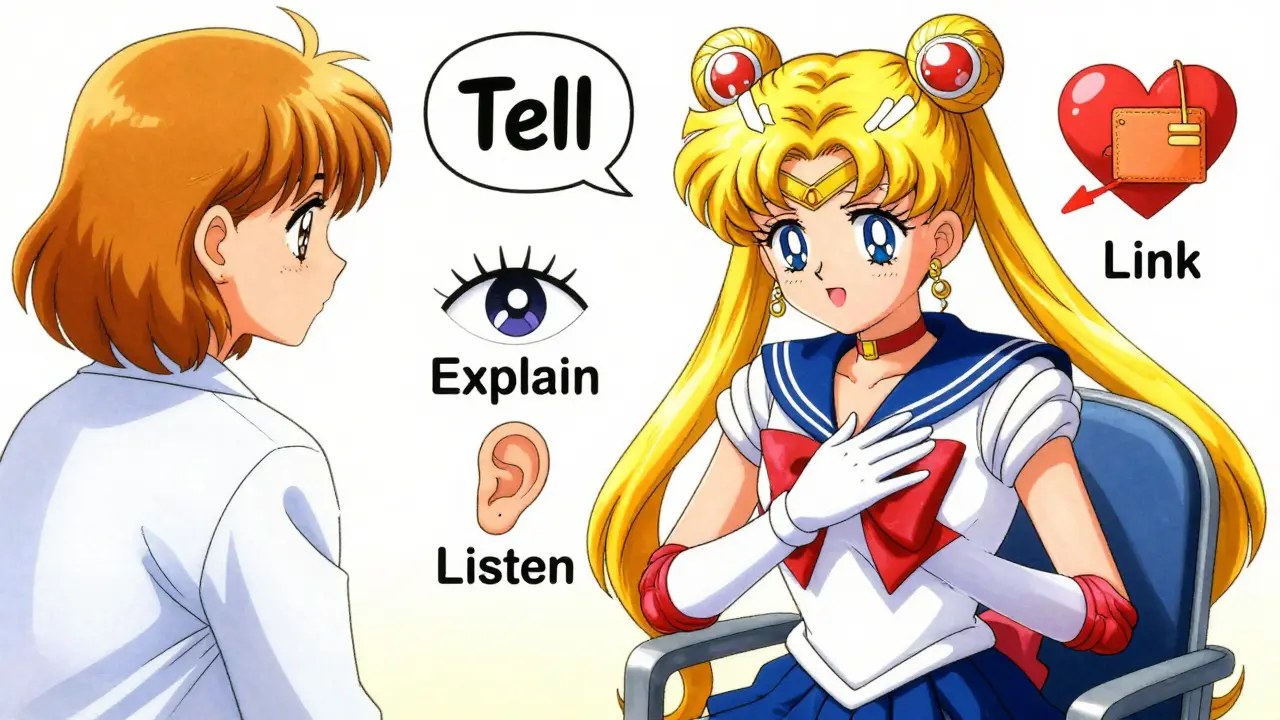
Structure matters. Ad-hoc explanations often miss key points. The American Pharmacists Association recommends the 'TELL' framework, which provides a clear, repeatable structure for these conversations. Here is how to apply it:
- Tell: Start with the facts. "This generic contains the exact same active ingredient as the brand name you were taking before." Be direct. Don’t hedge.
- Explain: Address the visible differences. "The reason it looks different is because trademark laws prevent manufacturers from copying the brand’s appearance. The inactive ingredients, like colors or binders, may vary, but they don’t change how the medicine works."
- Listen: This is the most crucial step. Stop talking and ask, "What specifically worries you about this change?" Let them voice their fears. Is it the color? A past bad experience? Fear of side effects?
- Link: Connect the information back to their personal goals. "Since this medication costs significantly less, you’ll have more financial flexibility, which helps you stay consistent with your treatment plan long-term."
This framework shifts the conversation from a sales pitch to a collaborative discussion. It respects the patient’s intelligence while guiding them toward the best clinical decision.
Handling Specific Concerns
Patients will ask hard questions. Having ready, evidence-based answers prevents awkward pauses that breed doubt. Here are three common scenarios and how to handle them:
"Is it really as strong?"
Answer: "Yes. The FDA requires that generics deliver the same amount of active ingredient into your bloodstream in the same amount of time. They test this rigorously. If it weren’t as strong, it wouldn’t be approved."
"My friend said this generic gave them headaches."
Answer: "That’s understandable to hear. Sometimes, inactive ingredients like dyes can affect sensitive individuals differently. However, for the vast majority of people, including those with similar profiles, the therapeutic effect is identical. We can monitor how you feel over the next week. If you notice any unusual side effects, let’s discuss them immediately."
"Can I stick with the brand?"
Answer: "You certainly can, but it will likely cost you significantly more out-of-pocket. Based on current insurance tiers, the brand might cost $X more per month. Given that the generic offers the same health benefit, would you like to try the generic to save those funds, or do you prefer to invest in the brand for peace of mind?" This approach presents the choice without judgment, allowing the patient to own the decision.
Special Cases: Narrow Therapeutic Index Drugs
While most generics are straightforward substitutes, some require extra caution. These are known as Narrow Therapeutic Index (NTI) drugs, which are medications where small changes in blood concentration can lead to serious side effects or lack of efficacy, such as warfarin, levothyroxine, or phenytoin. For these drugs, consistency in the manufacturer is key.
If a patient is stable on a specific generic version of an NTI drug, switching to a different manufacturer’s generic could theoretically cause fluctuations. While all FDA-approved generics meet strict bioequivalence standards, the margin for error is smaller here. In these cases, advise patients to stick with the same manufacturer whenever possible. If a switch is unavoidable due to supply issues, emphasize the need for closer monitoring and lab tests to ensure levels remain stable. Transparency here builds immense trust.
Measuring Success: Adherence and Outcomes
The ultimate goal of discussing generics is improved adherence. Studies show that patients who receive thorough counseling about generics demonstrate a 22% higher adherence rate at six months compared to those who receive minimal information. Why? Because uncertainty breeds non-adherence. When patients understand *why* they are taking a generic and *how* it works, they are more likely to take it consistently.
Use the "teach-back" method to confirm understanding. Ask the patient to explain in their own words what they know about their new medication. If they can articulate that it’s the same active ingredient and why it looks different, you’ve succeeded. Document this interaction in their profile. Noting "Counseled on generic substitution, addressed visual difference concerns" helps future providers understand the context.
Remember, you are not just dispensing pills; you are managing perceptions. By combining scientific accuracy with empathetic communication, you turn a potential point of friction into an opportunity for better health outcomes and financial relief.
Are generic medications always cheaper than brand-name drugs?
Yes, typically by 80-85%. Generic drugs cost less because manufacturers do not need to repeat the expensive clinical trials required for brand-name drugs, which average $2.6 billion in development costs. Generics leverage existing safety data, reducing development costs to approximately $2.2 million per application. Additionally, market competition among multiple generic manufacturers drives prices down further.
Why do generic pills look different from brand-name pills?
Trademark laws prevent generic manufacturers from copying the exact shape, color, or imprint of a brand-name drug. Therefore, generics use different inactive ingredients, such as dyes or binders, which alter the appearance. These inactive ingredients do not affect the drug's therapeutic effectiveness or safety, provided they meet FDA quality standards.
What is bioequivalence, and why does it matter?
Bioequivalence is a regulatory standard requiring that a generic drug delivers the same amount of active ingredient into the patient's bloodstream in the same amount of time as the brand-name reference product. The FDA requires 90% confidence intervals for the ratio of geometric means to fall within 80-125% of the reference product. This ensures that the generic performs identically to the brand in terms of absorption and elimination.
Should I be concerned about switching generic manufacturers?
For most medications, switching between generic manufacturers is safe and clinically insignificant. However, for Narrow Therapeutic Index (NTI) drugs like warfarin or levothyroxine, consistency is preferred. Small variations in inactive ingredients or manufacturing processes could theoretically impact blood levels. For NTI drugs, try to maintain the same manufacturer, and consult your provider if a switch is necessary.
How can I improve my patient's acceptance of generic medications?
Use the TELL framework: Tell them the active ingredient is identical, Explain that appearance differences are due to trademark laws and inactive ingredients, Listen to their specific concerns, and Link the cost savings to their long-term health goals. Using the teach-back method to confirm understanding also increases retention and adherence rates by up to 40%.