Imagine a drug company spends billions developing a breakthrough medicine. For years, they have total control over the market. But as the clock ticks down toward the patent expiration date, a financial cliff looms. To avoid this, many brands don't just rely on the original patent; they build a "picket fence" of secondary protections. One of the most effective tools in this strategy is the formulation patents on combinations, which allow a company to keep its product exclusive long after the initial chemical patent has expired.
Quick Takeaways: The Strategy of Combination Patents
- The Goal: Extend market control by 3 to 16 years beyond the original patent life.
- The Method: Patenting specific ratios of active ingredients, new delivery systems, or unique dosage regimens.
- The Legal Hurdle: Companies must prove "unexpected results" to overcome the legal presumption that combining two known drugs is obvious.
- The Impact: While it protects R&D investments, it often delays generic entry and keeps drug prices higher for longer.
The Mechanics of the "Picket Fence" Strategy
When a company launches a drug, they start with a composition-of-matter patent. This is the "gold standard" because it protects the actual chemical molecule. However, once that expires, generic competitors can move in. To stop this, brands employ Evergreening is the practice of extending the life of a patent by making slight modifications to a drug to create a new, patented version .
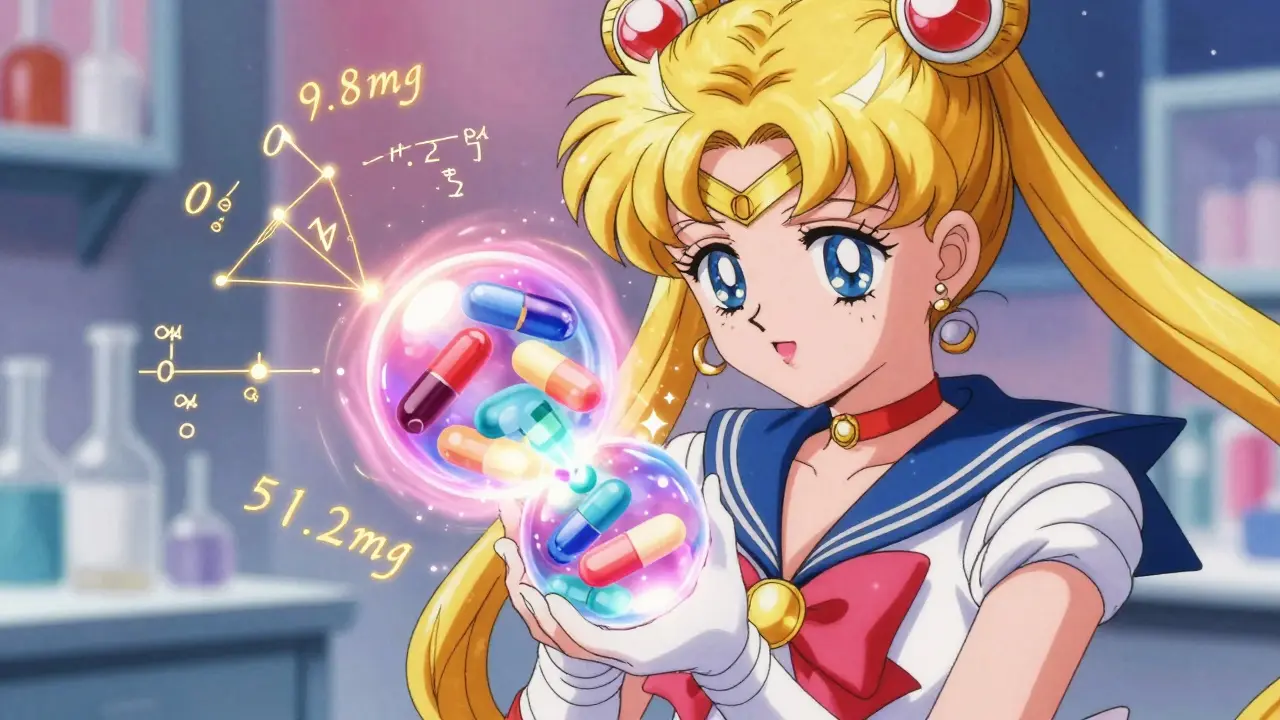
By creating a combination product-mixing two active pharmaceutical ingredients (APIs) into one pill or injection-a brand can file for a new patent. This isn't just about mixing things together; it's about the precision. For example, a patent might not cover just "Drug A and Drug B," but specifically "10mg of Drug A and 50mg of Drug B." If a generic maker can't match that exact ratio or delivery method, they can't launch their version without infringing.
This strategy often creates what experts call "patent thickets." Instead of one wall, the brand builds a dense forest of overlapping patents covering the API combination, the specific salt form, the modified-release mechanism, and even the injector device. According to the USPTO's 2024 report, this can extend a brand's dominance for an average of 3 to 16 years beyond the initial expiration.
Overcoming the "Obviousness" Trap
It isn't easy to get these patents approved. Patent examiners use a "common-sense" test based on the 2007 Supreme Court case KSR International Co. v. Teleflex Inc. The logic is simple: if you take two known drugs and combine them for a known purpose, the result is "obvious" and therefore not patentable.
To beat this, companies have to prove their combination does something surprising. They can't just say it's convenient; they must provide data showing a statistically significant improvement in efficacy or a dramatic reduction in side effects. This is why you'll see companies investing $28 to $42 million in additional R&D just to generate the data needed to satisfy the USPTO is the United States Patent and Trademark Office, the federal agency responsible for granting US patents .
Precision is everything. In some legal circles, practitioners have noted that a claim for a 10mg/50mg ratio might get rejected as obvious, while a highly specific 9.8mg/51.2mg ratio gets approved. That tiny difference in precision can be the difference between billions in revenue and a generic competitor entering the market.
Comparing Primary vs. Secondary Patents
Not all patents are created equal. While the primary patent protects the core discovery, formulation and combination patents are secondary tools used for strategic positioning.
| Feature | Primary (Composition-of-Matter) | Secondary (Formulation/Combination) |
|---|---|---|
| Core Focus | The chemical molecule itself | Ratios, delivery, and API combinations |
| Average Exclusivity | 12-14 years post-approval | 3-8 additional years |
| Invalidation Rate | Lower (~22%) | Higher (~38%) |
| Legal Vulnerability | Strongly protected | Prone to Paragraph IV challenges |
The Regulatory Game: The Orange Book and Exclusivities
The FDA Orange Book is the official list of approved drug products with therapeutic equivalence evaluations, which tracks patents that may limit generic competition is where the battle is fought. When a company files a New Drug Application (NDA), they list their patents here. If a generic company wants to enter the market, they often file a "Paragraph IV certification," essentially claiming that the brand's formulation patent is invalid or that their generic version doesn't infringe on it.
Beyond patents, companies hunt for "regulatory exclusivities." For example, if a brand can show that a new combination provides a "new clinical investigation" benefit, the FDA might grant a 3-year exclusivity period. This is a separate shield from the patent, meaning a generic company might have to wait for both the patent to expire AND the regulatory exclusivity to run out before they can sell their product.
A classic example is Roche's Phesgo®. By creating a subcutaneous combination of trastuzumab and pertuzumab, they moved away from intravenous versions. This made the drug more convenient for patients and created a new layer of protection that limited biosimilar competition, even though the core patents were aging.
The Controversy: Innovation or "Product Hopping"?
There is a fierce debate over whether this is a legitimate way to recoup R&D costs or just a way to keep prices artificially high. On one side, industry leaders argue that developing a drug costs an average of $2.6 billion. Without these extensions, they claim, the risk of innovating would be too high.
On the other side, regulators like the FTC is the Federal Trade Commission, a US agency that prevents unfair business practices and promotes competition are cracking down on "product hopping." This happens when a company discontinues an older version of a drug just as its patent expires and forces everyone to switch to a new, patented combination version. This effectively wipes out the generic market before it even starts.
Critics point out that many of these patents cover trivial changes-like changing a salt form or adding a common filler-that offer no real benefit to the patient. According to some analyses, this "patent privateering" can increase drug prices by 17% to 23% without actually improving healthcare outcomes.
What to Expect in the Future
The tide is starting to turn. Courts are applying stricter standards to what counts as "obvious," and generic manufacturers are becoming more aggressive with their legal challenges. In 2023 alone, there were over 800 Paragraph IV challenges against formulation patents, with a success rate of about 45%.
We are also seeing a shift toward more genuine innovation. Rather than just mixing two pills, companies are developing complex technologies, like pH-sensitive release mechanisms, to justify their patents. These are harder for generics to "design around" and more likely to be seen as a real medical advancement rather than a legal trick.
What is a formulation patent?
A formulation patent protects the specific way a drug is delivered or composed, rather than the active chemical molecule itself. This includes things like slow-release mechanisms, specific ratios of combined ingredients, or the use of particular stabilizers to make the drug more effective or easier to administer.
How does a combination patent extend a drug's life?
When the original patent on a chemical molecule expires, the company can launch a new version of the drug that combines it with another active ingredient. If they secure a patent for this specific combination, they create a new period of exclusivity, preventing generics from selling that combined version for several more years.
Why are combination patents often challenged in court?
They are frequently challenged on the grounds of "obviousness." Generic companies argue that combining two known drugs to treat a known condition is a logical step that any skilled pharmacist would take, meaning it doesn't qualify as a true invention and should not be granted patent protection.
What is a "patent thicket"?
A patent thicket is a dense web of overlapping intellectual property rights. Instead of one patent, a company files dozens of patents covering every possible variation of a drug-its dose, its combination, its delivery device, and its manufacturing process-making it legally risky and expensive for generics to enter the market.
Does the FDA approve these patents?
The FDA does not grant patents-the USPTO does. However, the FDA tracks these patents in the Orange Book. This listing is crucial because it creates a legal link between the patent and the drug's marketing approval, which triggers the legal protections and challenge processes (like Paragraph IV) that generic makers must navigate.
Chad Miller
April 10, 2026 AT 18:22this is just corporate greed plain and simple... absolutey disgusting how they manipulate the system to rob sick people
Doug DeMarco
April 12, 2026 AT 08:19Wow, that picket fence thing is wild! 🤯 It's a total game for the lawyers, but man, it really hits the patients hard. We gotta find a way to get these generics out faster! Keep sharing this stuff! :)
Simon Jenkins
April 13, 2026 AT 04:20Honestly, the sheer audacity of the USPTO allowing a 9.8mg vs 10mg distinction is a cosmic joke. It is a travesty of justice! We are living in an era where the legal definition of "innovation" has been completely hollowed out by corporate lobbyists to serve the interests of a few bloated conglomerates while the rest of us just pay the premium for the privilege of staying alive. Absolutely appalling!
Robin Walton
April 13, 2026 AT 16:37It's really heartbreaking to think about how many families are struggling just to afford their meds because of these legal loopholes. I hope there's a way to make this fairer for everyone.
emmanuel okafor
April 14, 2026 AT 00:41money and health are two things that should not be tied together in this way it seems the world values the profit more than the life
Peter Meyerssen
April 14, 2026 AT 08:01The paradigm shift here is essentially a socio-economic heuristic for rent-seeking behavior 🙄. It's just basic capitalistic synergy masquerading as clinical advancement. The ontological void between actual R&D and this formulation gaming is just... yikes.
Thabo Leshoro
April 15, 2026 AT 17:51This is some heavy API-level gaming!!! The Paragraph IV process is such a slog... just a total nightmare for the generic players!!! Too much red tape!!!
Emily Wheeler
April 15, 2026 AT 22:09I can see the perspective of the companies needing to recoup those massive billions in R&D costs, and while it feels contradictory to the need for affordable medicine, perhaps there is a middle ground where we incentivize true breakthrough innovation without allowing the trivial modifications that simply delay the inevitable entry of generics into the market for the sake of shareholder dividends.
Will Gray
April 16, 2026 AT 16:56Typical globalist playbook. They use these complex patents to keep the US healthcare system hostage while the big pharma elites laugh all the way to the bank. It's a coordinated effort to control the population through medical dependency and artificial pricing. Wake up!
Camille Sebello
April 17, 2026 AT 08:04Wait, do you actually take these meds?? I need to know which ones are affected!! This is too much!!
Franklin Anthony
April 18, 2026 AT 00:00just a little bit of a conspiracy here but it is obvious the fda is in the pocket of these brands. they act like they regulate but they just facilitate the price hikes for the elites. pretty friendly way to rob us blind haha
danny Gaming
April 19, 2026 AT 20:36total joke of a system... fda is payd off for sure. american pharma is a scam and we are the suckers paying for it lol