
More people than ever are popping herbal supplements like candy-turmeric for inflammation, green tea extract for weight loss, ashwagandha for stress. But what if those little capsules are quietly damaging your liver? It’s not a myth. Every year, hundreds of Americans end up in the hospital with liver failure linked to supplements that claim to be ‘natural’ and ‘safe.’ The truth? Herbal and supplement liver toxicity is real, growing, and often ignored until it’s too late.
These six supplements are the most dangerous for your liver
A 2024 study in JAMA Network Open looked at over 1,000 cases of herb-induced liver injury and found six botanicals consistently linked to serious harm: turmeric (or curcumin), green tea extract, Garcinia cambogia, black cohosh, red yeast rice, and ashwagandha. These aren’t obscure herbs. They’re in everything-from smoothies to weight-loss teas to ‘anti-aging’ capsules sold on TikTok.
Take turmeric. It’s everywhere. But high-dose turmeric supplements, especially those taken daily for months, have caused hospitalizations. One patient in Michigan took 1,500 mg of curcumin daily for six months to ease joint pain. Her liver enzymes shot up. She needed a transplant. She didn’t have a history of alcohol use or viral hepatitis. Just turmeric.
Green tea extract is another big one. It sounds healthy, right? But the concentrated form-often found in fat-burning pills-can overwhelm your liver. Consumer Reports tested 20 green tea extract products in 2023 and found 25% contained epigallocatechin gallate (EGCG) levels higher than what’s considered safe. That’s not a typo. Twenty-five percent.
Red yeast rice is sold as a ‘natural statin’ to lower cholesterol. But it contains monacolin K-the same compound as the prescription drug lovastatin. No one tells you that. And if you’re already on a statin? You’re doubling your dose. That’s a recipe for liver stress.
What’s really in your supplement? Probably not what’s on the label
Here’s the scary part: what’s listed on the bottle often has nothing to do with what’s inside. A 2017 study found that up to 60% of herbal supplements were mislabeled or adulterated. Some had heavy metals. Others had hidden pharmaceuticals.
Lead showed up in 18% of tested products. Mercury in 12%. Arsenic in 9%. In one case, a ‘natural’ weight-loss supplement contained sildenafil-the active ingredient in Viagra-without any warning. Another had corticosteroids, the kind doctors prescribe for autoimmune diseases. These aren’t mistakes. They’re intentional.
Even ‘pure’ herbs like black cohosh or valerian root can vary wildly in potency depending on where they’re grown, when they’re harvested, and which part of the plant is used. One batch might be safe. The next could be toxic. There’s no standardization. No quality control.
Your liver doesn’t know the difference between pills and potions
Dr. Robert S. Brown from Weill Cornell Medicine says it plainly: ‘The liver damage caused by supplements is identical to the damage caused by pharmaceuticals.’ Your liver doesn’t care if something is ‘natural’ or ‘synthetic.’ It sees a chemical. It tries to break it down. And if that chemical is too much-or if your body can’t process it-it turns on itself.
That’s why symptoms are so similar to drug-induced liver injury: extreme fatigue (87% of cases), right-side abdominal pain (76%), nausea (68%), dark urine (52%), jaundice (yellowing skin), and unexplained itching. These aren’t side effects. They’re warning signs. And they often show up months after you started taking the supplement.
Some people are just more vulnerable. Think of it like a drug allergy. One person takes a capsule with no problem. Another gets liver failure from the same dose. Why? Genetics. A 2022 study found that people with a specific gene variant-HLA-B*35:01-are at higher risk for liver injury from certain herbs. We don’t test for it. We don’t screen for it. We just assume everyone’s the same.

Supplements aren’t regulated like medicine
Here’s the biggest problem: supplements don’t need FDA approval before they hit the shelf. Unlike prescription drugs, they don’t have to prove safety, dosage, or purity. No clinical trials. No pharmacokinetic studies. No long-term monitoring.
The Dietary Supplement Health and Education Act of 1994 made this legal. The FDA can only act after someone gets hurt. By then, it’s too late. The agency doesn’t even require manufacturers to report adverse events. That’s why the number of liver injury cases keeps climbing-20% of all drug-induced liver injury cases now come from supplements, up from 7% in the early 2000s.
Meanwhile, the American College of Gastroenterology says doctors should routinely ask patients about supplement use when they see elevated liver enzymes. But most don’t. Patients don’t think to mention it. They don’t see turmeric or ashwagandha as ‘medicine.’
What about ‘clean’ brands or organic labels?
Organic doesn’t mean safe. Non-GMO doesn’t mean pure. ‘Third-party tested’ sounds reassuring-but there’s no universal standard for that either. Some labs test for heavy metals. Others don’t. Some check for contaminants. Many don’t. And even if a brand tests clean once, the next batch could be contaminated.
There’s no reliable way to know if your supplement is safe. Not from the label. Not from the brand. Not from the influencer on TikTok who says it ‘cleansed her liver.’
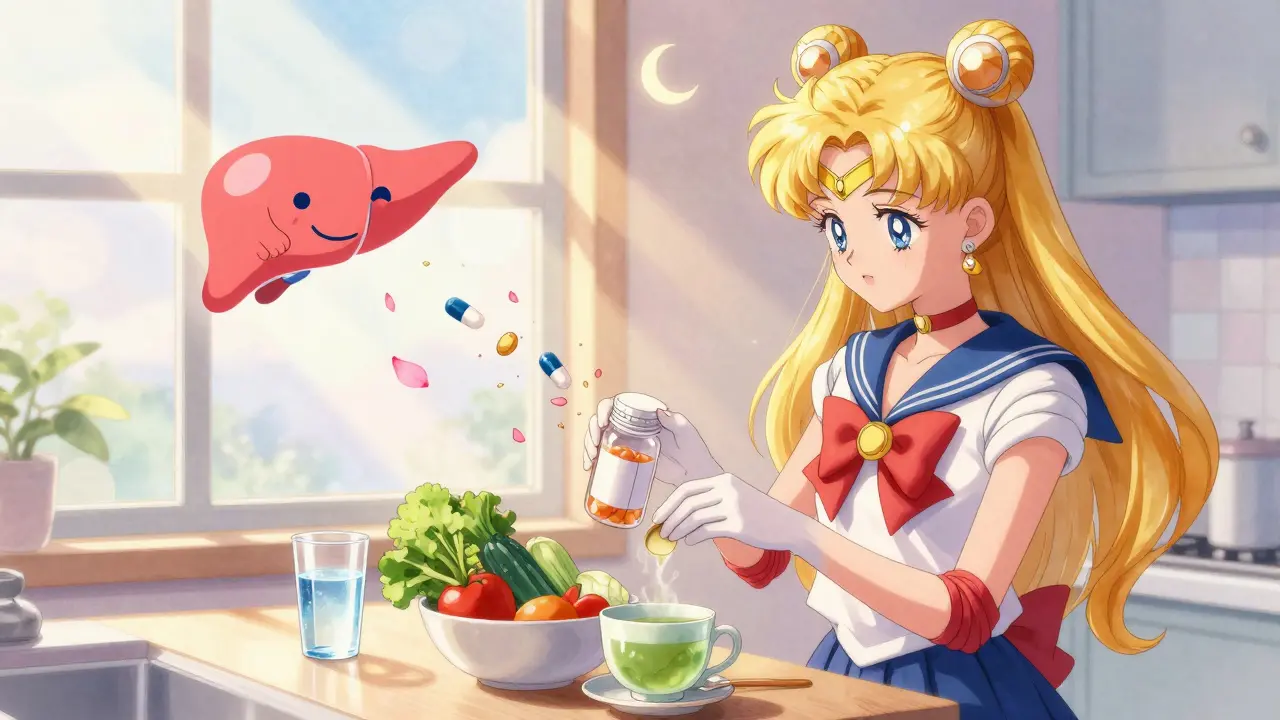
What should you do instead?
First: Stop assuming ‘natural’ equals ‘safe.’ That myth kills people.
Second: If you’re taking any supplement-especially turmeric, green tea extract, ashwagandha, or black cohosh-get your liver enzymes checked. A simple blood test for ALT and AST can catch early damage. No symptoms? Still get tested. Liver damage often shows up without warning.
Third: Talk to your doctor before starting anything. Not your yoga instructor. Not your nutrition coach on Instagram. A licensed clinician who knows how these substances interact with your body.
Fourth: If you’ve been taking supplements for more than three months and feel tired, nauseous, or notice your skin turning yellow-stop immediately. Get tested. Don’t wait.
Fifth: Avoid multi-ingredient products. The more ingredients, the harder it is to know what’s causing harm. A single herb is risky enough. A blend of 12? That’s a gamble with your liver.
Who’s most at risk?
Young adults. Women. People with pre-existing liver conditions. Those taking multiple medications. People who take supplements daily for months or years. And anyone who trusts a TikTok video over a medical study.
The rise of social media has turned supplements into a trend. ‘Detox teas.’ ‘Liver cleanse capsules.’ ‘Natural testosterone boosters.’ These aren’t health products. They’re marketing scams with real, life-threatening side effects.
The FDA has issued warnings about specific products like OxyELITE Pro® and Hydroxycut. But new ones pop up every week. By the time one gets pulled, another is already on the shelf.
Bottom line: Your liver can’t fight this alone
Your liver filters everything you eat, drink, and take. It’s not designed to handle unregulated, unpredictable, and often contaminated substances. Supplements aren’t harmless. They’re not ‘just vitamins.’ They’re potent chemicals-and your liver is the one paying the price.
If you’re taking any herbal or dietary supplement, ask yourself: Why? Is there real evidence it works? Is there evidence it’s safe? And if I get sick, will anyone know it was this pill?
When in doubt, skip it. Your liver will thank you.
Can herbal supplements cause liver failure?
Yes. Multiple cases of acute liver failure have been directly linked to herbal supplements, especially green tea extract, black cohosh, and weight-loss products containing aegeline or usnic acid. The NIH’s LiverTox database lists over 800 documented cases where supplements triggered liver failure requiring transplant or leading to death.
Is turmeric safe for the liver?
Turmeric in food is generally safe. But high-dose turmeric supplements-especially those with concentrated curcumin-have caused severe liver injury in susceptible individuals. Consumer Reports found 30% of turmeric supplements exceeded safe lead levels. Daily use of 1,000 mg or more for months increases risk significantly.
Do green tea supplements damage the liver?
Yes. Green tea extract, particularly in capsule form, is one of the top causes of supplement-related liver injury. The compound EGCG, which is beneficial in tea, becomes toxic at high doses. Products with more than 800 mg of EGCG per day have been linked to hepatitis and liver failure. Most fat-burning supplements contain unsafe levels.
Are ‘natural’ supplements safer than prescription drugs?
No. The liver processes natural and synthetic chemicals the same way. Supplements lack the safety testing, dosage controls, and monitoring that prescription drugs require. In fact, supplement-related liver injury now accounts for 20% of all drug-induced liver injury cases-more than some prescription medications.
Should I get my liver tested if I take supplements?
Yes, especially if you’ve been taking supplements for more than three months or if you feel unusually tired, nauseous, or notice dark urine or yellowing skin. A simple blood test for ALT and AST can detect early liver damage before symptoms become severe. The American College of Gastroenterology recommends this for anyone with unexplained liver enzyme elevations.
What supplements are safest for the liver?
There’s no supplement proven to be completely safe for the liver long-term. Even commonly trusted ones like milk thistle have inconsistent quality and unproven benefits. The safest choice is to avoid high-dose, long-term herbal supplements altogether. If you need support, focus on diet, sleep, hydration, and reducing alcohol and processed foods-proven, safe ways to protect your liver.
Jerry Rodrigues
January 21, 2026 AT 08:18Been taking ashwagandha for anxiety. Never thought it could hurt my liver. Gonna get my enzymes checked this week.
Dee Monroe
January 21, 2026 AT 12:47You know what’s wild? We’ll take a pill with a 12-page warning label from a pharmacy and call it medicine-but a turmeric capsule with zero labeling gets called ‘natural’ and ‘safe.’ The liver doesn’t care if it’s from a lab or a leaf. It just knows it’s poison. And we’re treating our bodies like they’re indestructible robots fueled by TikTok trends. We’ve turned self-care into a gamble where the house always wins. The real tragedy? Most people don’t even know they’re playing until their bilirubin hits the ceiling. It’s not just about supplements-it’s about how we’ve outsourced responsibility to influencers, labels, and wishful thinking. We want magic pills because real healing takes time, discipline, and silence. But silence doesn’t sell. So we keep swallowing.
Alex Carletti Gouvea
January 21, 2026 AT 20:14Why is the FDA letting this happen? We regulate candy better than we regulate ‘natural’ supplements. This is a national disgrace.
Ben McKibbin
January 22, 2026 AT 02:19It’s not just the chemicals-it’s the culture. We’ve created a society where ‘natural’ is a moral virtue and ‘pharmaceutical’ is a dirty word. But nature doesn’t care about your intentions. Poison ivy is natural. Botulinum toxin is natural. The human liver evolved to process food, not concentrated extracts from plants harvested in monsoon-season India and shipped across the globe with no batch tracking. We romanticize ‘ancient wisdom’ while ignoring that ancient people didn’t take 1,500 mg of curcumin daily. They used a pinch in curry. There’s a reason traditional medicine was contextual, seasonal, and moderated by elders-not marketed by influencers with 2 million followers.
Melanie Pearson
January 22, 2026 AT 15:54Let me be clear: anyone who takes supplements without a blood panel and a physician’s oversight is either dangerously naive or willfully ignorant. The fact that this is even a conversation is a testament to the collapse of medical literacy in this country. I’ve seen patients with ALT levels over 2,000 because they thought ‘detox tea’ was a lifestyle choice. It’s not. It’s a medical emergency waiting to happen. And the people who profit from this? They’re not healers. They’re predators.
Gerard Jordan
January 24, 2026 AT 04:33Just got my ALT results back-normal! 😌 Took green tea extract for 6 months, stopped cold turkey after reading this. Grateful for people like you sharing the truth. 🙏💚
MARILYN ONEILL
January 24, 2026 AT 12:59Of course it’s dangerous. You think the government wants you healthy? They want you dependent. That’s why they let this happen. Big Pharma owns the FDA. They profit from liver transplants. Wake up.
shubham rathee
January 25, 2026 AT 18:37They’re hiding the truth about red yeast rice because it’s basically lovastatin and they can’t patent it so they let people die so they can sell real statins
Ashok Sakra
January 26, 2026 AT 15:13My cousin took turmeric and his liver exploded he was in ICU for 3 weeks and now he can't even walk his wife left him and now he cries every night I swear to god this is the worst thing that ever happened to my family
Kevin Narvaes
January 26, 2026 AT 18:58so like... if i eat real turmeric in curry its fine but if i take a pill its poison? so the pill is the real villain? that’s wild. feels like the universe is trolling us
Philip Williams
January 27, 2026 AT 07:05While the risks outlined are well-documented and concerning, it is equally important to recognize that the absence of regulation does not inherently imply danger. Many traditional systems of medicine, including Ayurveda and Traditional Chinese Medicine, have employed these botanicals for millennia with documented success when used appropriately. The issue lies not in the substances themselves, but in the commercialization, dosage inconsistency, and lack of professional guidance. The solution is not blanket avoidance, but rather improved education, standardized dosing, third-party verification, and integration with conventional medical oversight. Responsible use, informed by evidence and expertise, remains possible-even with botanicals.