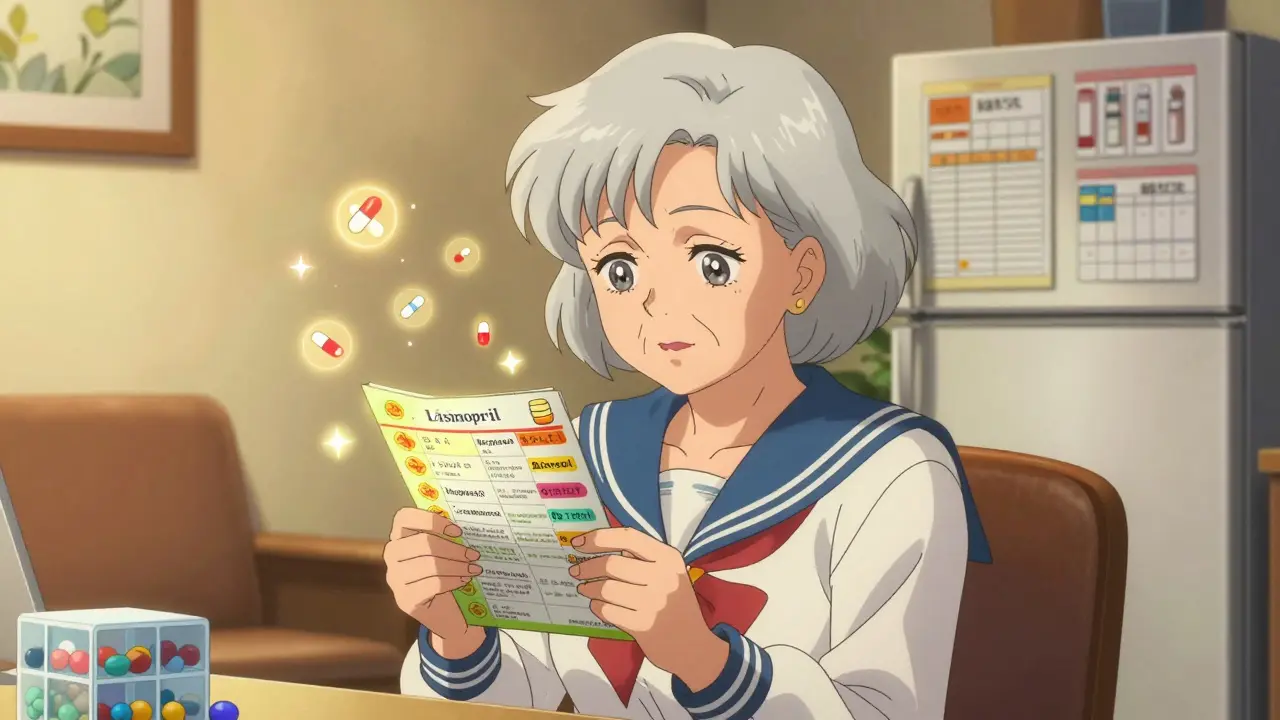
Every year, over 350,000 preventable hospital visits among seniors are caused by medication mistakes. That’s not just a statistic-it’s someone’s parent, grandparent, or neighbor. Many seniors take five or more medications daily, and mixing them without care can lead to dizziness, falls, confusion, or worse. The good news? Most of these problems are avoidable. With a few simple, practical steps, seniors and their caregivers can dramatically reduce risks and keep daily life safer and calmer.
Keep a Current, Complete Medication List
Start with a list. Not just a mental note. Not a scribble on a napkin. A real, written, updated list that includes every pill, patch, liquid, vitamin, and supplement. This means prescription drugs, over-the-counter pain relievers like ibuprofen, herbal teas marketed for sleep, and even magnesium supplements bought online.The list needs details: exact name (brand and generic if different), dosage, how often it’s taken, why it was prescribed, who wrote the prescription, and the pharmacy’s phone number. Also note any side effects you’ve noticed-like nausea after taking a certain pill or dizziness when standing up. The FDA and the National Institute on Aging both say this list should be updated within 24 hours of any change, even if it’s just a dose adjustment.
Bring this list to every doctor visit, pharmacy pickup, and emergency room trip. Pharmacists say 92% of dangerous drug interactions are caught simply because someone showed up with a clear list. If your loved one has memory issues, keep a copy in their wallet and another taped to the fridge. Use a free template from the NIA or your pharmacist-it’s easier than trying to remember everything.
Use a Pill Organizer-But Choose the Right One
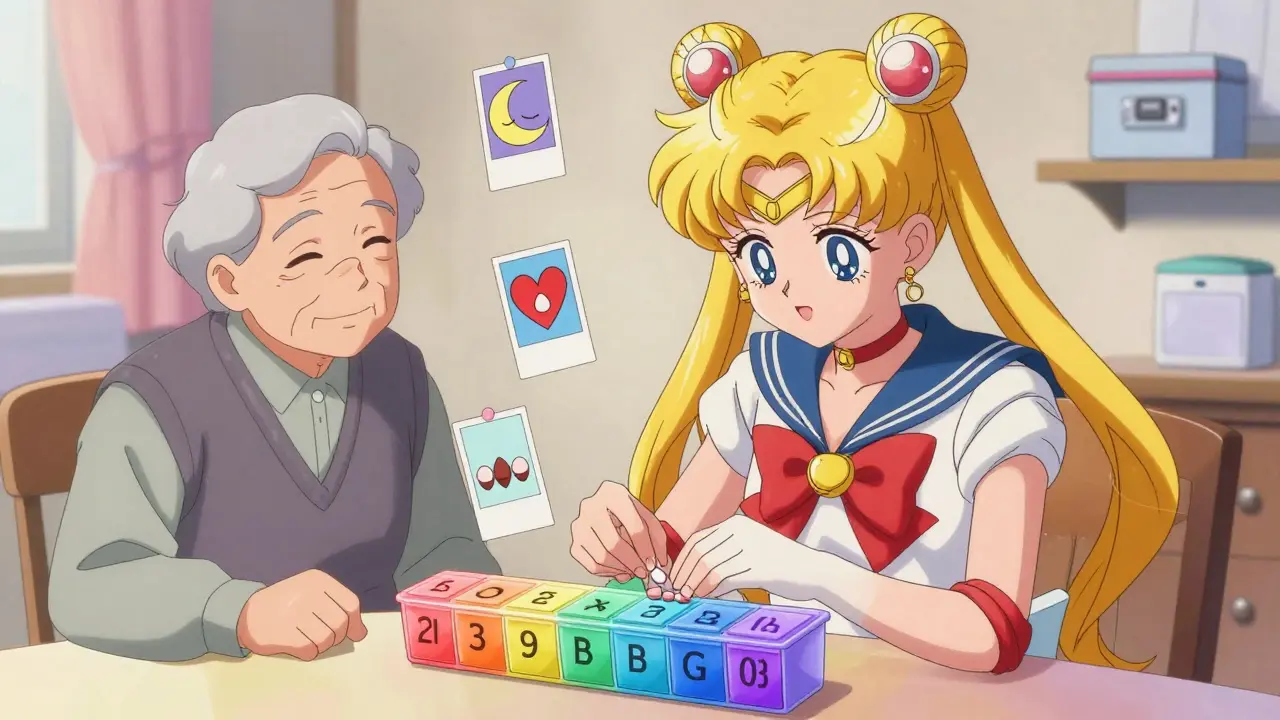
Pill organizers aren’t just for busy people. For seniors managing multiple medications, they’re a lifeline. But not all organizers work the same. A simple 7-day box with morning and evening slots is often enough for many. For those with memory loss or confusion, look for ones with alarms, locked lids, or color-coded labels.Studies show that using a properly designed pill organizer can improve adherence by up to 47% in seniors with mild cognitive decline. The key is matching the tool to the person. If someone keeps forgetting to open the box or takes pills twice because they can’t remember if they already did, a locked organizer might be better. Some caregivers swear by visual aids: laminated cards with photos of each pill next to its name and purpose. One Reddit user reported an 80% drop in anxiety after making these for their dad.
Don’t just buy the cheapest one. Check for large print, easy-open lids, and clear labels. Pharmacies often offer free or low-cost organizers with large text. And remember: never crush or split pills unless the doctor says it’s safe. Some medications are designed to release slowly-breaking them can cause dangerous spikes in dosage.
Watch for Dangerous Interactions
Medications don’t always play nice with each other-or with food and drinks. Grapefruit juice, for example, interferes with 85 common prescriptions, including cholesterol-lowering statins and blood pressure drugs. Alcohol can turn sedatives into dangerous depressants and make diabetes medications cause dangerously low blood sugar.The American Geriatrics Society updates the Beers Criteria every two years-a list of 138 medications that are risky for older adults. These include certain sleep aids, antihistamines, and painkillers that increase fall risk or confusion. Ask your pharmacist to run your loved one’s full list against the latest Beers Criteria. If something shows up as risky, ask: “Is there a safer alternative?”
Also, don’t assume natural means safe. CBD oil, turmeric, ginkgo, and even St. John’s wort can interact badly with blood thinners, antidepressants, or heart medications. Always tell your doctor about every supplement, even if you think it’s “just a little.”

Store Medications Correctly
The bathroom medicine cabinet is the worst place to store pills. Heat and moisture from showers and sinks can break down medications. A 2022 University of Florida study found that 37% of common drugs lose effectiveness when stored in humid bathrooms.Medications should be kept in a cool, dry place-between 68°F and 77°F (20-25°C). A bedroom drawer or kitchen shelf away from the stove is better. Keep everything in its original bottle with the label intact. That way, you can always check the name, dosage, and expiration date.
If you have grandchildren visiting, lock up all medications-even the aspirin. The Poison Control Center reports 60,000 accidental pediatric poisonings each year from unsecured meds. A simple lockbox or cabinet with a childproof latch costs less than $20 and can prevent a tragedy.
And don’t keep expired pills. The average senior home holds $317 worth of old, unused, or expired medications. Check expiration dates yearly. Most pills lose potency after a year or two. If you’re unsure, ask your pharmacist to dispose of them safely. Never flush them down the toilet unless the label says it’s safe.
Ask the Right Questions at Every Appointment
Doctors are busy. But you don’t have to accept “I don’t know” as an answer. Prepare three key questions before every visit:- “Is this medication still necessary?”
- “What side effects should I watch for?”
- “Is there a cheaper or simpler version?”
One of the biggest problems in senior care is “prescribing creep”-adding new meds without stopping old ones. A 2023 study in JAMA Internal Medicine found that simplifying a regimen-from four times a day to once a day-boosted adherence from 50% to 90%. That’s huge. Ask if any meds can be cut or combined.
If your loved one has dementia, use the “medication buddy system.” Pick one person-maybe a child, neighbor, or home care aide-to double-check doses daily. A WesleyLife.org study showed this raised adherence from 52% to 85% in just six weeks.
Also, ask about Medicare’s Medication Therapy Management (MTM) program. If your loved one takes eight or more medications for chronic conditions, they may qualify for a free, in-depth review by a pharmacist. Over 15 million seniors are eligible, and it’s covered under Medicare Part D.
And don’t ignore the little things. If your mom keeps missing doses because the bottle is too small to read, ask your pharmacy for large-print labels. Over 7,200 U.S. pharmacies now offer them for free. If she’s confused by the pill shape or color, ask for a different brand. Many generics look completely different-sometimes that’s the root of the problem.
Medication safety isn’t about perfection. It’s about consistency. It’s about knowing what’s in the bottle, why it’s there, and what to do if something feels off. It’s about asking questions, even when you’re tired. It’s about choosing the right tools-not the fanciest, but the one that fits your loved one’s life.
These five tips aren’t just advice-they’re backed by data from the FDA, the National Institute on Aging, and geriatric experts across the country. Used together, they can prevent hospital stays, reduce confusion, and give seniors more independence. And for caregivers? They bring peace of mind.
Adarsh Dubey
December 23, 2025 AT 09:32This is one of the most practical guides I’ve read on medication safety. I’ve been keeping a digital list on my phone for my mom, and it’s cut down her ER visits by half. The NIA template works better than any app I’ve tried-simple, clean, no ads. Also, never underestimate the power of a labeled pill organizer with big text. She used to mix up her blood pressure meds until we got one with color-coded slots. Game changer.
Jeffrey Frye
December 24, 2025 AT 13:37lol at people who think ‘natural’ means safe. my aunt took ginkgo with warfarin and ended up in the ICU. no, turmeric isn’t a ‘blood thinner’-it’s a blood thinner. and yes, your ‘herbal sleep tea’ probably has unlisted benzos in it. just sayin’.
Andrea Di Candia
December 24, 2025 AT 14:58I love how this post doesn’t just list rules-it gives you a way to breathe. My dad used to panic every time he saw a new pill bottle. Now we do a weekly ‘med check’ with tea and music. We don’t even talk about side effects unless he brings it up. Just ‘what’s this one for again?’ and ‘does it taste weird?’ Turns out, he remembers more when he’s relaxed. Peace > perfection.
Dan Gaytan
December 25, 2025 AT 19:22YES to the pharmacy’s MTM program!! 🙌 My grandma qualified and got a 45-min call from a pharmacist who literally rearranged her whole regimen. Cut 4 meds, added 1, and now she’s not dizzy all day. Also, they mailed her a free pill box with her name on it. That tiny thing made her feel seen. ❤️
Usha Sundar
December 27, 2025 AT 06:03My uncle died from mixing ibuprofen and blood thinners. Don’t be him.
Joseph Manuel
December 27, 2025 AT 17:07While the general recommendations are sound, the article lacks empirical granularity regarding pharmacokinetic interactions in geriatric populations. For instance, the CYP450 enzyme system’s age-related downregulation is not addressed, which fundamentally alters drug metabolism. Furthermore, the assertion that 92% of interactions are caught via medication lists is statistically unsupported without citation of primary source data from peer-reviewed journals.
Delilah Rose
December 29, 2025 AT 15:51Okay, I just had to share this-my mom used to keep all her meds in the bathroom because ‘that’s where the mirror is.’ Then one day, her arthritis got worse and she couldn’t open the pill bottle, so she just started taking half doses because she thought they were expired. We moved everything to a drawer in her bedroom, got the big-print labels, and now she actually remembers what she’s supposed to take. It’s not about being perfect-it’s about making the environment work for her, not against her. And yes, the locked box for the grandkids? Non-negotiable. I found my nephew holding my mother’s cholesterol pill like it was candy. That was the day I bought the lockbox. Worth every dollar.
Bret Freeman
December 31, 2025 AT 08:04People are so lazy these days. You think you can just ‘use a pill organizer’ and call it a day? What about the fact that 60% of seniors don’t even know what their meds are for? They just swallow them because ‘the doctor said so.’ And don’t get me started on supplements-half of them are snake oil sold by influencers. If you can’t manage your meds, maybe you shouldn’t be living alone. This isn’t about convenience. It’s about responsibility.
niharika hardikar
December 31, 2025 AT 14:53From a pharmacovigilance standpoint, the Beers Criteria remains the gold standard for potentially inappropriate medication use in older adults; however, its application is contingent upon comprehensive polypharmacy profiling. The omission of renal clearance metrics (eGFR) in medication risk assessment represents a critical clinical blind spot. Furthermore, the efficacy of pill organizers is confounded by cognitive heterogeneity-MMSE scores should be incorporated into tool selection protocols.
John Pearce CP
January 1, 2026 AT 20:53It’s pathetic. We’ve spent trillions on healthcare and yet we still need a ‘five-tip guide’ to keep seniors from killing themselves with pills? In my day, you learned your meds, you respected your body, and you didn’t rely on apps and laminated cards. This isn’t safety-it’s infantilization. The real problem? We’ve turned medicine into a spectator sport. People don’t take responsibility anymore. They just want a checklist. Shameful.