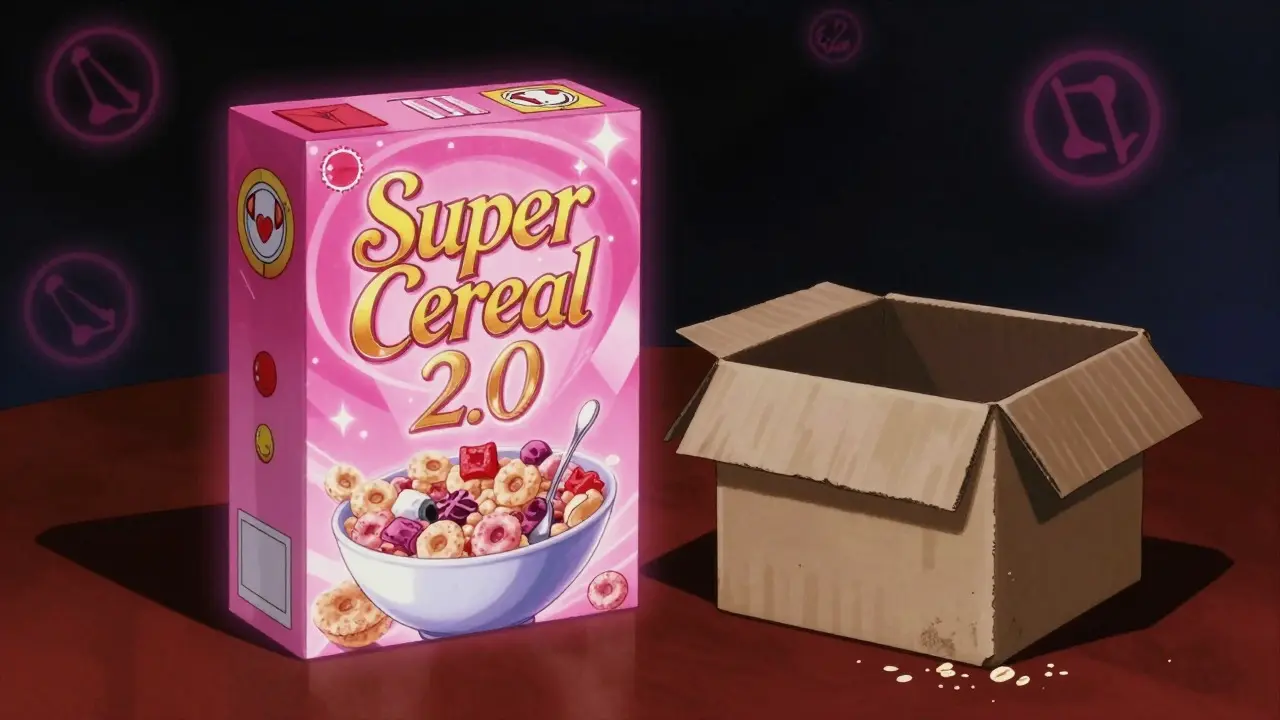
Imagine you have a favorite brand of cereal. The recipe is delicious, but the ingredients are simple-oats, sugar, water. Now imagine that after twenty years, the company invents a "new" version. They change the shape of the flakes from squares to circles. Or maybe they add a slightly different shade of red food coloring. They call it "Super Cereal 2.0," file a new patent, and charge double the price. Meanwhile, the original recipe is sitting there, ready for anyone else to make and sell at a lower cost.
This isn't just a hypothetical breakfast scenario. This is exactly what happens in the pharmaceutical industry through a practice known as evergreening. It is a strategy used by pharmaceutical companies to extend the lifetime of their patents beyond the standard expiration date to retain monopoly revenues.
You might think patents expire cleanly. A drug gets approved, the company has twenty years to make money back, and then generics flood the market, dropping prices by up to 85%. But the reality is messier. Companies like AstraZeneca and AbbVie use legal loopholes, minor tweaks, and complex patent clusters to keep generic competitors out for decades longer than intended. For patients, this means higher bills. For the healthcare system, it means billions in wasted spending. Let's look at how these strategies work, why they are so effective, and what is changing in 2026.
The Mechanics of Evergreening: More Than Just Patents
At its core, evergreening is about timing. The goal is to create a "patent thicket"-a dense web of overlapping protections that makes it too expensive or risky for generic manufacturers to challenge the brand owner. When a major patent is set to expire, the clock starts ticking. Lifecycle management teams within pharma companies begin working five to seven years ahead to identify every possible angle to extend exclusivity.
It doesn't always require a breakthrough invention. In fact, most evergreening tactics rely on incremental changes. According to research from Harvard University, these strategies often involve filing for new patents on minor modifications. Think about it: if you can't patent the molecule itself anymore, you patent the way it is delivered.
- New Dosage Forms: Changing a tablet into a capsule, or a pill into a liquid solution.
- New Release Mechanisms: Creating an "extended-release" version that allows patients to take the drug once a day instead of three times.
- New Combinations: Mixing the old drug with another existing medication to treat a related condition.
- New Indications: Finding a new medical use for an old drug (e.g., using a heart medication to treat anxiety).
These changes often provide little to no clinical benefit over the original formulation. However, they are legally distinct enough to qualify for new patents or regulatory exclusivity periods. This shifts the focus from innovation to litigation and marketing.
Regulatory Loopholes: The Hatch-Waxman Framework
To understand evergreening, you have to look at the rules of the game. In the United States, the framework was established by the Hatch-Waxman Act of 1984. This law was designed to balance two competing interests: rewarding big pharma for taking risks on new drugs and allowing generic companies to enter the market quickly to lower costs.
While well-intentioned, the Act created several pathways that companies now exploit to delay competition. Here is how the exclusivity periods break down:
| Strategy Type | Exclusivity Duration | How It Works |
|---|---|---|
| New Drug Approval | 5 Years | Standard protection for a completely new molecular entity. |
| New Clinical Trials | 3 Years | Added if the company conducts new clinical investigations essential for approval of a modified application. |
| Orphan Drugs | 7 Years | Protection for drugs treating rare diseases affecting fewer than 200,000 people in the US. |
| Pediatric Studies | 6 Months | Bonus time added if the company studies the drug in children. |
The "New Clinical Trials" clause is particularly ripe for abuse. A company can run small, non-pivotal studies on a slightly altered version of their drug. If those studies are deemed "essential" for the FDA to approve the new formulation, the company gains three extra years of market exclusivity. During this time, even if a generic competitor has already patented the same modification, they cannot launch until the exclusivity period ends.
Case Study: The Humira Patent Thicket
No discussion of evergreening is complete without mentioning Humira, manufactured by AbbVie. Humira is one of the best-selling drugs in history, primarily used to treat autoimmune conditions like rheumatoid arthritis and Crohn's disease.
When Humira's main patent was set to expire, AbbVie didn't just sit back. Instead, they filed a staggering 247 patent applications related to the drug. Over 100 of these were granted. These patents covered everything from the specific color of the vial cap to the manufacturing process and various dosage forms.
This created a massive barrier to entry. Generic manufacturers couldn't just prove their version was safe and effective; they had to navigate a minefield of intellectual property claims. Challenging all 247 patents would cost millions in legal fees and take years. As a result, generic competition was delayed significantly, keeping Humira's price high. At its peak, Humira generated approximately $40 million per day for AbbVie. The US Federal Trade Commission eventually sued AbbVie in 2022, arguing that this strategy was anticompetitive, but the financial impact on patients had already been felt for years.

Product Hopping: Forcing Patients to Switch
Another aggressive tactic is "product hopping." This occurs when a company knows their current drug is about to face generic competition, so they deliberately withdraw the original product from the market and replace it with a newer, patented version.
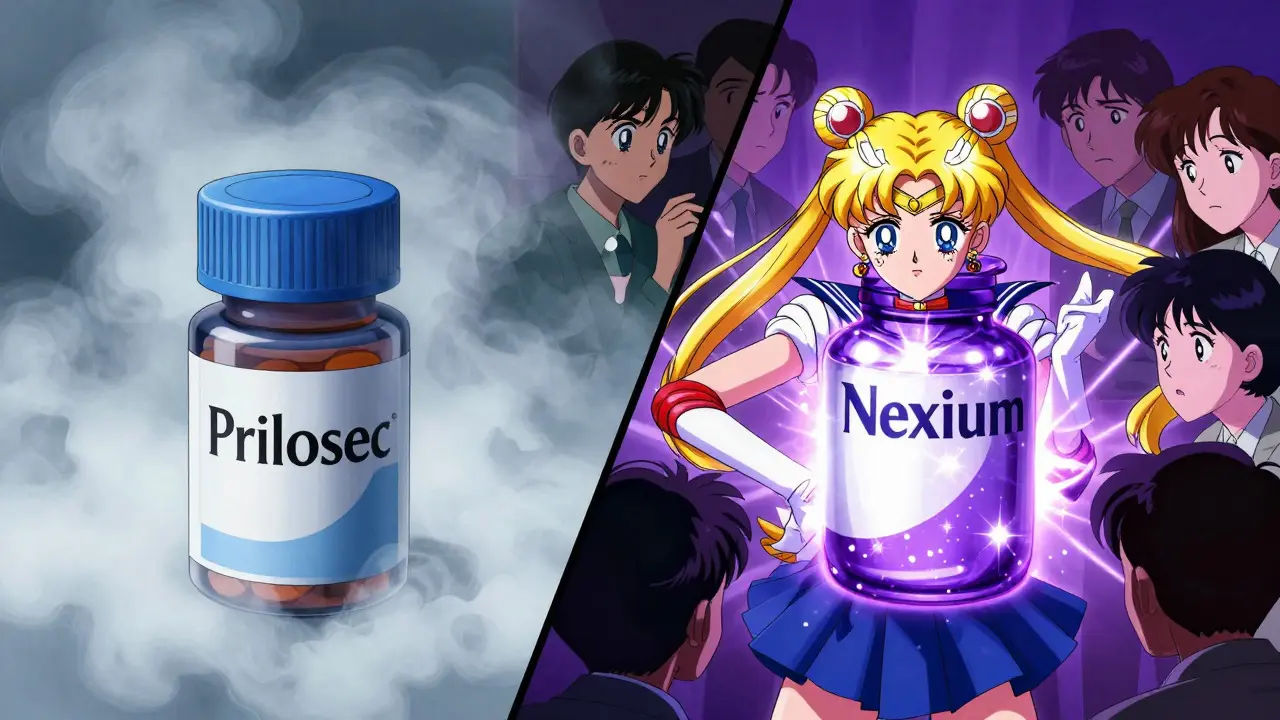
A classic example is AstraZeneca's transition from Prilosec to Nexium. Prilosec was a blockbuster acid-reflux drug. As its patent neared expiration, AstraZeneca heavily marketed Nexium, a chemically similar but patented successor. They pushed doctors and patients to switch, often claiming superior efficacy despite limited evidence. Once patients moved to Nexium, the generic version of Prilosec lost its customer base. The generic manufacturer was left with a product that no one wanted, effectively nullifying the threat of competition.
This strategy forces physicians to prescribe the new, expensive drug because the old one is no longer available or supported. It disrupts patient care and keeps revenue flowing to the brand owner rather than trickling down to consumers through cheaper alternatives.
The Cost of Delayed Generics
Why does any of this matter? Because generic drugs are the backbone of affordable healthcare. When a patent expires and generics enter the market, prices typically drop by 80% to 85% within the first year. This savings is passed on to insurance companies, government programs like Medicare, and ultimately, patients.
By delaying generic entry through evergreening, pharmaceutical companies maintain monopoly pricing power. This has direct consequences:
- Higher Out-of-Pocket Costs: Patients may pay hundreds or thousands more per month for their medication.
- Reduced Access: Some patients skip doses or stop treatment entirely because they cannot afford the branded drug.
- Strained Healthcare Systems: Hospitals and insurers spend more on medications, leaving less budget for other critical services.
Research indicates that developing a truly new molecular entity costs around $2.6 billion and takes 10-15 years. In contrast, evergreening modifications are far cheaper and faster. Critics argue that the current system rewards legal maneuvering over genuine scientific innovation. If a company can make billions by simply changing a pill's coating, where is the incentive to cure diseases?
Is Evergreening Legal? The Gray Area
Technically, yes. Most evergreening strategies operate within the boundaries of existing patent and regulatory laws. The US Patent Office grants patents for inventions that are novel, non-obvious, and useful. Defining "non-obvious" for a slight change in drug delivery can be subjective.
However, the landscape is shifting. Regulators and courts are becoming more skeptical. The USPTO has increased scrutiny on "obviousness-type" double patenting, making it harder to get multiple patents for trivial changes. The European Medicines Agency (EMA) requires stricter proof of "significant clinical benefit" for modified drugs seeking additional exclusivity.
In 2022, the Inflation Reduction Act introduced Medicare drug price negotiations. While this doesn't ban evergreening, it reduces the financial reward by capping prices for certain high-cost drugs. If the government can negotiate lower prices, the urgency to delay generics diminishes slightly.
What Comes Next? Future Trends in 2026
As traditional small-molecule drugs face more pressure, pharma companies are adapting. We are seeing a rise in biologics-complex drugs made from living organisms. Biologics are much harder to copy than chemical pills, creating a natural barrier to generic competition (known as biosimilars). This allows companies to maintain exclusivity for longer periods without relying as heavily on patent thickets.
We also see emerging strategies involving nanotechnology and pharmacogenomics. By patenting genetic tests that determine which patients will respond to a drug, companies can lock in market share before the drug even launches. These are sophisticated moves that require deep expertise in both biology and law.
For now, evergreening remains a dominant force. But with increased political pressure, antitrust lawsuits, and potential patent reforms, the window for easy extensions is narrowing. Patients and advocates continue to push for transparency, demanding that patent protection serve public health, not just corporate profits.
What is evergreening in simple terms?
Evergreening is when a pharmaceutical company extends the life of a drug's patent by making small, often insignificant changes to it-like altering the dosage form or packaging-and filing new patents for those changes. This delays the entry of cheaper generic versions into the market.
Why do pharmaceutical companies use evergreening strategies?
The primary reason is profit. When a patent expires, generic competitors enter the market, causing drug prices to drop by up to 85%. Evergreening allows companies to maintain monopoly pricing and protect their revenue streams for years longer than the original patent term.
Is evergreening illegal?
Not necessarily. Most evergreening tactics operate within current patent and regulatory laws. However, some aggressive strategies, like excessive patent thickets or anticompetitive product hopping, have faced legal challenges from agencies like the FTC. Courts are increasingly scrutinizing whether these modifications represent true innovation or just legal gaming.
How does evergreening affect patients?
Evergreening keeps drug prices high by blocking affordable generic alternatives. This can lead to higher out-of-pocket costs for patients, reduced access to necessary medications, and increased strain on healthcare budgets. In severe cases, patients may skip doses due to cost.
What is the difference between a generic drug and an authorized generic?
A generic drug is produced by a different company after the original patent expires. An authorized generic is the exact same drug as the brand-name version, but sold under a different label by the original manufacturer or a partner. Companies sometimes use authorized generics to undercut third-party generics while still capturing some of the lower-price market segment.
Can regulators stop evergreening?
Regulators are trying. The USPTO is tightening rules on obviousness, and the EMA requires stronger clinical benefits for new formulations. Legislation like the Inflation Reduction Act also impacts profitability by enabling price negotiations. However, significant patent reform is needed to fully curb abusive practices.